
SPCC for farms becomes mandatory when your operation stores 1,320+ gallons of oil. The 2014 farm amendment created a self-certification pathway most agricultural producers don’t know exists, avoiding costly Professional Engineer requirements for qualifying operations.
Key Takeaways:
- Farm operations storing 1,320+ gallons qualify for streamlined self-certification under WRRDA 2014 amendments
- No-discharge history for 36 months plus facility design compliance eliminates Professional Engineer requirements
- Agricultural containers like field tanks and mobile nurse tanks count toward your 1,320-gallon threshold calculation
Farm operations face the same federal oil storage regulations as industrial facilities, but SPCC requirements by facility type vary significantly in their implementation pathways. Understanding SPCC plan requirements helps agricultural producers navigate compliance without unnecessary complexity or cost.
Do Farm Operations Need SPCC Plans?
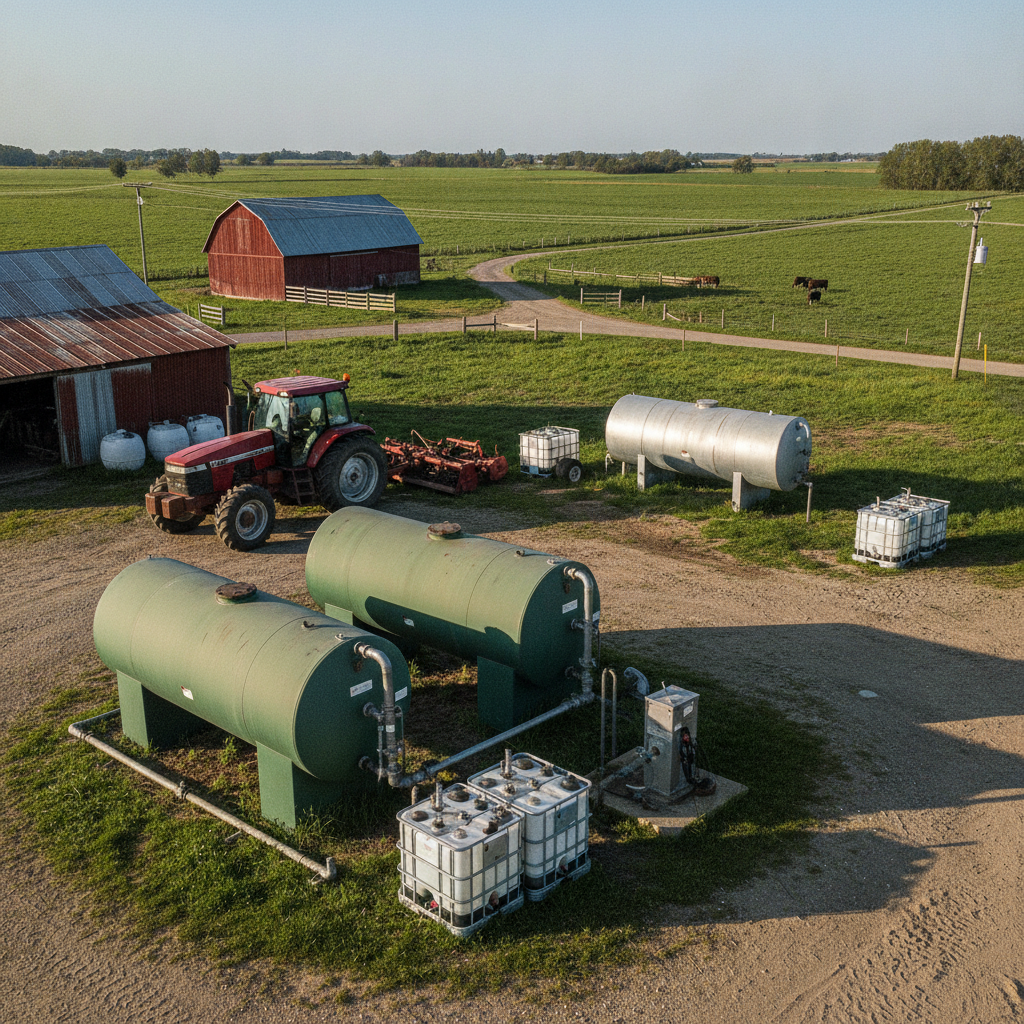
SPCC plans for farms are mandatory when your agricultural operation stores 1,320 gallons or more of oil in aggregate capacity. This means every oil container on your property, from bulk diesel tanks to hydraulic reservoirs in equipment, counts toward the threshold calculation under 40 CFR Part 112.
The 1,320-gallon aggregate oil storage threshold triggers SPCC requirements regardless of your facility type. Farm operations qualify for specific compliance pathways that didn’t exist before 2014, but you still need a plan if you exceed the storage threshold.
What qualifies as “oil” under SPCC includes diesel fuel, gasoline, hydraulic oil, motor oil, transmission fluid, and heating oil. Your grain elevator hydraulic system, tractor reservoirs, and bulk fuel tanks all contribute to your aggregate calculation. Even oil that cannot be practically drained from equipment counts toward the threshold.
Agricultural operations storing less than 1,320 gallons total remain exempt from SPCC requirements. However, many farm operations exceed this threshold once they account for all oil-containing equipment and storage systems on their property.
What Changed With the WRRDA 2014 Farm Amendment?
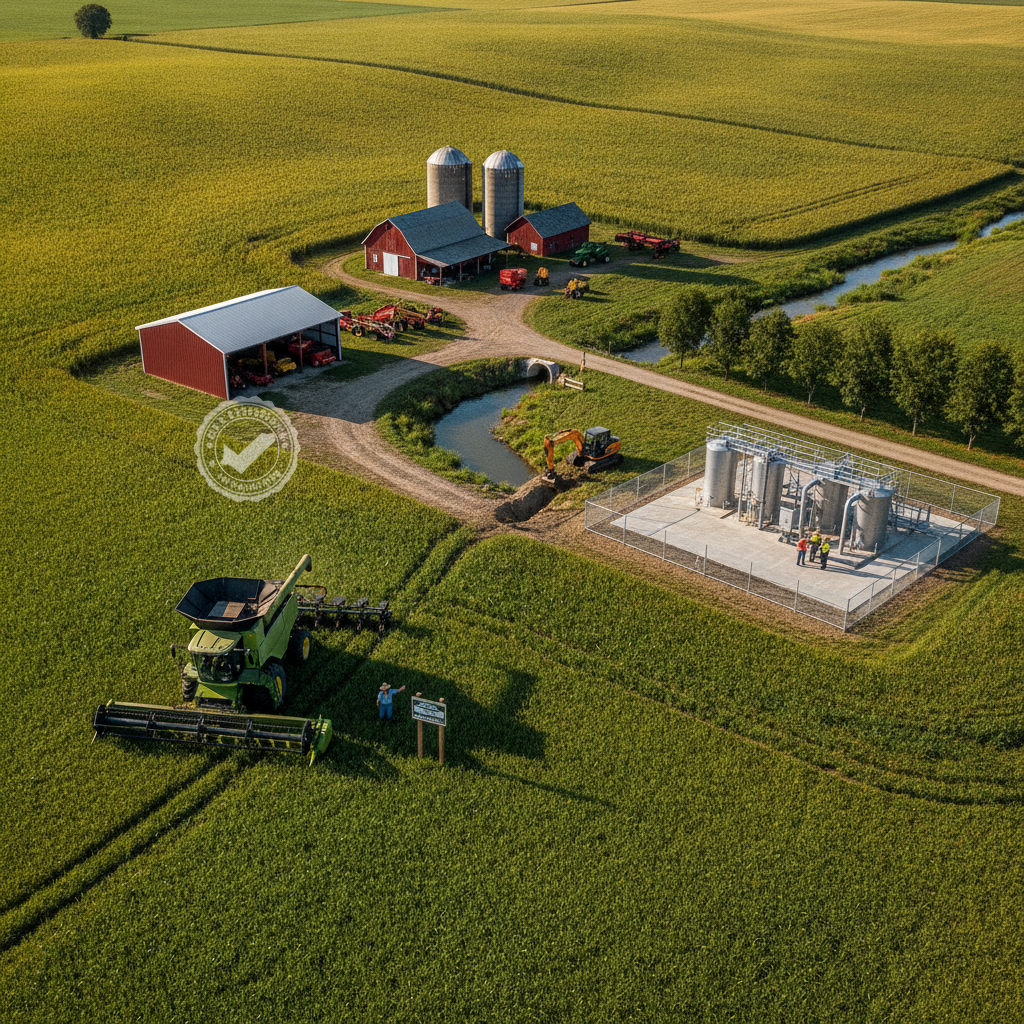
The Water Resources Reform and Development Act of 2014 farm amendment created an agricultural self-certification pathway that eliminates Professional Engineer requirements for qualifying farms. WRRDA 2014 farm amendment provisions recognize that agricultural operations have different risk profiles and operational characteristics than industrial facilities.
Before 2014, all farm operations exceeding 1,320 gallons required Professional Engineer certification of their SPCC plans, costing $2,000-$8,000 per certification. The farm amendment introduced self-certification eligibility for operations meeting specific criteria, dramatically reducing compliance costs.
| Requirement Category | Pre-2014 Rules | Post-2014 Farm Amendment |
|---|---|---|
| Professional Engineer Required | All farms over 1,320 gallons | Only farms with discharge history or complex designs |
| Certification Cost | $2,000-$8,000 | $0 for self-certification |
| No-Discharge History | Not specified | 36 months documented |
| Plan Updates | PE required for changes | Self-certification for qualifying farms |
| Secondary Containment | Full industrial standards | Farm-appropriate design flexibility |
Farm self-certification eligibility requires a 36-month no-discharge history and compliance with facility design standards. Any discharge to navigable waters or their shorelines within the past three years disqualifies your operation from self-certification, requiring Professional Engineer involvement.
The amendment recognizes that agricultural operations often have seasonal variations, mobile equipment, and field-based storage that doesn’t fit industrial facility models. Self-certification allows farmers to certify their own plans when they meet eligibility criteria.
Which Farm Storage Containers Count Toward the 1,320-Gallon Threshold?
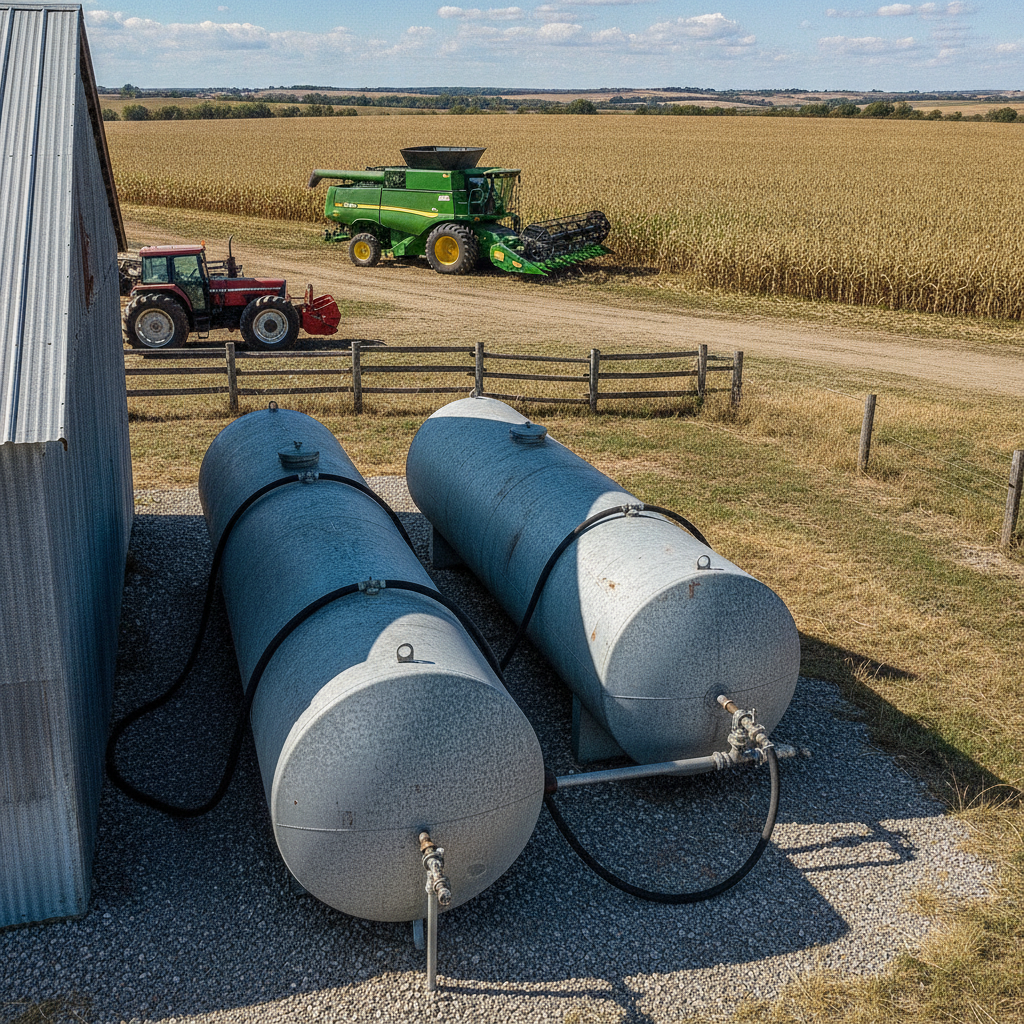
Agricultural containers contribute toward SPCC threshold calculations based on their individual capacity and permanence at your facility. Every oil storage container with 55+ gallon capacity counts toward your aggregate total, including mobile equipment stationed at your operation.
Bulk diesel farm storage tanks represent the largest contributors to most agricultural SPCC thresholds. A single 1,000-gallon diesel tank plus equipment hydraulics often pushes farm operations over the 1,320-gallon trigger. Field application tanks, nurse tanks, and stationary fuel storage all contribute to your calculation.
| Container Type | Counts Toward Threshold | Typical Capacity | Notes |
|---|---|---|---|
| Bulk diesel tanks | Yes | 500-5,000 gallons | Primary threshold contributor |
| Mobile nurse tanks | Yes, if stationed at facility | 300-1,500 gallons | Count only if regularly present |
| Tractor hydraulic systems | Yes | 15-50 gallons each | All equipment adds up |
| Combine hydraulic reservoirs | Yes | 20-60 gallons each | Cannot be practically drained |
| Portable containers under 55 gallons | No | 5-50 gallons | Exempt regardless of quantity |
| Heating oil for farm buildings | Yes | 275-1,000 gallons | Often overlooked contributor |
Portable containers under 55 gallons are exempt from threshold calculations regardless of how many you store. This exempts typical oil change supplies, small hydraulic reservoirs, and maintenance lubricants from your aggregate calculation.
Mobile nurse tanks count toward your threshold only if they’re regularly stationed at your facility. Tanks that visit briefly for field operations don’t contribute to your aggregate capacity calculation. Document which mobile equipment stays on-site versus equipment that visits temporarily.
Equipment hydraulic oil presents the biggest calculation challenge for farms. Each tractor, combine, and implement contains hydraulic fluid that counts toward your threshold. Ten pieces of equipment with 30-gallon hydraulic systems each contributes 300 gallons to your total.
Farm Self-Certification Requirements: What You Must Prove

Farm self-certification requires specific documentation proving your operation meets eligibility criteria under the agricultural amendment. You must demonstrate both facility design compliance and operational history to qualify for self-certification instead of Professional Engineer involvement.
Document your no-discharge history for 36 consecutive months. Maintain records showing no oil discharges to navigable waters or shorelines for three years prior to certification. Any spill reaching drainage ditches, streams, or ground water disqualifies self-certification.
Verify secondary containment compliance for your storage systems. Calculate containment capacity requirements and document that your berms, pallets, or containment systems meet 40 CFR Part 112 specifications for your largest tank plus 10% of remaining tanks.
Complete facility design compliance verification. Review your operation against SPCC facility design standards, documenting that tank locations, loading areas, and drainage systems prevent oil from reaching navigable waters during normal operations.
Prepare self-certification documentation package. Create written certification stating your farm meets all eligibility criteria, signed by facility owner or operator with authority to certify compliance. Retain this documentation with your SPCC plan.
Establish ongoing compliance monitoring procedures. Document monthly inspection procedures, spill response protocols, and record-keeping systems that maintain your self-certification eligibility going forward.
Three years of documented no-discharge history forms the foundation of farm self-certification eligibility. You must prove no oil reached navigable waters during the 36 months preceding your self-certification date. Even minor spills to drainage systems disqualify your operation.
Secondary containment specifications for farms allow more flexibility than industrial facilities while maintaining environmental protection. Your containment systems must prevent oil from reaching navigable waters but can use berms, liners, or natural topography appropriate for agricultural operations.
Vertical Compliance Scenarios: When Farms Need Professional Engineer Certification
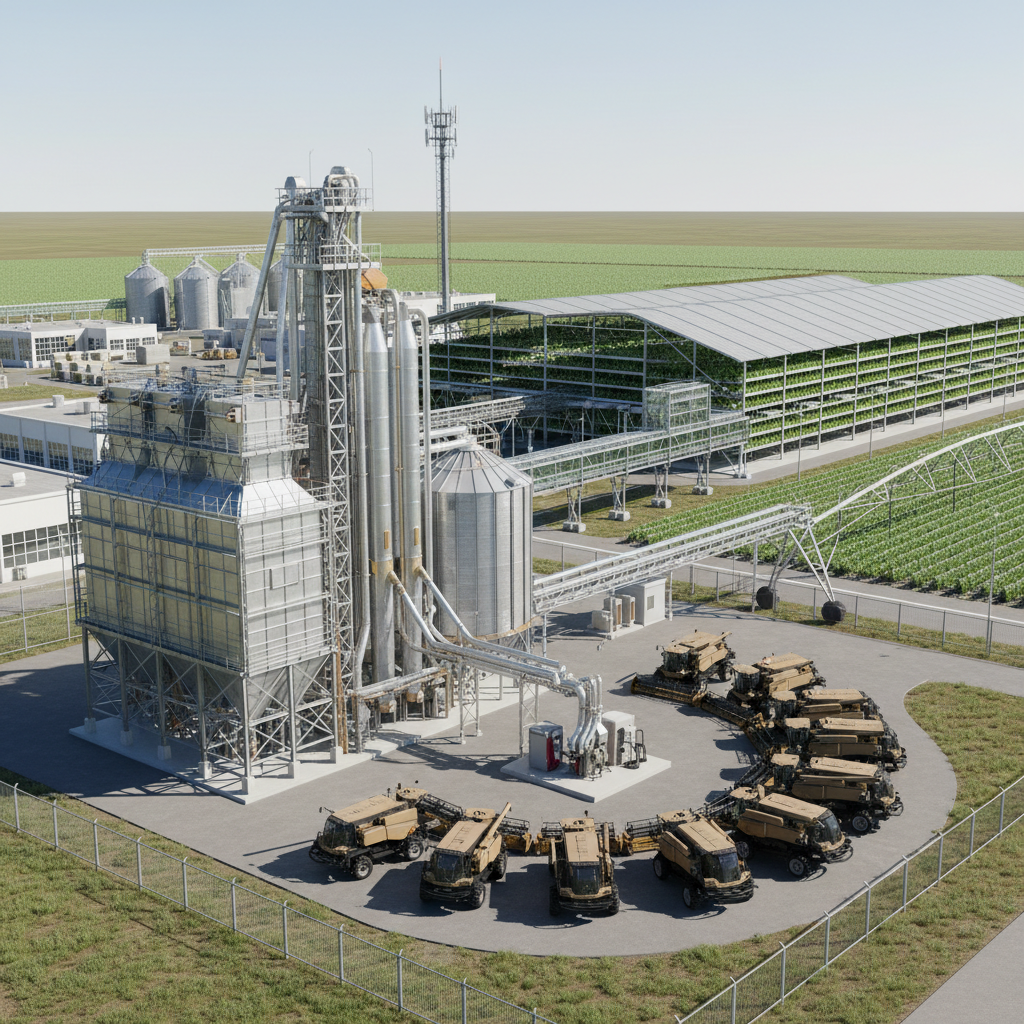
Vertical compliance scenarios determine when agricultural operations cannot use self-certification and must obtain Professional Engineer certification for their SPCC plans. Industry-specific SPCC applicability creates different requirements based on your operation’s complexity and history.
Farms requiring Professional Engineer certification instead of self-certification include:
Operations with any discharge history in the past 36 months. Any oil release reaching navigable waters, drainage ditches, or groundwater eliminates self-certification eligibility regardless of spill volume or cleanup efforts.
Complex multi-site agricultural operations exceeding capacity thresholds. Integrated farming operations with multiple locations, processing facilities, or storage exceeding 10,000 gallons aggregate capacity require Professional Engineer involvement.
Facilities with integrated processing components. Agricultural operations that include grain processing, ethanol production, or other industrial processes fall under standard industrial SPCC requirements rather than farm amendment provisions.
Operations unable to demonstrate facility design compliance. Farms with inadequate secondary containment, poor drainage control, or storage systems that cannot meet 40 CFR Part 112 design standards require Professional Engineer certification and facility modifications.
Agricultural cooperatives and commercial fuel distribution sites. Facilities serving multiple farms or selling fuel commercially operate under standard SPCC requirements rather than agricultural self-certification provisions.
Agricultural SPCC self-certification pathway benefits only qualify farms meeting strict eligibility criteria. Operations exceeding these parameters must follow standard SPCC requirements including Professional Engineer certification, regardless of their agricultural classification.
Farms with discharge history face the most common disqualification from self-certification. Even small spills reaching storm drains or field drainage systems eliminate your ability to self-certify for three years following the incident.
Frequently Asked Questions
Does equipment hydraulic oil count toward the 1,320-gallon farm threshold?
Yes, hydraulic oil in tractors, combines, and stationary equipment counts toward your aggregate storage calculation. Each piece of equipment’s hydraulic reservoir capacity adds to your total, even if the oil cannot be practically drained. Document each machine’s hydraulic capacity to calculate your threshold accurately.
Can I self-certify my farm SPCC plan if I had a small diesel spill 2 years ago?
No, any discharge to navigable waters or their shorelines within the past 36 months disqualifies your farm from self-certification. You must use a Professional Engineer to certify your SPCC plan regardless of spill size. The three-year clock restarts from your last discharge incident.
Do grain bins with hydraulic systems need SPCC coverage?
Grain bins themselves don’t require SPCC plans, but their hydraulic systems count toward your oil storage threshold. If your total farm oil storage including bin hydraulics exceeds 1,320 gallons, you need an SPCC plan. Consider both your grain handling equipment and bulk fuel storage in your threshold calculation.