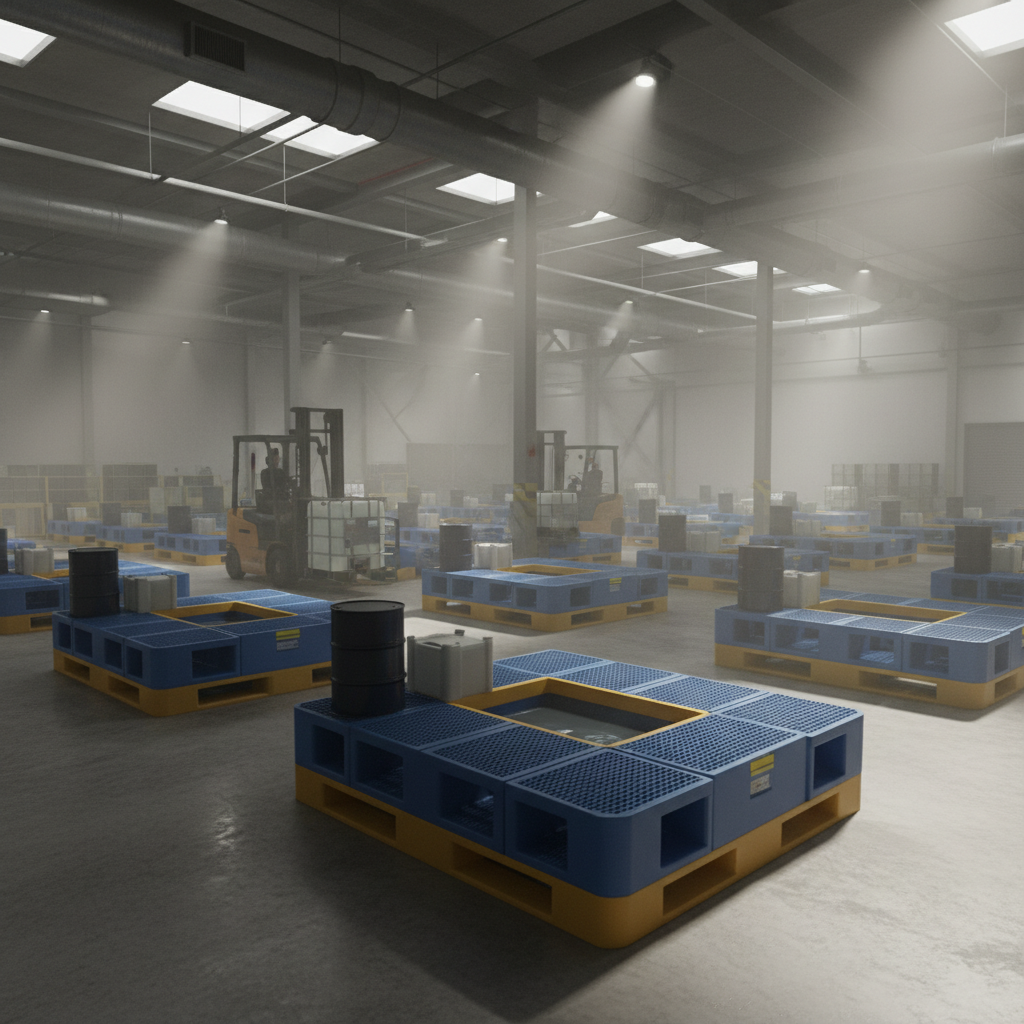
Spill containment pallet failures happen when facilities ignore the 110% sump capacity rule for each storage area. Most buyers focus on price over compliance requirements and end up with pallets that can’t hold the required volume.
Key Takeaways:
- 4-drum pallets require 66-gallon sump capacity minimum for SPCC compliance with 55-gallon drums
- Polyethylene pallets cost 40-60% less than steel but last 3-5 years vs 15-20 years for steel
- IBC tote pallets need 385-gallon sump capacity for 350-gallon totes under SPCC regulations
What Sump Capacity Do You Need for SPCC Compliance?
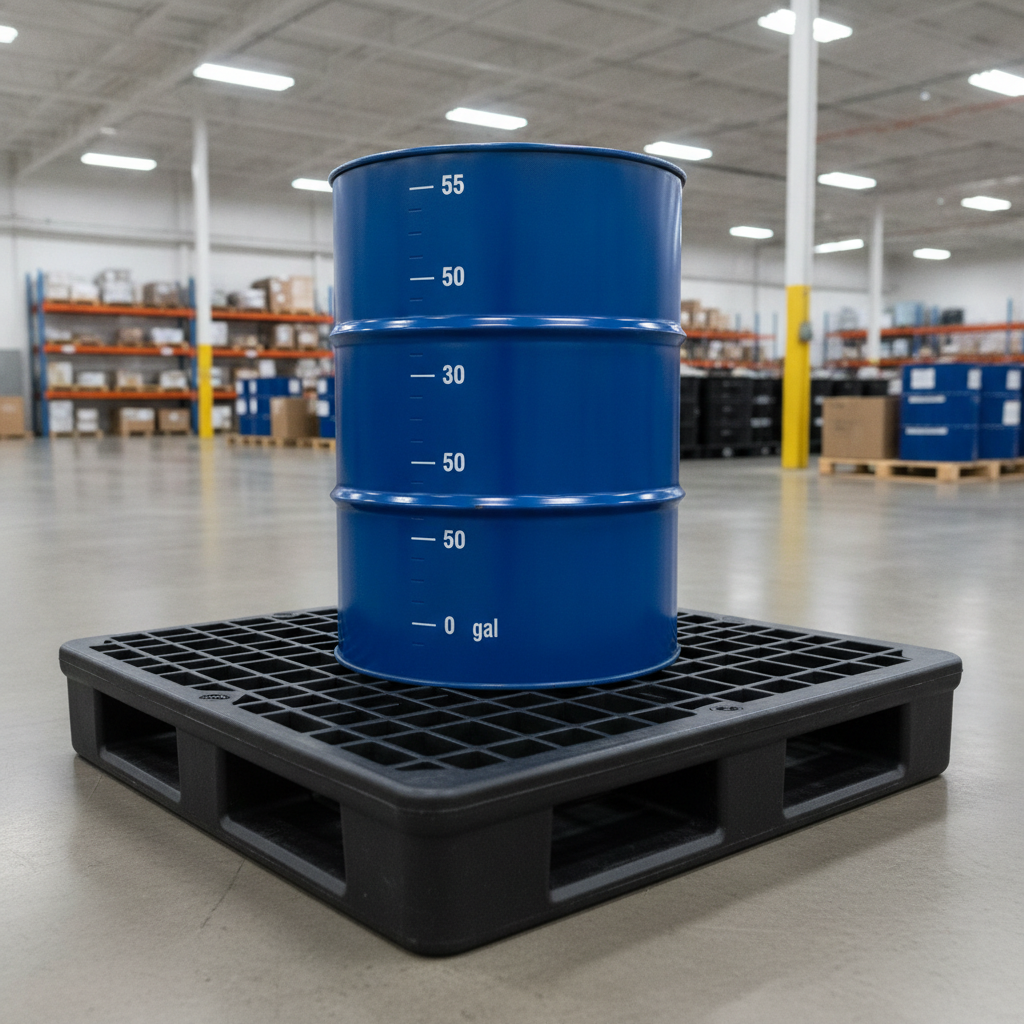
SPCC-compliant sump sizing is the capacity calculation that determines how much liquid your containment system must hold. Under 40 CFR Part 112, secondary containment must hold 110% of the largest container’s contents. This means a 55-gallon drum requires 60.5 gallons of containment capacity minimum.
The calculation gets complex with multiple containers. Four 55-gallon drums need 66-gallon sump capacity, not 242 gallons. The rule applies to the single largest container plus 10%, not the total of all containers. However, the containment must also hold reasonable precipitation and minor spills from normal operations.
SPCC regulations require that your containment capacity calculation accounts for the actual storage configuration. If you store drums with different volumes in the same containment area, calculate based on the largest drum. A containment area with three 55-gallon drums and one 30-gallon drum needs 60.5-gallon capacity, not 33 gallons.
Most facilities fail inspection because they buy pallets sized for the total liquid volume rather than following the 110% rule. The regulation is clear: secondary containment capacity equals 110% of the largest single container in that containment area.
2-Drum vs 4-Drum Pallet Capacity: Which Size Do You Need?
| Configuration | Sump Capacity Required | Typical Cost Range | Cost Per Drum | Floor Space |
|---|---|---|---|---|
| 2-Drum Pallet | 60.5 gallons | $180-$380 | $90-$190 | 28 sq ft |
| 4-Drum Pallet | 66 gallons | $360-$700 | $90-$175 | 48 sq ft |
| 6-Drum Pallet | 66 gallons | $580-$950 | $97-$158 | 64 sq ft |
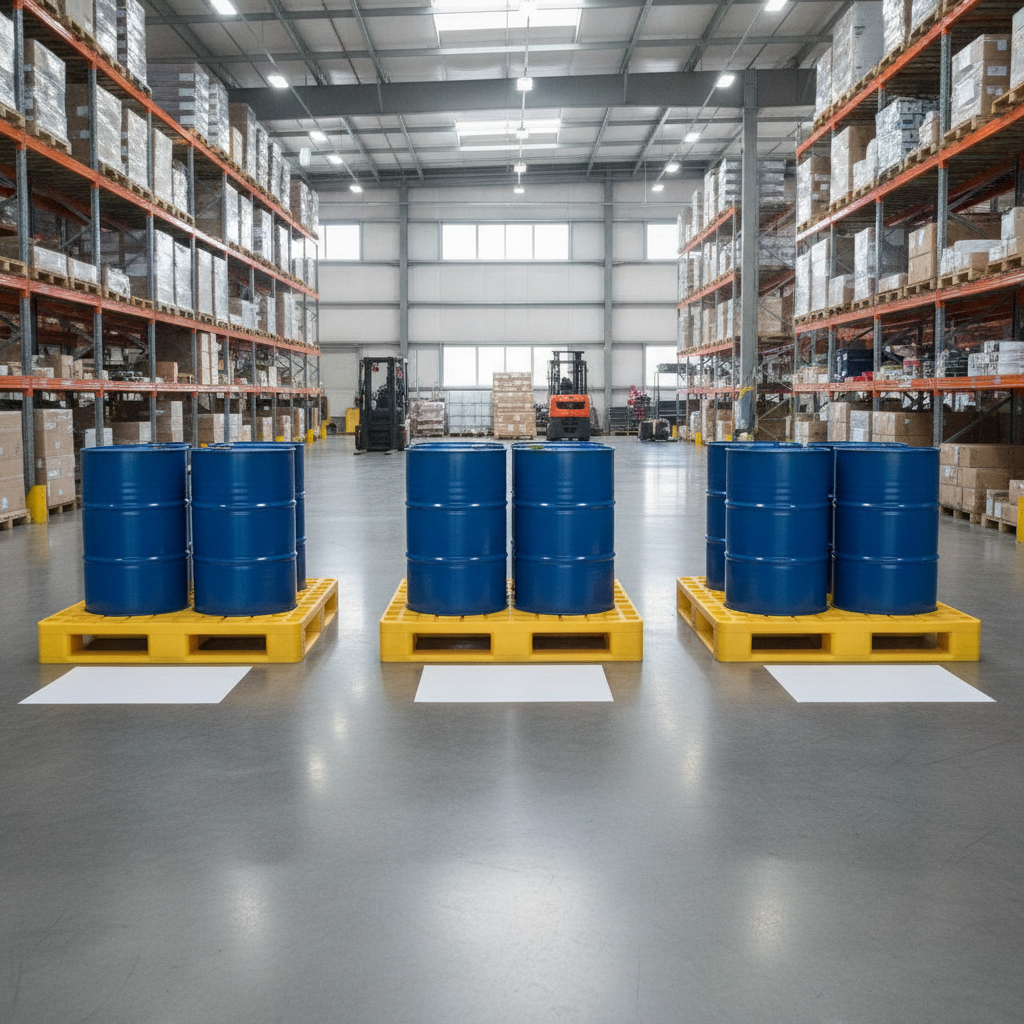
Drum configuration determines required sump capacity under SPCC rules. A 2-drum pallet holding two 55-gallon drums needs 60.5-gallon sump capacity. A 4-drum pallet with the same drum size needs 66 gallons because you’re storing the same largest container (55 gallons) but need additional freeboard for multiple containers.
Four-drum pallets cost $180-320 more than 2-drum units but reduce the cost per drum stored by 35% on average. The math works when you need to store multiple drums in the same work area. However, multiple 2-drum pallets give you more flexibility to separate different product types and create dedicated containment areas.
Storage footprint matters for tight spaces. Two 2-drum pallets require 56 square feet total vs 48 square feet for one 4-drum pallet. The 4-drum configuration saves floor space but forces you to store all drums in the same containment area, which may complicate inventory management or create compatibility issues with different oil types.
How Do You Size IBC Spill Containment Pallets?
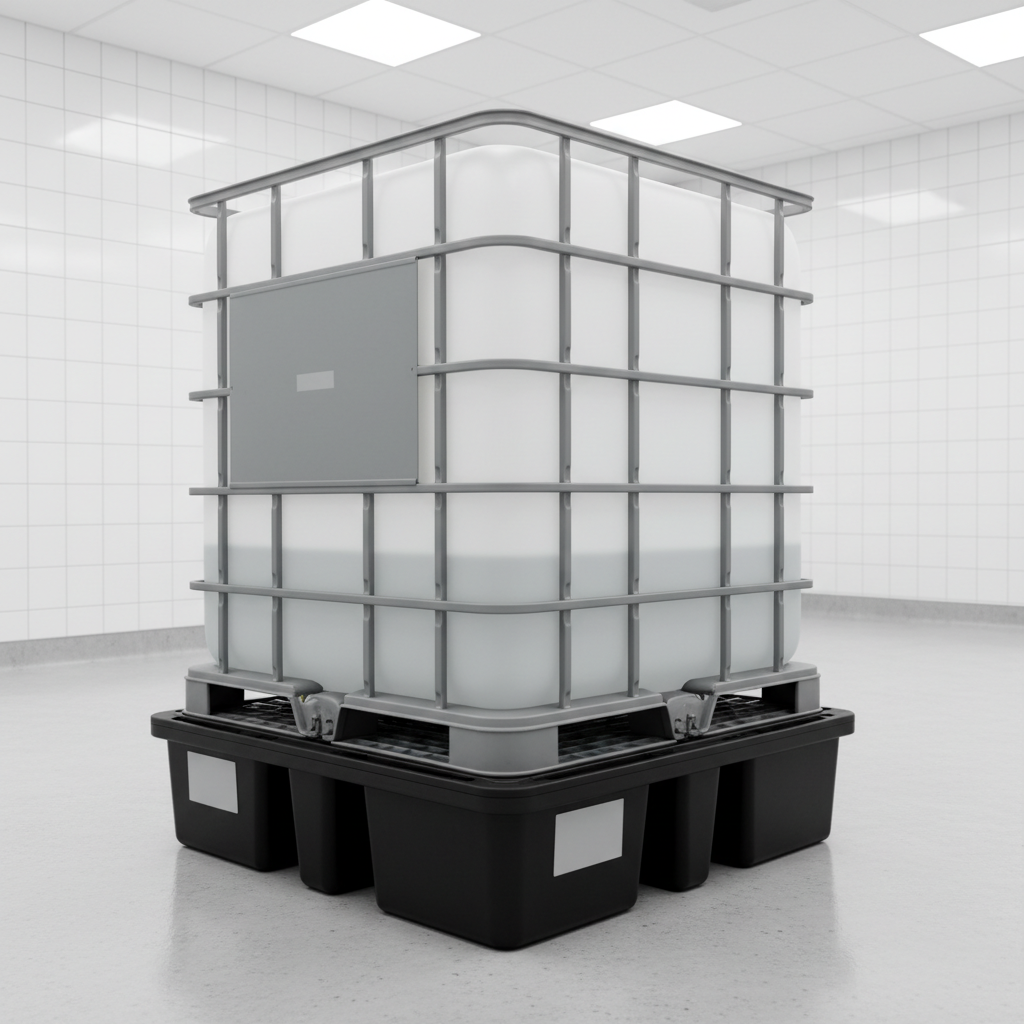
Calculate the 110% rule for your largest IBC. A 350-gallon tote requires 385-gallon minimum sump capacity. Most facilities use 350-gallon IBCs, but 275-gallon and 330-gallon sizes need proportional calculations.
Account for forklift access requirements. IBC pallets need drive-over capability for standard forklift forks. The sump design must allow fork entry from two sides while maintaining structural integrity under 4,000+ pound loads.
Verify the pallet accommodates your IBC footprint. Standard IBCs measure 48″ x 40″ x 46″ high, but specialty totes vary. The containment pallet must center the IBC properly to prevent tipping during forklift operations.
Add freeboard for precipitation and operational spills. SPCC inspectors look for 2-6 inches of freeboard above the calculated 110% capacity. This buffer prevents overflow during normal operations and light rain.
IBC tote pallet sizing requires 385-gallon containment minimum for standard 350-gallon containers under SPCC regulations. The calculation accounts for the single largest container rule, but IBC pallets typically hold only one tote, making the math straightforward. Most IBC spill pallets provide 385-400 gallon capacity to meet SPCC requirements with adequate freeboard.
Should You Buy Polyethylene or Steel Spill Pallets?
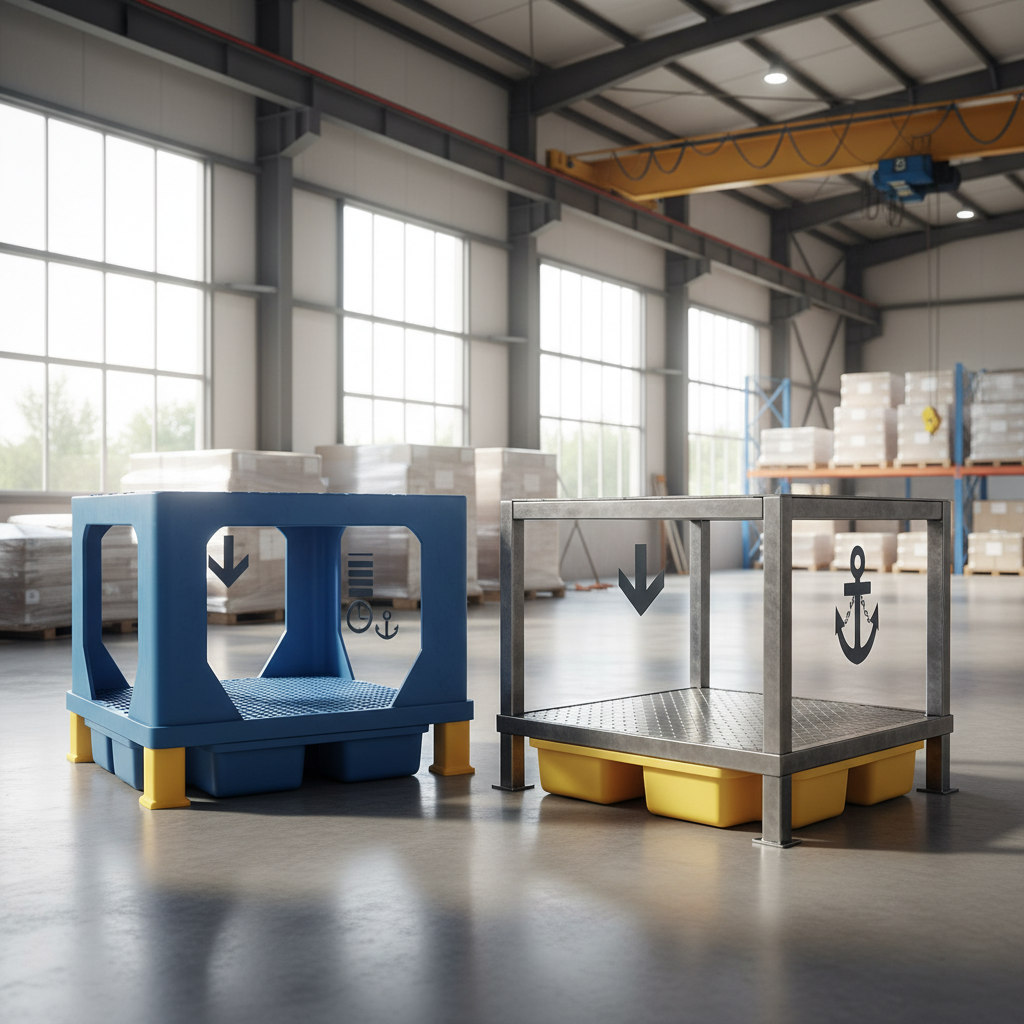
| Factor | Polyethylene | Steel | Winner |
|---|---|---|---|
| Initial Cost | $180-$600 | $400-$1,200 | Polyethylene |
| Lifespan | 3-5 years | 15-20 years | Steel |
| Weight Capacity | 4,000 lb max | 6,000+ lb | Steel |
| UV Resistance | Degrades in sunlight | Rust with moisture | Polyethylene |
| Chemical Compatibility | Resistant to most oils | Corrodes with acids | Depends on application |
| Maintenance | Replace when cracked | Paint and rust prevention | Polyethylene |
Material choice affects lifespan and chemical compatibility in ways that impact total cost of ownership. Polyethylene pallets cost 40-60% less upfront but need replacement every 3-5 years with outdoor exposure. Steel pallets handle 6,000+ lb loads vs 4,000 lb maximum for polyethylene, making steel necessary for heavy drum handling or IBC storage.
Chemical compatibility varies by application. Polyethylene resists most petroleum products but can swell with certain solvents. Steel pallets corrode when exposed to acids but handle standard motor oils and diesel fuel without problems. Check the chemical compatibility chart for your specific products before choosing materials.
UV exposure kills polyethylene pallets faster than chemical contact. Direct sunlight causes brittleness and cracking within 2-3 years, even with UV stabilizers. Steel pallets rust in wet conditions but maintain structural integrity much longer. Factor replacement costs into your total budget – steel pallets often cost less per year of service despite higher initial prices.
What Grating Types Work Best for Different Applications?
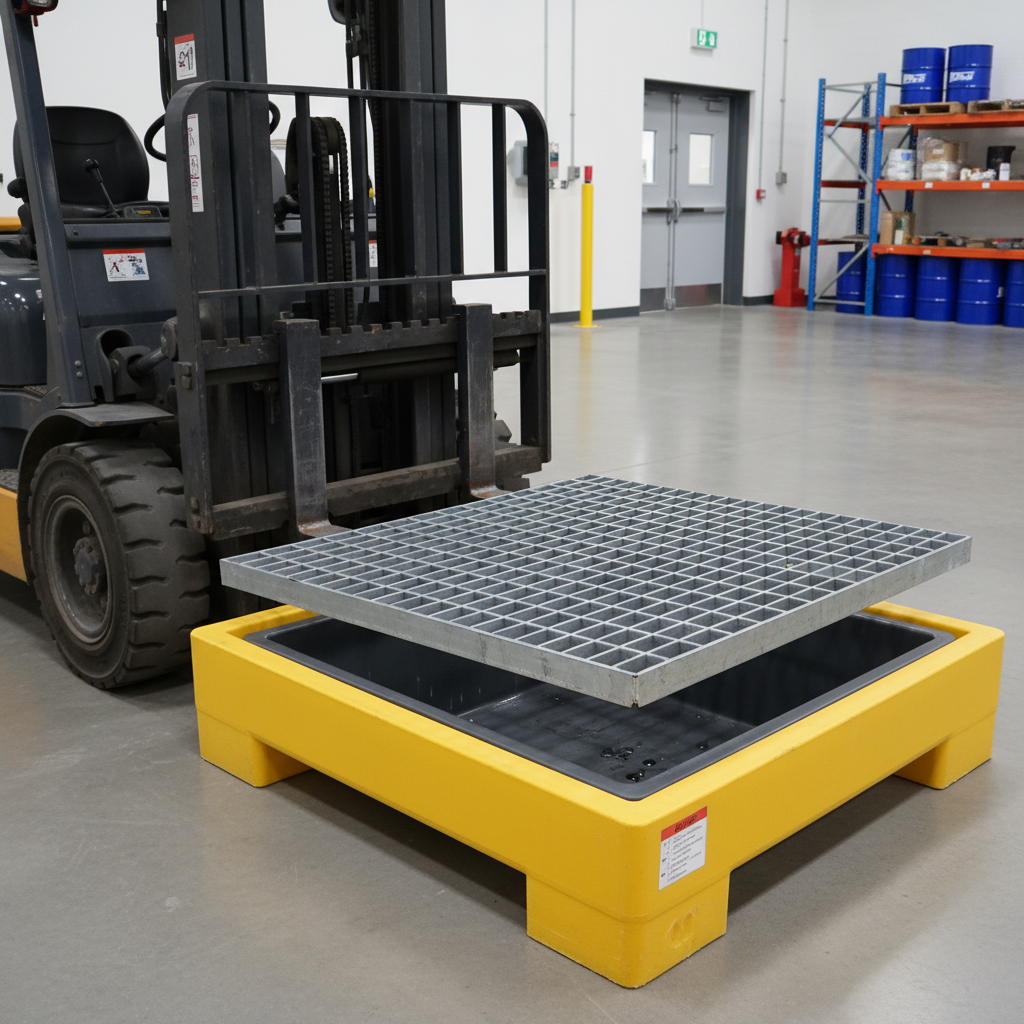
Removable steel grating supports 4,000+ lb forklift loads and allows easy access for cleaning spilled materials. The grating lifts out completely, letting you pump or vacuum liquids from the sump without obstruction.
Fixed plastic grating costs 30-50% less than steel but limits load capacity to 2,500 lb maximum. Plastic grating works for hand-loaded drums but fails under forklift traffic or heavy IBC containers.
Expanded metal grating provides the best chemical resistance and drainage characteristics. The open design allows maximum liquid flow into the sump while supporting heavy loads. However, small parts and tools can fall through the openings.
Solid deck covers eliminate fall-through problems but require drain plugs for liquid removal. This design works well for small parts storage areas but complicates spill cleanup because you can’t see liquid levels in the sump.
Hinged grating sections offer compromise between access and support. Part of the grating stays fixed for structural support while access panels open for cleaning. This design costs 20-40% more but works well for mixed storage applications.
Grating selection impacts accessibility and chemical resistance based on your facility’s specific needs. Removable grating gives maximum cleaning access but adds handling steps during spill response. Fixed grating simplifies daily operations but can trap debris and complicate maintenance.
Frequently Asked Questions
Do spill pallets count as secondary containment under SPCC?
Spill containment pallets qualify as secondary containment under SPCC regulations if they meet the 110% capacity requirement. The pallet must hold the full contents of the largest container plus 10% additional volume for SPCC compliance. EPA accepts properly sized pallets as equivalent to berms or vaults for drum and IBC storage.
Can you use multiple 2-drum pallets instead of one 4-drum pallet?
Multiple 2-drum pallets work for SPCC compliance and often provide more flexibility for facility layout. However, 4-drum pallets typically cost 30-40% less per drum stored and require less floor space per gallon of storage. The choice depends on whether you need separate containment areas for different products or can group all drums together.
How often do spill containment pallets need to be replaced?
Polyethylene pallets typically last 3-5 years with outdoor exposure, while steel pallets can last 15-20 years with proper maintenance. UV exposure and chemical contact reduce polyethylene lifespan significantly. Steel pallets need rust prevention but maintain structural integrity much longer, making them more cost-effective for permanent installations.