
Spill response plan failures drove 67% of SPCC violation cases EPA reviewed. The fines start at $59,973 per day when your procedures fall short.
Key Takeaways:
- SPCC spill response plans must include a 24-hour notification chain with National Response Center contact (800-424-8802) documented
- Personnel responsibilities section must identify specific individuals by name and title for spill response roles
- Post-spill review procedures are mandatory within 30 days of any discharge event under SPCC regulations
What Must Your SPCC Spill Response Plan Actually Document?

Spill response plan documentation is the written procedures your facility follows when oil hits the ground. This means EPA expects specific elements in your plan, not generic boilerplate.
The core requirement lives in 40 CFR 112.7(a)(3). Your plan must document discharge reporting thresholds that trigger different response levels. A 5-gallon hydraulic leak gets different treatment than a 500-gallon tank rupture.
Your documentation must name exact quantities that escalate response procedures. Most facilities set internal thresholds at 1 gallon (immediate containment), 42 gallons (reportable discharge requiring National Response Center notification), and facility-specific volumes based on your largest tank.
EPA inspectors check three elements during reviews: notification procedures that specify who calls whom, containment procedures that match your storage configuration, and cleanup procedures that address your specific oil types. Generic language fails these reviews.
The plan must specify response procedures for different discharge scenarios. Loading/unloading spills need different procedures than tank failures. Your documentation should address the most likely spill scenarios at your facility based on your operations.
Adequate response procedures include step-by-step actions for the first 30 minutes after discovery. This covers immediate safety measures, initial containment steps, and notification triggers. EPA wants to see that whoever finds the spill knows exactly what to do next.
SPCC Personnel Responsibilities: Who Does What During a Spill?
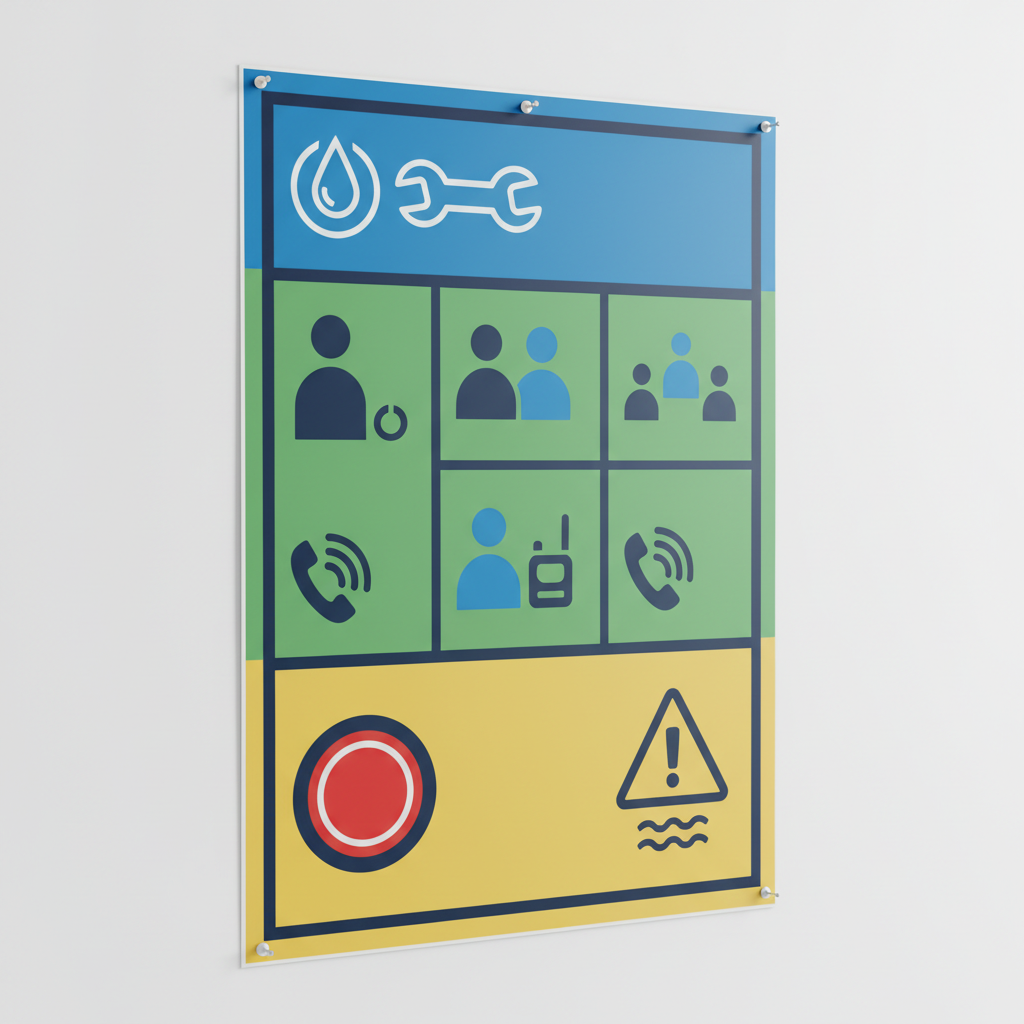
Personnel responsibilities sections assign specific spill response roles to named individuals at your facility. EPA requires more than job titles – you need names, contact methods, and backup assignments.
| Role | Primary Contact | Backup Contact | Key Responsibilities |
|---|---|---|---|
| Spill Coordinator | [Name], [Title], [Phone] | [Name], [Title], [Phone] | Direct overall response, make notification calls |
| First Responder | [Name], [Title], [Phone] | [Name], [Title], [Phone] | Initial containment, scene safety, equipment deployment |
| Cleanup Supervisor | [Name], [Title], [Phone] | [Name], [Title], [Phone] | Coordinate contractors, oversee recovery operations |
| Documentation Lead | [Name], [Title], [Phone] | [Name], [Title], [Phone] | Photo evidence, regulatory reporting, record keeping |
The spill coordinator role carries the most responsibility. This person makes notification decisions, coordinates contractor response, and serves as the primary EPA contact during investigations. Choose someone available 24/7 with authority to approve cleanup spending.
Backup personnel designation prevents response gaps when primary contacts are unavailable. Your plan must identify specific individuals, not generic titles like “shift supervisor.” Include home phone numbers and cell phones for after-hours contact.
Training documentation standards require annual updates. EPA expects records showing each person received spill response training appropriate to their assigned role. Generic safety training doesn’t satisfy this requirement – it must cover SPCC-specific procedures.
How Do You Build the Notification Chain EPA Actually Wants to See?
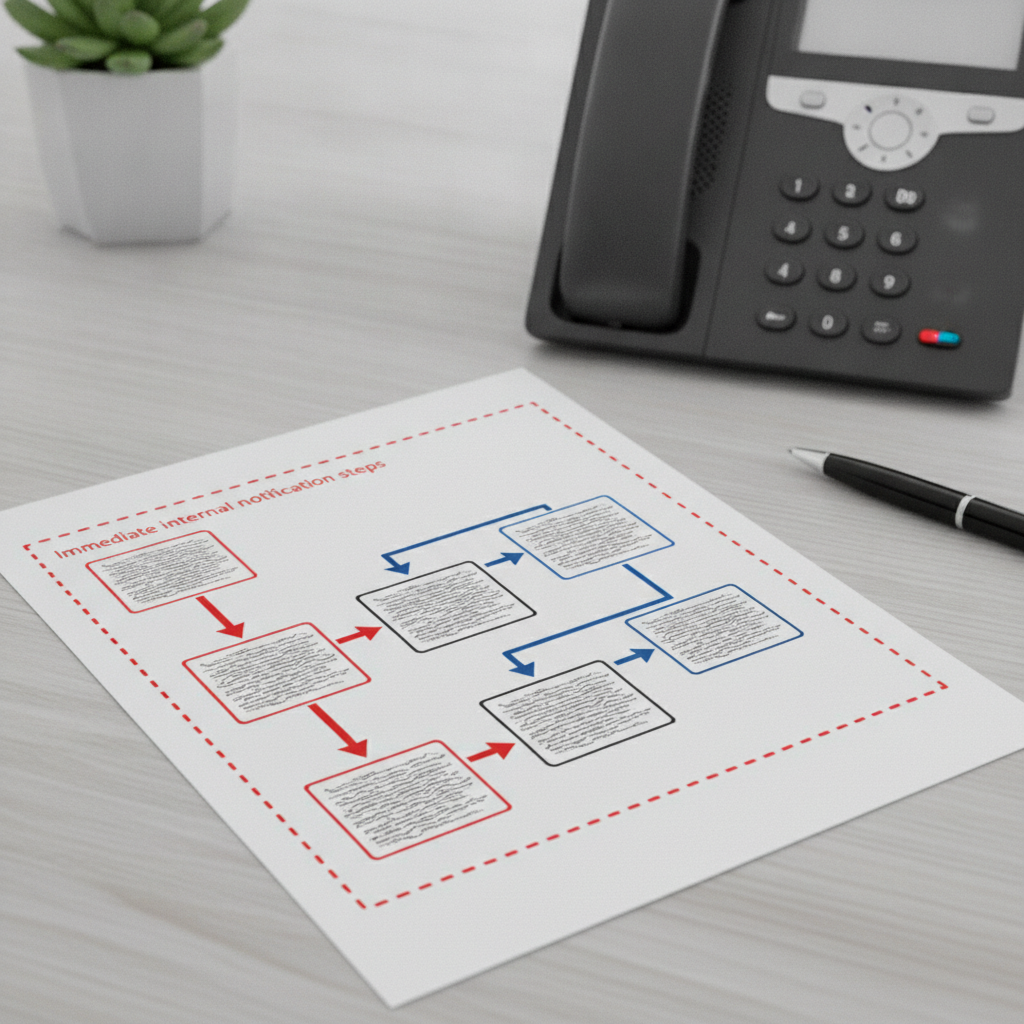
Emergency response notification chain procedures include National Response Center reporting as the first external notification. Here’s the sequence EPA expects:
Immediate internal notification – Spill coordinator contacted within 15 minutes of discovery, regardless of spill size or time of day.
National Response Center contact – Call 800-424-8802 within 24 hours for any discharge that reaches navigable waters or exceeds 42 gallons on land.
State environmental agency notification – Contact your state agency within timeframes specified in your state’s regulations, typically 2-24 hours.
Local emergency services coordination – Fire department and hazmat teams if spill creates safety hazards or requires specialized equipment.
Cleanup contractor mobilization – Approved contractors contacted immediately for spills exceeding your internal response capability.
Insurance carrier notification – Property and environmental coverage providers contacted within policy timeframes, usually 72 hours.
The National Response Center operates 24/7 at 800-424-8802. Have your EPA identification number, facility location coordinates, estimated spill volume, and oil type ready when you call. The operator will assign a case number you’ll need for all follow-up communications.
Timeline requirements vary by notification type. Internal notifications happen immediately, but external reporting follows the 24-hour rule for most situations. State agencies often have stricter deadlines – check your state’s specific requirements.
What Equipment List Requirements Apply to SPCC Response Plans?
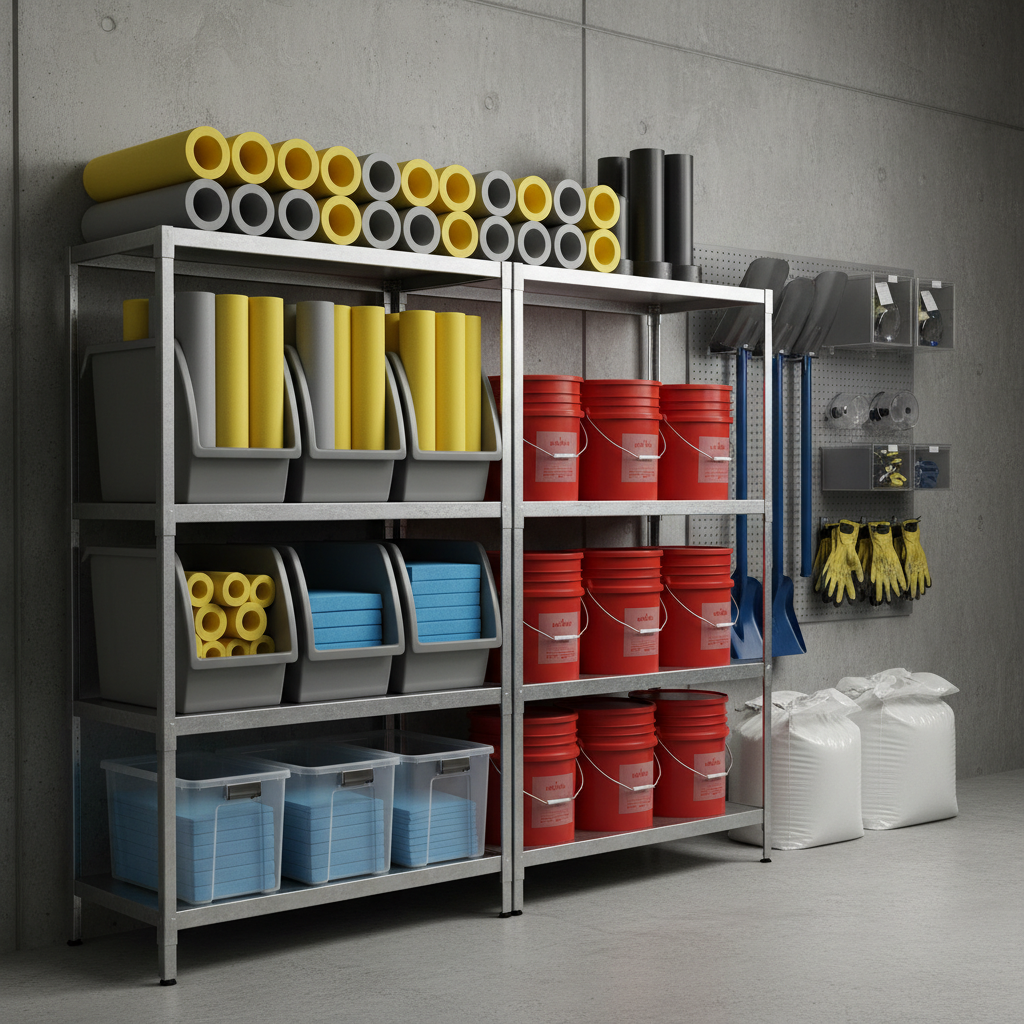
Spill response equipment lists must specify location and maintenance schedules for all response materials at your facility. EPA expects detailed inventories, not generic equipment categories.
Absorbent materials inventory – Minimum 50% of your largest tank capacity in absorbent pads, booms, and loose absorbent with specific storage building and shelf locations documented
Containment equipment specifications – Portable berms, sandbags, and temporary diking materials sized to contain your anticipated spill volumes with monthly inspection schedules
Recovery equipment details – Pumps, vacuum trucks, and transfer equipment with capacity ratings and maintenance records, including contractor-owned equipment under service agreements
Personal protective equipment requirements – Chemical-resistant suits, gloves, boots, and respiratory protection stored in designated response trailer or cabinet with annual replacement schedules
Communication and documentation tools – Waterproof cameras, two-way radios, sampling containers, and chain-of-custody forms stored in spill response kit with battery check schedules
Equipment capacity must match your facility’s spill scenarios. A facility with 10,000-gallon tanks needs different equipment than one with 55-gallon drums. Size your inventory to handle 10% of your largest single container as a planning baseline.
Contractor equipment agreements require documentation when your facility relies on third-party response services. Include response time commitments, equipment specifications, and 24/7 availability guarantees in your plan.
Monthly inspection schedules keep equipment ready for deployment. Check absorbent material condition, pump operability, and PPE integrity. Document these inspections – EPA reviews maintenance records during facility inspections.
How Do You Document Cleanup Procedures That Pass EPA Review?

Cleanup procedure documentation must address containment and recovery methods specific to your facility’s oil storage configuration. EPA wants procedures that match your actual operations, not generic cleanup language.
Containment procedures vary by spill location and size. Loading area spills require immediate drain coverage and absorbent deployment. Tank area spills need secondary containment evaluation and potential transfer operations. Document specific steps for each scenario your facility might face.
Recovery and disposal methods must specify approved disposal facilities and transportation requirements. Include disposal facility names, contact information, and waste acceptance criteria. EPA expects you to know where contaminated soil and used absorbents will go before the spill happens.
Environmental impact mitigation procedures address soil sampling, groundwater monitoring, and vegetation protection. Your plan should identify sampling points, specify testing parameters, and name the laboratory you’ll use for analysis.
Contractor coordination procedures become critical for spills exceeding your internal response capability. Document contractor selection criteria, response time expectations, and equipment specifications. Include backup contractors – your primary choice might be handling another emergency.
Cleanup procedures must address different spill volumes based on facility storage capacity ranges. Facilities with tanks over 5,000 gallons need procedures for major releases that could exceed 1,000 gallons. Smaller facilities focus on complete containment and recovery procedures.
What Post-Spill Review Requirements Must Your Plan Include?

Post-spill review requirements mandate plan update evaluation within 30 days of any discharge event. This isn’t optional – EPA expects documented analysis of response effectiveness and plan improvements.
The review must evaluate notification timing, personnel performance, equipment adequacy, and cleanup effectiveness. Document what worked, what failed, and why. EPA uses these reviews to assess facility commitment to spill prevention and response improvement.
Plan effectiveness evaluation criteria should address response time targets, containment success rates, and notification compliance. Set measurable standards so post-spill reviews produce actionable findings rather than subjective opinions.
Documentation requirements for lessons learned include written findings, recommended plan changes, and implementation timelines. EPA expects to see continuous improvement in your spill response capabilities based on actual experience.
Plan amendment triggers from review findings require formal plan updates when reviews identify deficiencies. Personnel changes, equipment failures, or procedure gaps must result in documented plan revisions within the required timeframes.
Frequently Asked Questions
Do I need different spill response procedures for different types of oil at my facility?
No, SPCC regulations require one comprehensive spill response plan that covers all oil types at your facility. The plan must address different spill scenarios but can use unified procedures for notification and response.
Can I use a template for my SPCC spill response procedures?
Yes, EPA provides template language for spill response procedures, but you must customize it with your facility-specific personnel, equipment, and contact information. Generic templates without site-specific details fail EPA compliance reviews.
What happens if my designated spill coordinator leaves the company?
You must update your SPCC plan within 6 months to reflect personnel changes in spill response roles. The plan should also designate backup personnel to avoid gaps in spill response capability.