SPCC Spill Response Plans: What Your Plan Must Include and Why

Emergency responders in gear managing oil spill with booms and absorbents.

Spill response plan failures drove 67% of SPCC violation cases EPA reviewed. The fines start at $59,973 per day when your procedures fall short. Key Takeaways: SPCC spill response plans must include a 24-hour notification chain with National Response Center contact (800-424-8802) documented Personnel responsibilities section must identify specific individuals by name and title for … Read more


Secondary Containment for Transformers: What Utilities and Facilities Must Do

Transformer with containment system under dramatic lighting and fog.

Transformer oil secondary containment SPCC compliance catches most utilities and industrial facilities off guard. Most don’t realize their transformers count as oil storage under SPCC regulations until they get hit with a violation notice. Key Takeaways: Transformers containing 55+ gallons of oil count toward SPCC thresholds under 40 CFR 112.7 The impracticability alternative allows inspection … Read more

Secondary Containment for 55-Gallon Drums: Options, Sizing, and Products

55-gallon drums on a containment pallet with dramatic lighting and fog.

Secondary containment for 55-gallon drums gets overlooked because facilities focus on price instead of actual sump capacity requirements. Most drum storage setups fail SPCC inspections not because they lack containment, but because the containment holds 55 gallons when regulations demand 66. Key Takeaways: 55-gallon drums require 66-gallon minimum sump capacity per 40 CFR Part 112.7 … Read more

IBC Spill Containment Pallets: What to Buy for Totes and Intermediate Bulk Containers

IBC tote on a spill containment pallet in dramatic lighting and fog.

IBC spill containment pallet solutions handle the unique footprint and capacity demands of intermediate bulk containers that standard drum containment can’t accommodate. Standard drum pallets can’t handle the 48 x 40-inch footprint of intermediate bulk containers, which is why IBC-specific containment pallets exist as the only SPCC-compliant option for tote storage. Key Takeaways: 275-gallon IBC … Read more

Spill Containment Berms: Types, Sizing, and SPCC Compliance

Vehicle maintenance area with foam-wall berms and dramatic lighting.

Spill containment berms protect your facility from EPA violations that average $50,000 per incident. Choose wrong and a simple hydraulic leak becomes a regulatory nightmare. Key Takeaways: Foam-wall berms work for 95% of vehicle maintenance applications under 1,000 gallons Drive-through berms cost 40-60% more than standard foam walls but eliminate forklift positioning issues SPCC compliance … Read more

Spill Containment Pallets: Complete Buyer’s Guide for SPCC Compliance

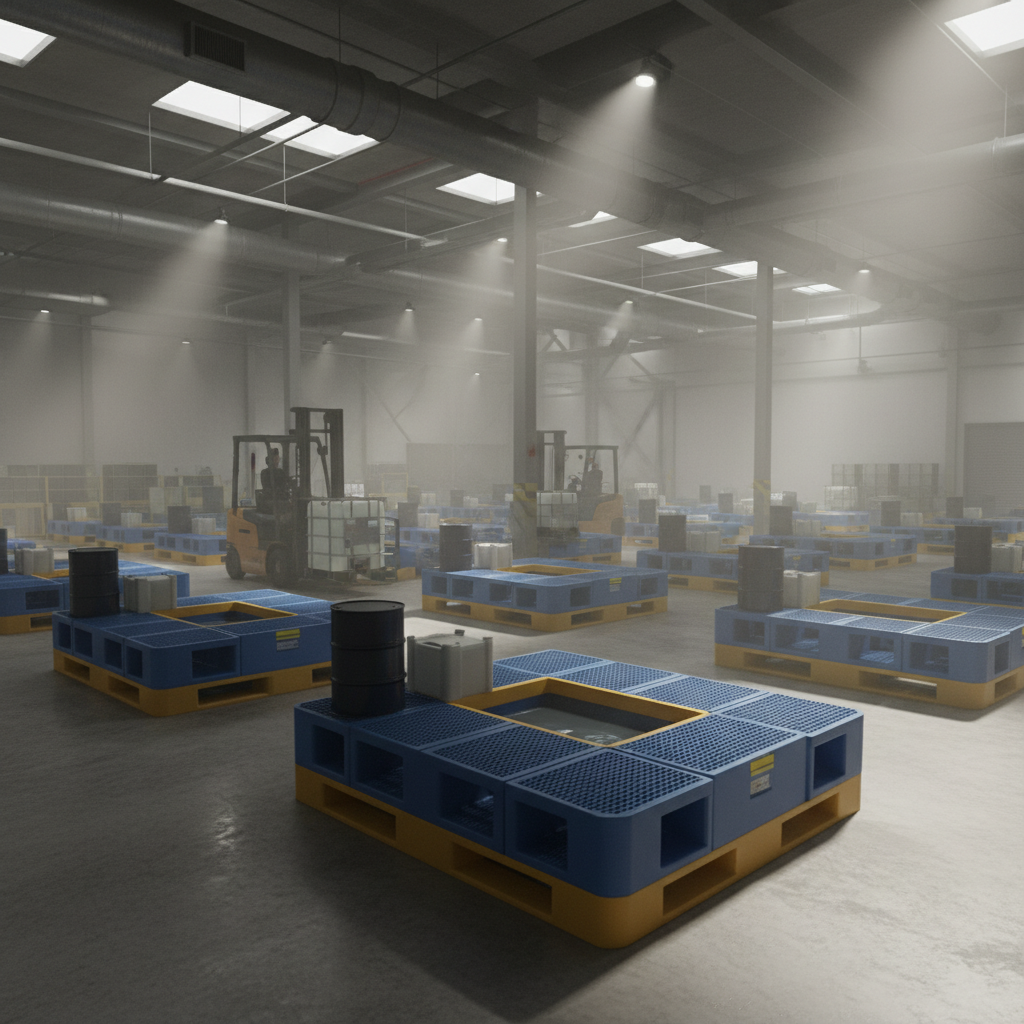
Industrial spill containment pallets in a warehouse, dramatic lighting and fog.

Spill containment pallet failures happen when facilities ignore the 110% sump capacity rule for each storage area. Most buyers focus on price over compliance requirements and end up with pallets that can’t hold the required volume. Key Takeaways: 4-drum pallets require 66-gallon sump capacity minimum for SPCC compliance with 55-gallon drums Polyethylene pallets cost 40-60% … Read more

Spill Containment Pallets vs Containment Berms: Which Is Right for Your Facility?

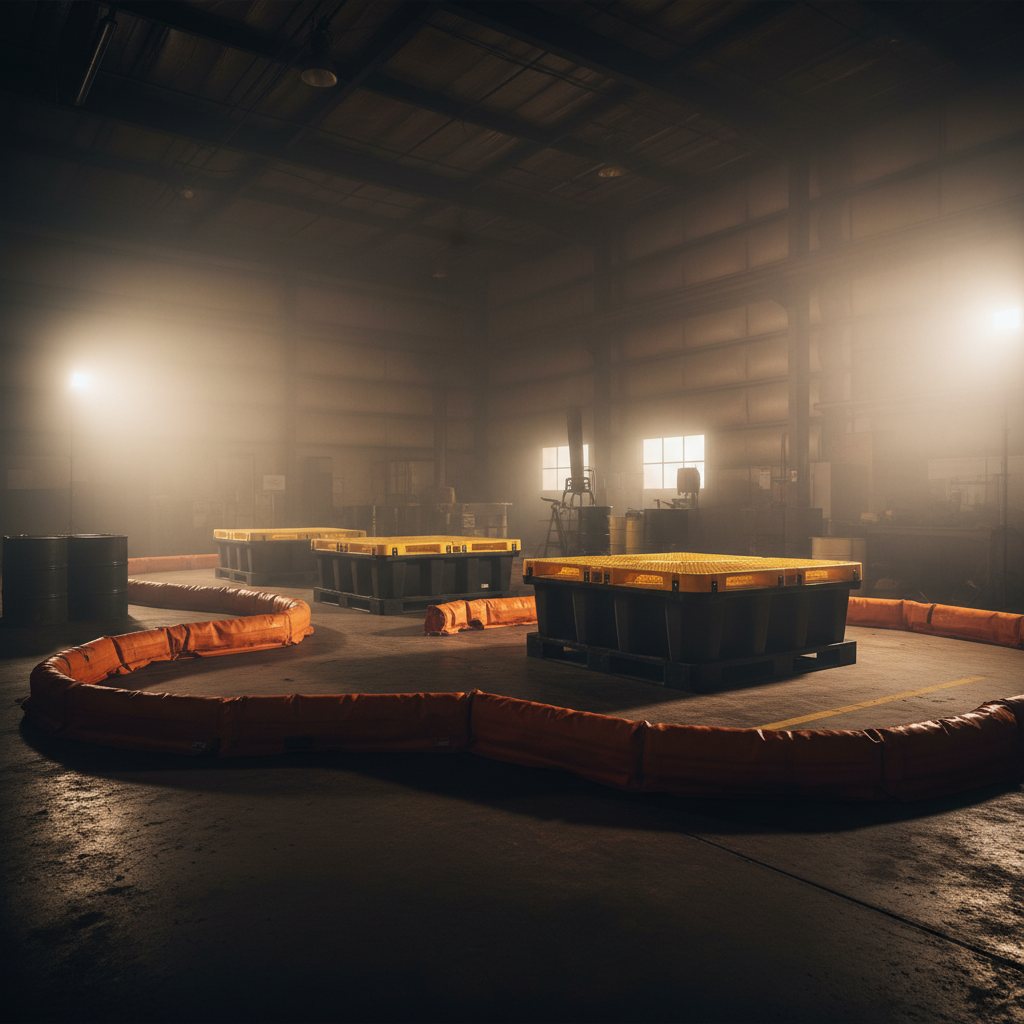
Warehouse with spill containment pallets and containment berms, dramatic lighting.

Spill pallet vs containment berm SPCC decisions affect your compliance status and violation risk. Choose wrong and face $59,973 daily penalties. Choose right and handle everything from 55-gallon drums to 50,000-gallon tank batteries with proper secondary containment. Key Takeaways: Spill pallets handle drum and IBC storage up to 350 gallons per unit, while berms accommodate … Read more

Double-Wall vs Single-Wall Aboveground Tanks: SPCC Compliance Implications

Double-wall storage tank with outer shell and fog in a facility.

Double wall aboveground storage tank SPCC compliance promises to eliminate expensive berms and containment pads, but EPA rules don’t automatically accept double-wall construction as secondary containment. Tank design alone won’t satisfy federal requirements. Key Takeaways: Double-wall ASTs must have UL 142 listing with continuous interstitial monitoring to qualify as SPCC secondary containment Single-wall tanks require … Read more

Aboveground Storage Tank Maintenance Schedule: Daily, Monthly, Annual Tasks

An operator inspects a large storage tank with dramatic lighting and fog.

Aboveground storage tank maintenance schedules prevent costly violations when facility managers waste thousands on reactive repairs. Structured preventive programs cost 40% less than emergency fixes. Key Takeaways: Daily visual inspections catch 85% of tank problems before they become regulatory violations or expensive repairs Monthly leak detection testing reduces catastrophic spill risk by 72% and ensures … Read more