
IBC spill containment pallet solutions handle the unique footprint and capacity demands of intermediate bulk containers that standard drum containment can’t accommodate. Standard drum pallets can’t handle the 48 x 40-inch footprint of intermediate bulk containers, which is why IBC-specific containment pallets exist as the only SPCC-compliant option for tote storage.
Key Takeaways:
- 275-gallon IBC totes require 330+ gallon sump capacity for SPCC compliance, standard drum pallets only hold 66 gallons
- IBC containment pallets cost $800-2,400 each but prevent $50,000+ in spill cleanup and EPA fines
- Double IBC containment systems need 660+ gallon sump capacity to meet the largest single container rule
Why Standard Drum Pallets Don’t Work for IBC Totes
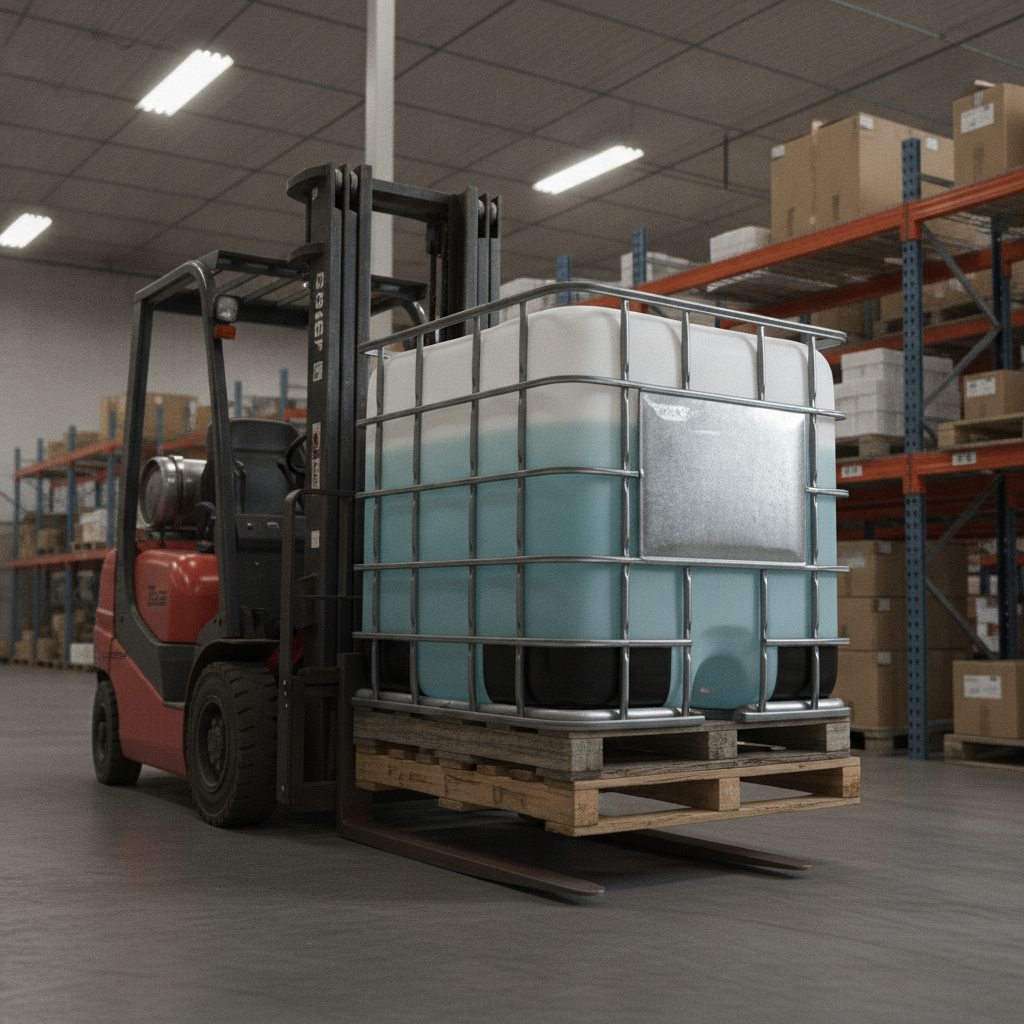
Drum and IBC containment solutions are not interchangeable equipment. A drum pallet is designed for 55-gallon drums with a 51 x 26-inch platform. This means your 275-gallon IBC tote won’t fit properly on the platform, creating stability risks during forklift operations.
The weight difference creates structural problems. A loaded 275-gallon IBC weighs 2,500 pounds compared to 460 pounds for a standard drum. Most drum pallets are rated for 1,000-1,500 pounds maximum. Your tote will exceed the weight capacity before you finish filling it.
Sump volume is the compliance killer. Standard drum pallets hold maximum 66 gallons in their containment basin. Your 275-gallon IBC requires 330+ gallon sump capacity under SPCC rules. The math doesn’t work, 66 gallons can’t contain a 275-gallon spill.
Secondary containment failures happen when facilities try to save money with wrong equipment. EPA inspectors know the difference between proper IBC containment and makeshift solutions. The violation citations reference specific containment volume shortfalls, not effort or intent.
IBC Containment Pallet Sizing: 275 vs 330 Gallon Totes
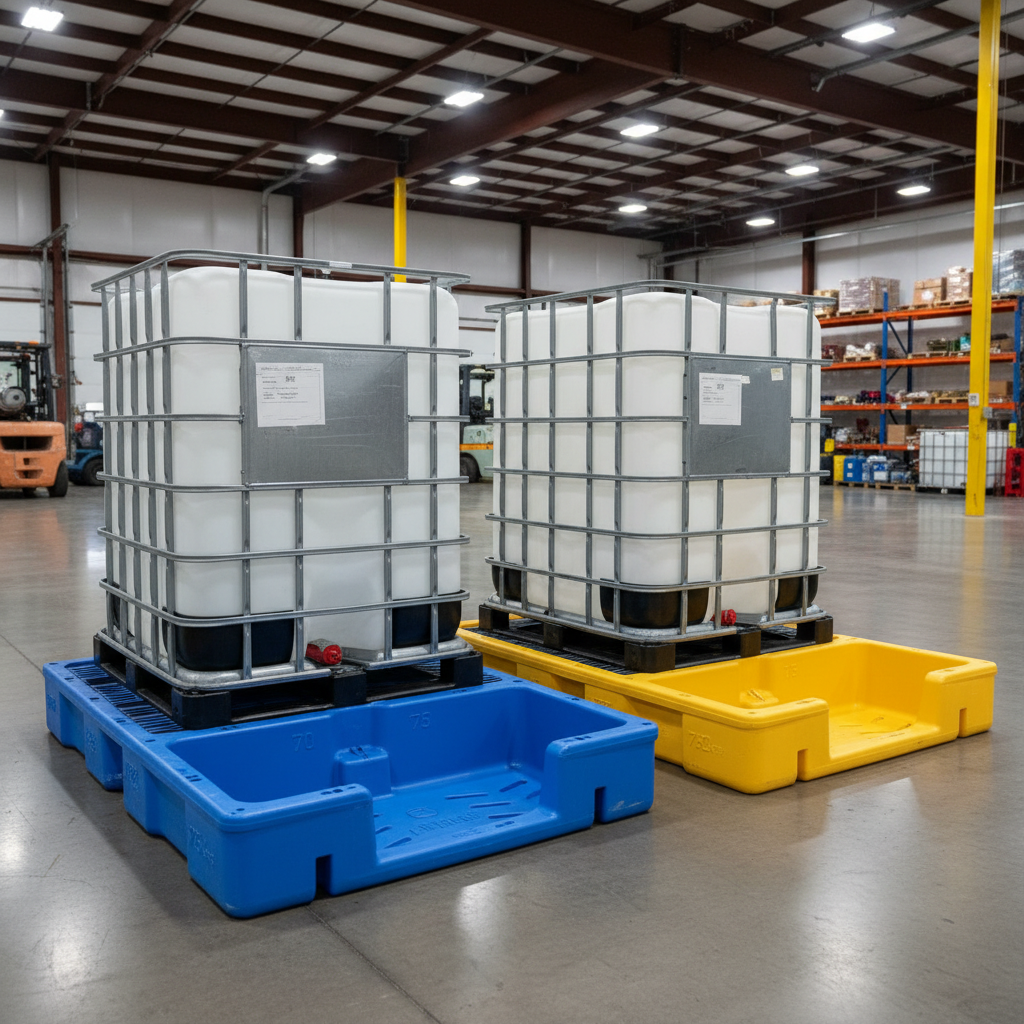
IBC containment sizing depends on tote capacity and SPCC requirements that vary by container size. Most facilities store either 275-gallon or 330-gallon capacity totes, which need different sump volumes.
| Tote Capacity | Required Sump Volume | Platform Size | Weight Capacity | Price Range |
|---|---|---|---|---|
| 275 gallons | 330+ gallons | 50 x 50 inches | 4,400 lbs | $800-1,200 |
| 330 gallons | 400+ gallons | 52 x 52 inches | 5,000 lbs | $1,000-1,600 |
| Dual 275s | 660+ gallons | 100 x 50 inches | 8,800 lbs | $2,000-2,800 |
| Dual 330s | 800+ gallons | 104 x 52 inches | 10,000 lbs | $2,400-3,200 |
Precipitation freeboard adds to your sump requirements. SPCC regulations require space for the 25-year, 24-hour storm event in your location. Phoenix facilities need 2.1 inches of additional freeboard. Miami facilities need 8.9 inches. This precipitation volume reduces your effective sump capacity.
Regional rainfall considerations change your pallet selection. High-rainfall areas need larger sump volumes or active pumping systems to maintain compliance. The same 275-gallon IBC needs a 330-gallon sump in Arizona but a 365-gallon sump in Louisiana.
What Sump Capacity Do You Actually Need for SPCC Compliance?
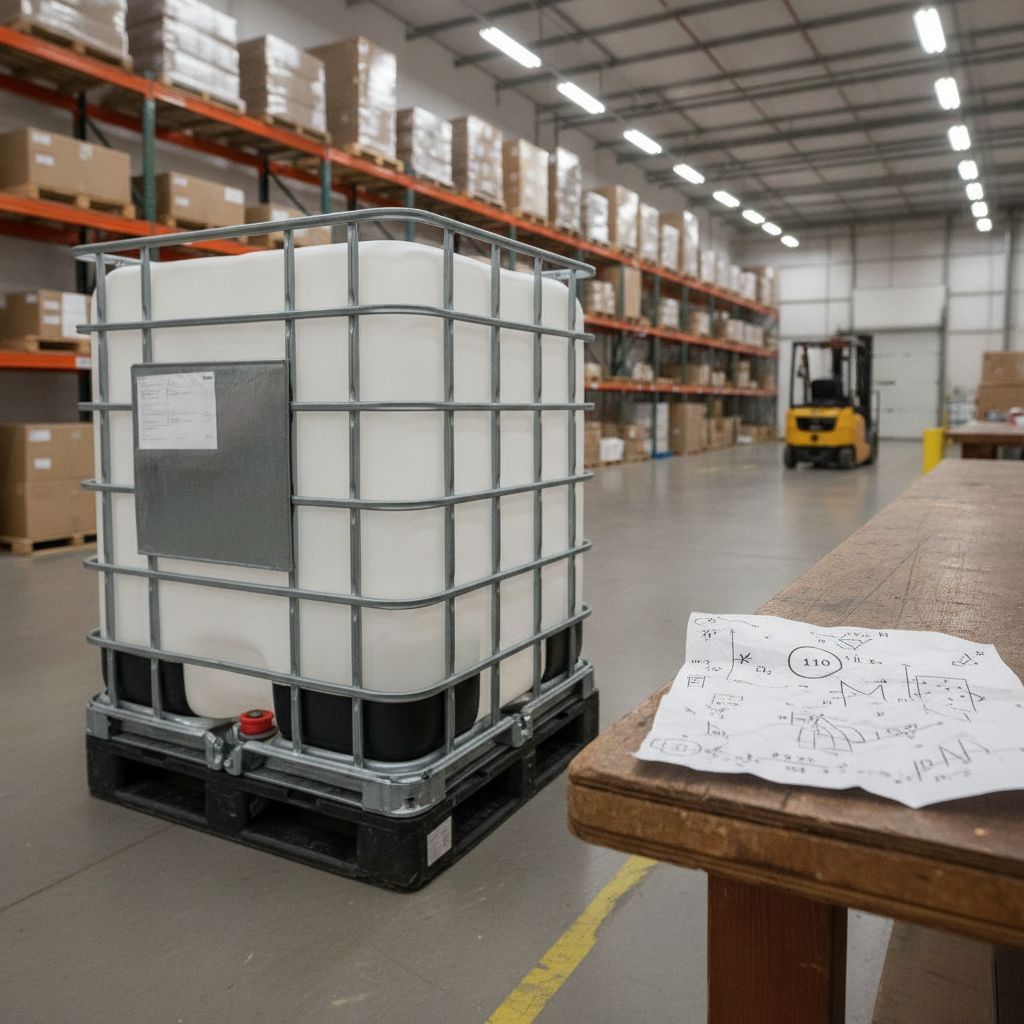
SPCC compliance requires 110% plus precipitation calculations for every IBC containment installation. The calculation protects against both container failures and storm events.
Calculate 110% of your largest container capacity. A 275-gallon IBC needs 302.5 gallons minimum containment.
Add precipitation freeboard for your location’s 25-year, 24-hour storm. Check NOAA precipitation frequency data for your zip code.
Subtract tank displacement if multiple containers share the same containment area. Each IBC displaces approximately 8 cubic feet of sump space.
Add 10% safety margin for practical operations. Inspectors expect containment systems to handle real-world conditions, not theoretical minimums.
Size up to the next available pallet capacity. You can’t buy a 347-gallon sump, you need a 400-gallon model.
Multiple IBC calculations use the largest single container rule. Two 275-gallon IBCs need containment for 275 gallons (not 550). However, you still add precipitation and displacement for both containers. The total typically requires 660+ gallon sump capacity.
Tank displacement considerations reduce your effective volume. Each IBC takes up space in the containment area, leaving less room for spilled liquid. Calculate displacement as container footprint times height of potential liquid level.
IBC Containment Stations vs Single Pallets: Which Do You Need?
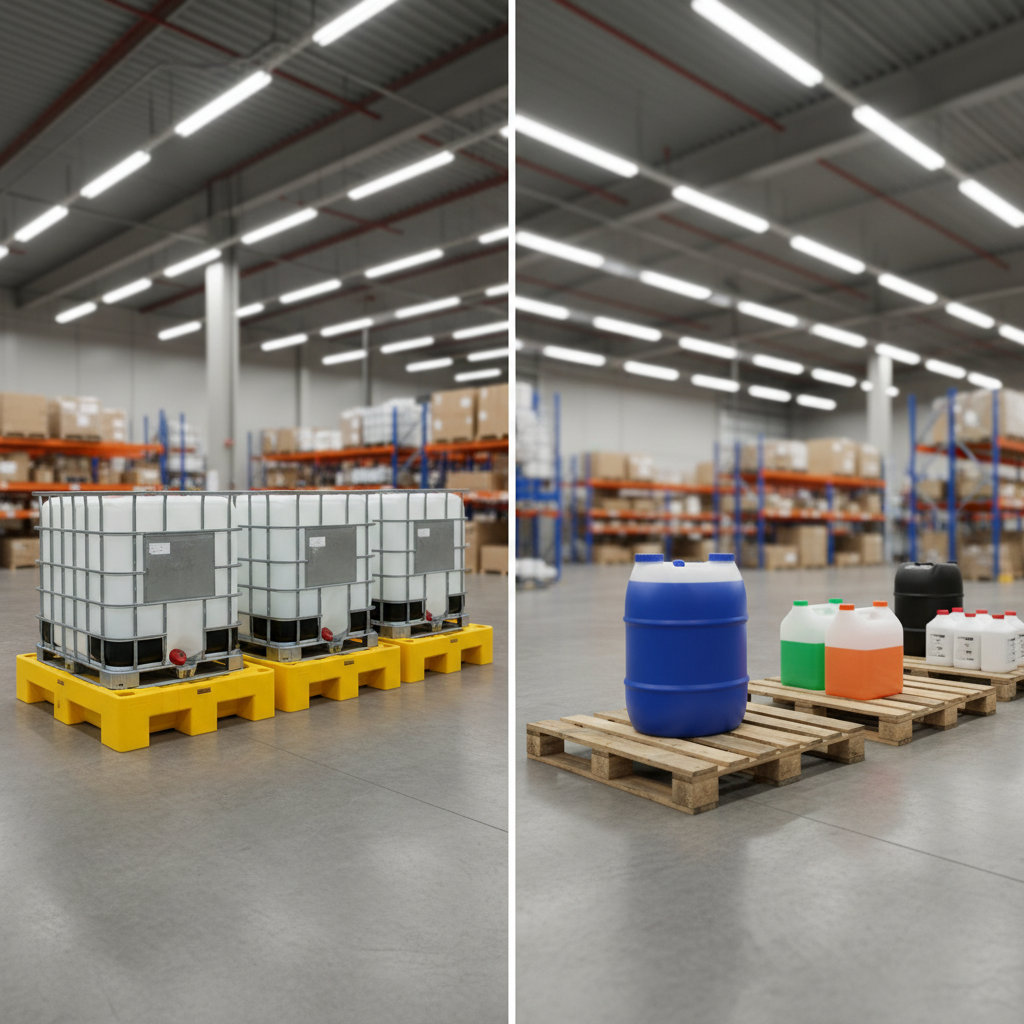
IBC containment stations handle multiple tote configurations while single pallets serve dedicated storage positions. Your choice depends on operational flexibility and cost per tote.
| Feature | Single Pallet | Dual Station | Quad Station |
|---|---|---|---|
| Upfront cost | $800-1,200 | $2,000-2,800 | $4,500-8,000 |
| Cost per tote | $800-1,200 | $1,000-1,400 | $1,125-2,000 |
| Floor space | 25 sq ft | 42 sq ft | 80 sq ft |
| Flexibility | None | Medium | High |
| Maintenance access | Easy | Moderate | Difficult |
Single pallet systems work for dedicated chemical storage with consistent inventory. You know exactly which product goes where, and you don’t need to move containers between positions. Maintenance access is simple because each pallet is independent.
Containment stations cost $2,400-8,000 but reduce per-tote cost from $1,200 to $600 for facilities with 4+ IBCs. The economics improve as you scale up. However, stations create operational constraints, you can’t easily relocate individual positions.
Space efficiency favors stations in cramped facilities. A quad station uses 80 square feet for four totes compared to 100 square feet for four separate pallets. The 20% space savings matters in expensive industrial real estate.
Scalability for growing operations leans toward modular single pallets. You can add containment capacity one unit at a time rather than committing to multi-bay stations before you need them.
IBC Pallet Material Guide: Polyethylene vs Steel Construction
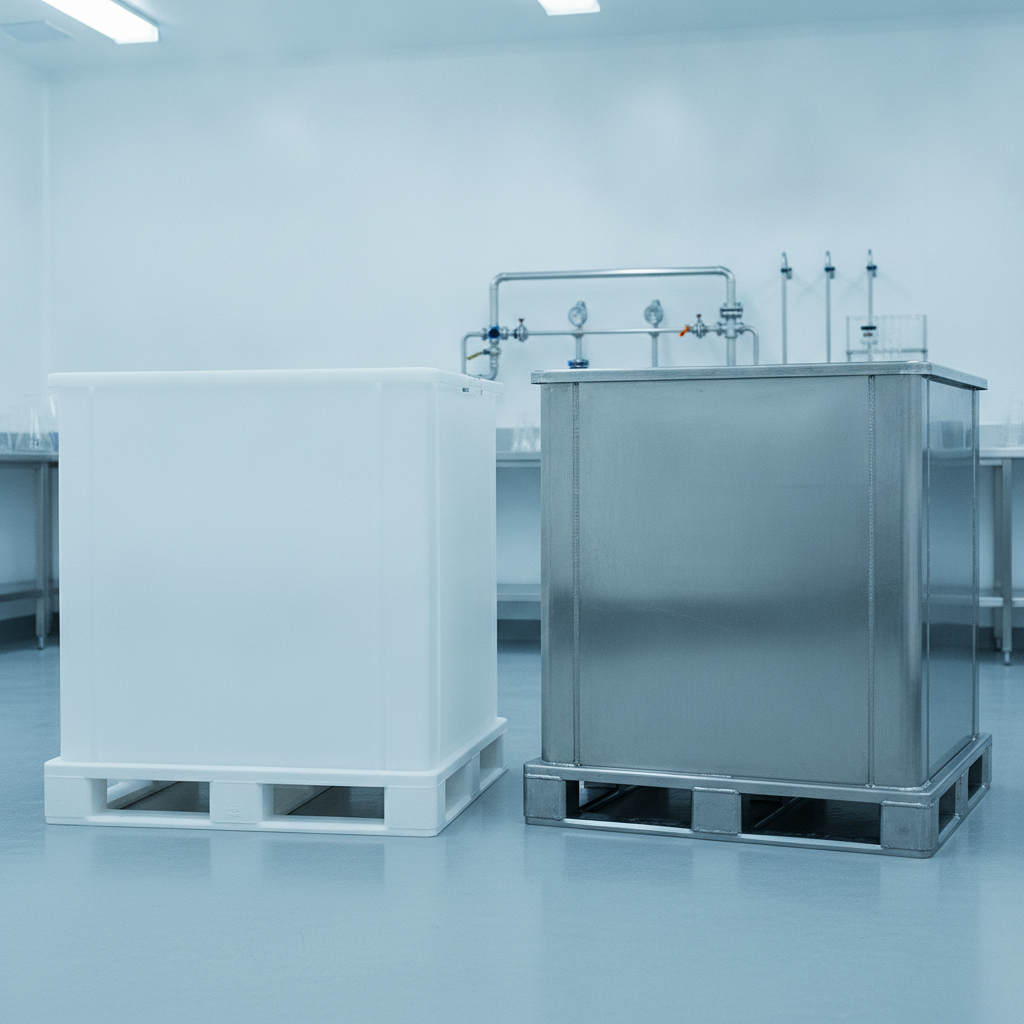
IBC pallet materials determine chemical compatibility and lifespan across different storage applications. Polyethylene and steel each handle specific operational requirements.
Polyethylene pallets resist acids, bases, and most solvents without corrosion. They won’t rust in outdoor storage or humid environments. However, polyethylene degrades under UV exposure and has a 4,400-pound weight limit.
Steel pallets handle 6,000+ pound loads and resist physical damage from forklift impacts. They work in high-temperature applications up to 180°F. However, steel requires powder coating or galvanization to prevent rust, especially with corrosive chemicals.
Chemical compatibility charts show polyethylene works with 90% of common industrial chemicals while steel has restrictions with acids and chlorinated compounds. Check your material safety data sheets before selecting pallet material.
Temperature range limitations affect outdoor storage. Polyethylene becomes brittle below -10°F and softens above 140°F. Steel maintains structural integrity from -40°F to 500°F but transfers temperature to stored containers.
Maintenance requirements differ significantly. Polyethylene needs UV protection and periodic replacement of degraded components. Steel requires annual coating inspection and rust treatment in corrosive environments.
Forklift handling considerations favor steel construction for heavy-duty operations. The rigid structure resists deflection under load, making positioning easier. Polyethylene pallets can flex during lifting, requiring slower handling speeds.
Frequently Asked Questions
Can I use a drum spill pallet for my 275 gallon IBC tote?
No, drum pallets can’t support IBC totes properly. Standard drum pallets measure 51×26 inches while IBC totes need 48×40 inch platforms with 330+ gallon sump capacity. Drum pallets only hold 66 gallons maximum.
How many IBC totes can fit on a single containment pallet?
Single IBC pallets hold one tote, while dual IBC stations accommodate two totes with 660+ gallon combined sump capacity. Quad IBC stations can hold four totes but require 1,100+ gallon sump capacity for SPCC compliance.
Do IBC containment pallets need special forklift handling?
Yes, loaded IBC pallets weigh 2,500-3,000 pounds and require forklifts rated for 5,000+ pounds. The pallet design includes forklift channels but operators need training on the higher center of gravity compared to standard pallets.