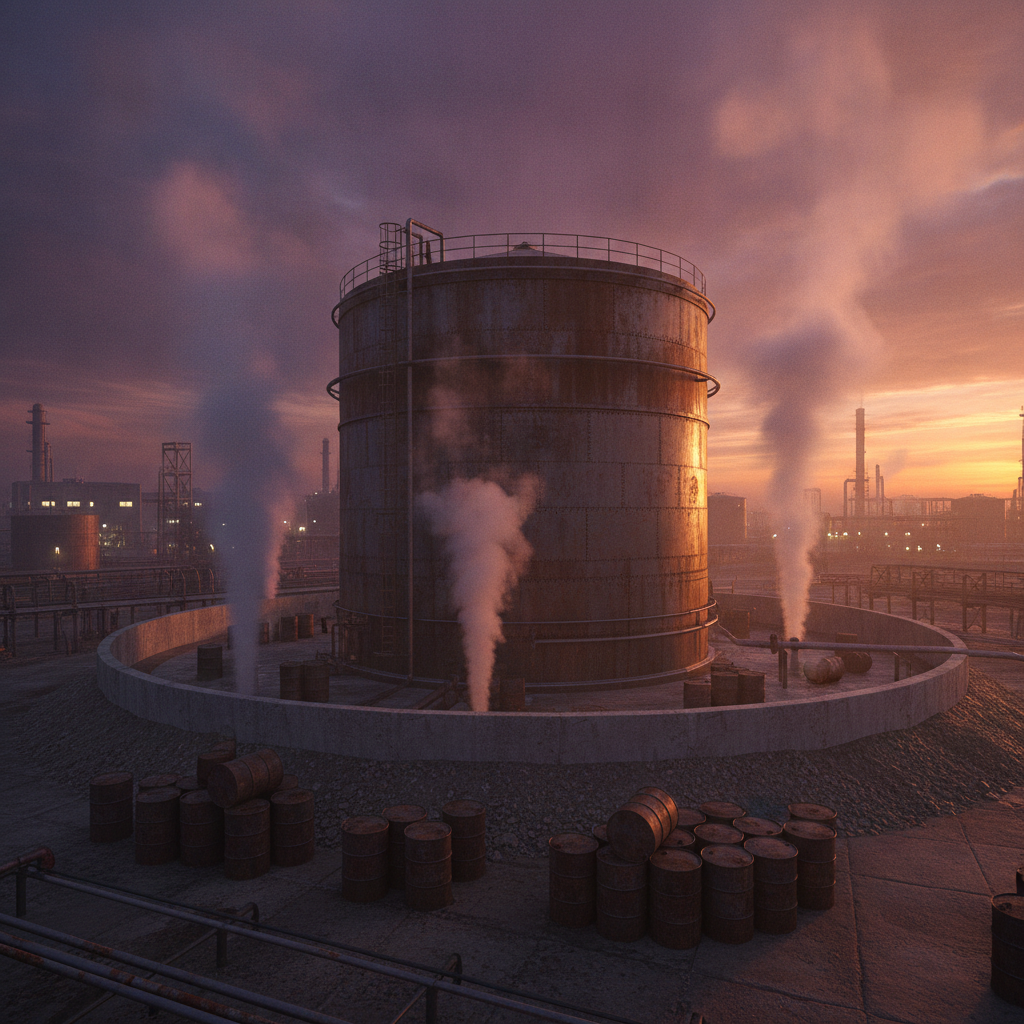
Secondary containment requirements SPCC violations now average $47,000 per incident according to EPA enforcement data, yet most facilities still guess at compliance requirements. This costs money and invites regulatory scrutiny.
Key Takeaways:
- EPA’s 110% rule requires containment volume equal to 110% of the largest single tank plus freeboard for the 25-year, 24-hour storm event
- OSHA secondary containment rules differ from EPA SPCC requirements in material specifications and inspection frequency
- Drain valves in secondary containment systems must remain normally closed per 40 CFR 112.8(c)(2) with specific opening procedures
What Is Secondary Containment Under SPCC Regulations?
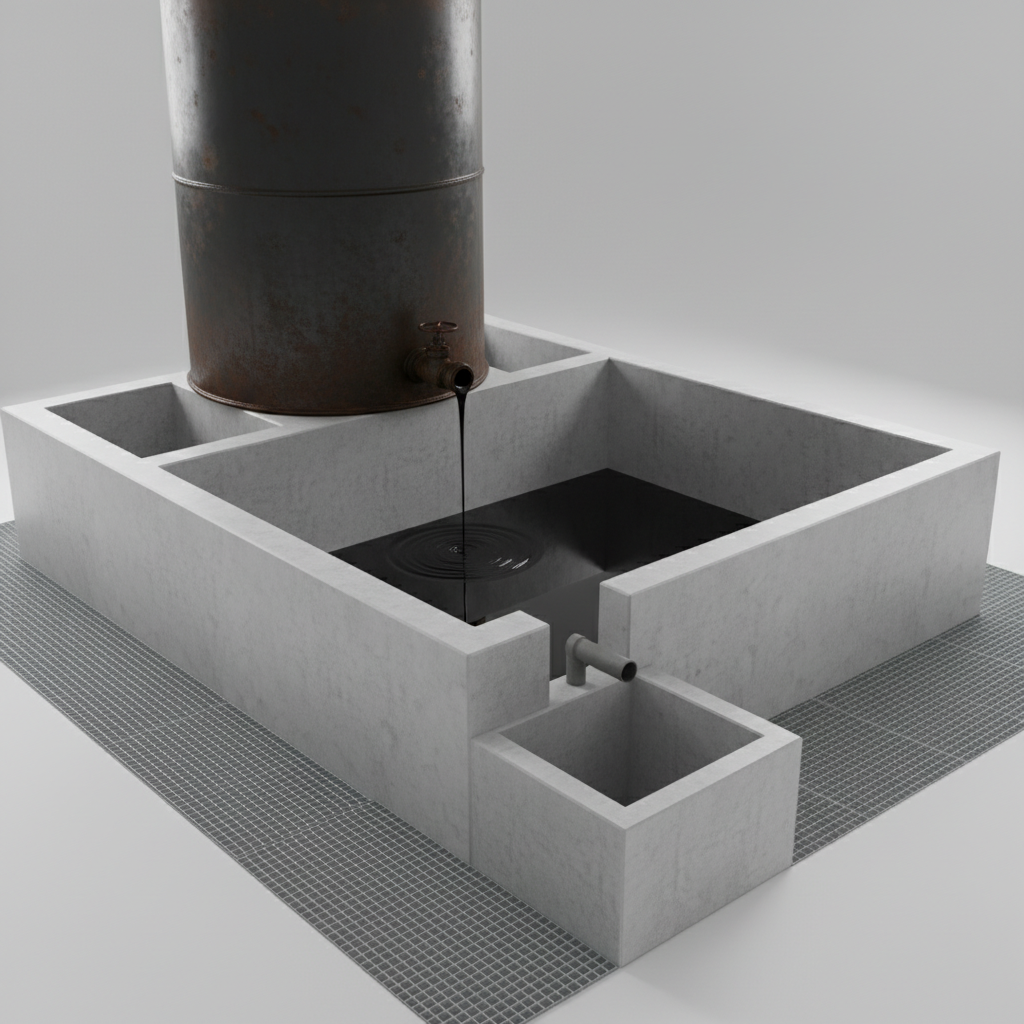
Secondary containment is a physical barrier system designed to prevent oil discharge to navigable waters when primary storage fails. This means every drop that leaks from your tank, pipe, or valve stays contained within an engineered boundary until you can clean it up.
Under 40 CFR Part 112, secondary containment applies to oil storage containers that have a reasonable potential for discharge to navigable waters. The regulation doesn’t care about your tank size if there’s a direct path for spilled oil to reach a storm drain, creek, or wetland. This threshold appears in 40 CFR 112.1(d) as the trigger for SPCC coverage regardless of total facility storage volume.
Secondary containment differs from spill control measures like absorbent pads or portable berms. Control measures respond to spills after they happen. Secondary containment prevents environmental discharge before it occurs. The EPA expects containment systems to function without human intervention during the critical first hours of a release.
Double-wall tank construction can substitute for secondary containment under specific conditions, but most facilities use external containment systems because they cost less and provide visual confirmation of primary tank integrity. When the space between tank walls isn’t accessible for inspection, you’re betting your compliance on hidden metal.
How Do You Calculate Secondary Containment Volume Requirements?
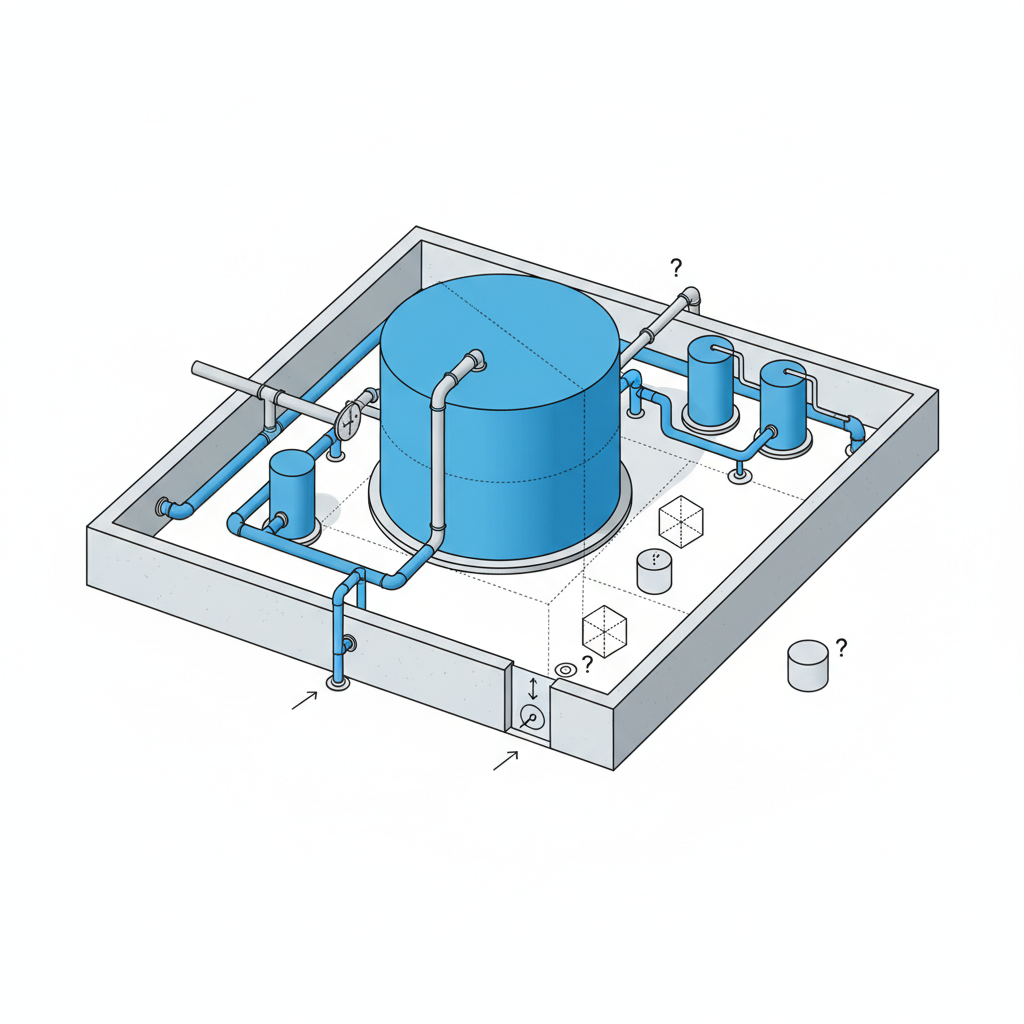
EPA’s 110% rule sets the minimum containment volume, but the actual calculation involves three components that most people miss.
Identify your largest single container volume. This includes the tank plus connected piping that would drain by gravity during a failure. Don’t add up all your tanks – the rule applies to the biggest individual unit.
Calculate 110% of that volume. If your largest tank holds 5,000 gallons, you need 5,500 gallons of containment volume minimum. This covers the entire contents plus a safety margin.
Add freeboard for the 25-year, 24-hour storm event. Check NOAA precipitation data for your location to find this number. In most areas, this adds 2-4 inches of additional containment depth.
Subtract displacement from other equipment. Pumps, piping, and other tanks within the containment area reduce available volume. Account for their footprint in your calculations.
Verify the math with actual containment dimensions. Length × width × height must equal or exceed your required volume. Don’t forget that berms and walls have thickness that reduces internal capacity.
The 25-year, 24-hour storm freeboard comes from NOAA Weather Service data specific to your facility location. This prevents containment overflow during normal weather events that coincide with equipment failures.
Multiple tank scenarios follow the same rule: size containment for the single largest tank, not the combined volume. If you have three 2,000-gallon tanks in one containment area, you need 2,200 gallons of capacity plus storm freeboard, not 6,600 gallons.
Secondary Containment Material and Construction Standards
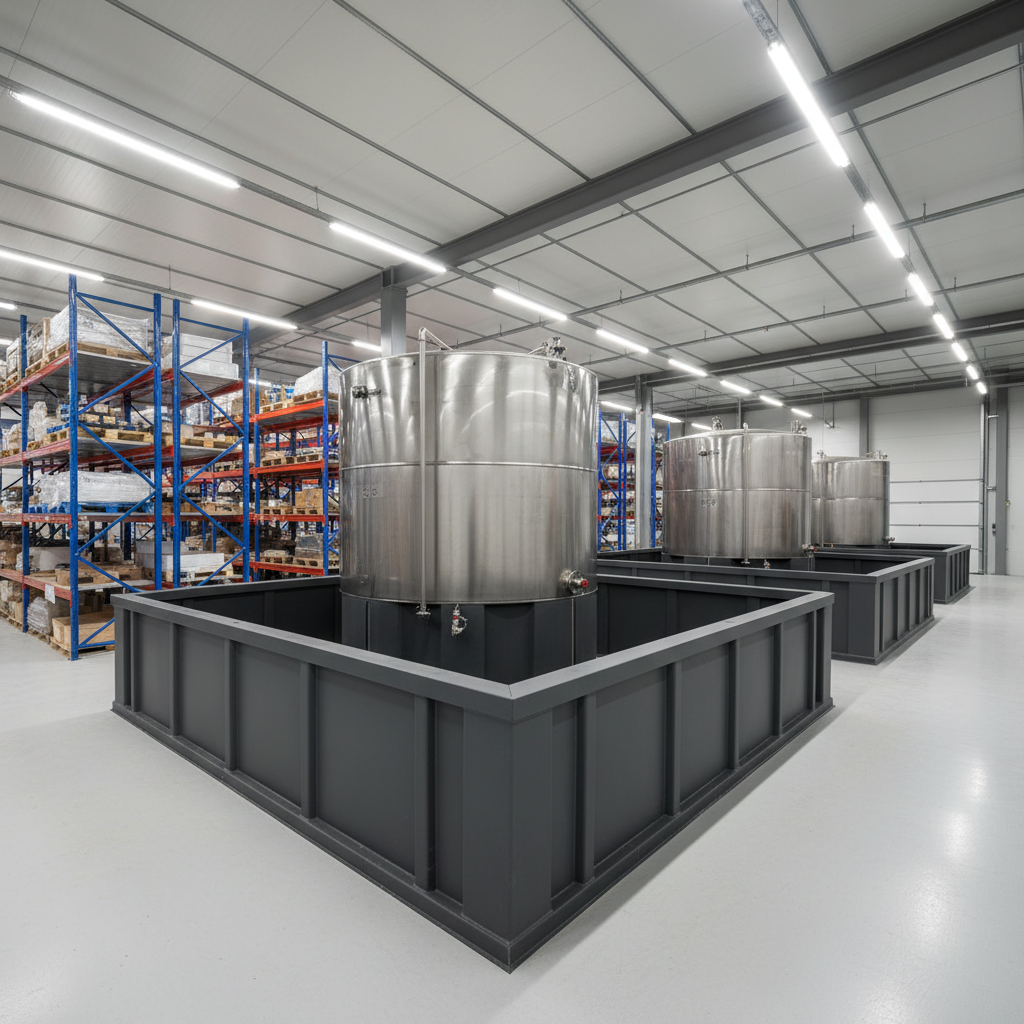
EPA mandates impervious materials that resist degradation from stored oil products. This means more than waterproof – your containment must maintain integrity when exposed to diesel, gasoline, or hydraulic oil for extended periods.
| Material Type | Permeability Standard | Typical Applications |
|---|---|---|
| Reinforced concrete | <1×10^-7 cm/sec | Permanent installations, large tank farms |
| Steel with coating | <1×10^-7 cm/sec | Prefab systems, equipment platforms |
| HDPE liner systems | <1×10^-7 cm/sec | Flexible berms, retrofit applications |
| Geomembrane composite | <1×10^-7 cm/sec | Large area containment, irregular shapes |
The permeability coefficient of 1×10^-7 cm/sec represents the EPA’s maximum acceptable seepage rate. Materials exceeding this threshold don’t qualify as impervious under 40 CFR 112.8.
Drain valves must remain normally closed per 40 CFR 112.8(c)(2). You can open them only during inspection, maintenance, or to remove accumulated precipitation. Each opening requires documentation of the reason, duration, and visual confirmation that no oil was present before valve operation.
Containment walls need sufficient height to contain the required volume plus freeboard. Most facilities underestimate the freeboard requirement because they calculate volume but forget that rain and snow add to the liquid level inside their containment.
Inspection access matters for long-term compliance. Design your containment system so personnel can visually examine all interior surfaces, drain points, and potential failure locations without special equipment. EPA inspectors expect to see proof that you can actually perform required maintenance.
What Secondary Containment Products Meet SPCC Standards?
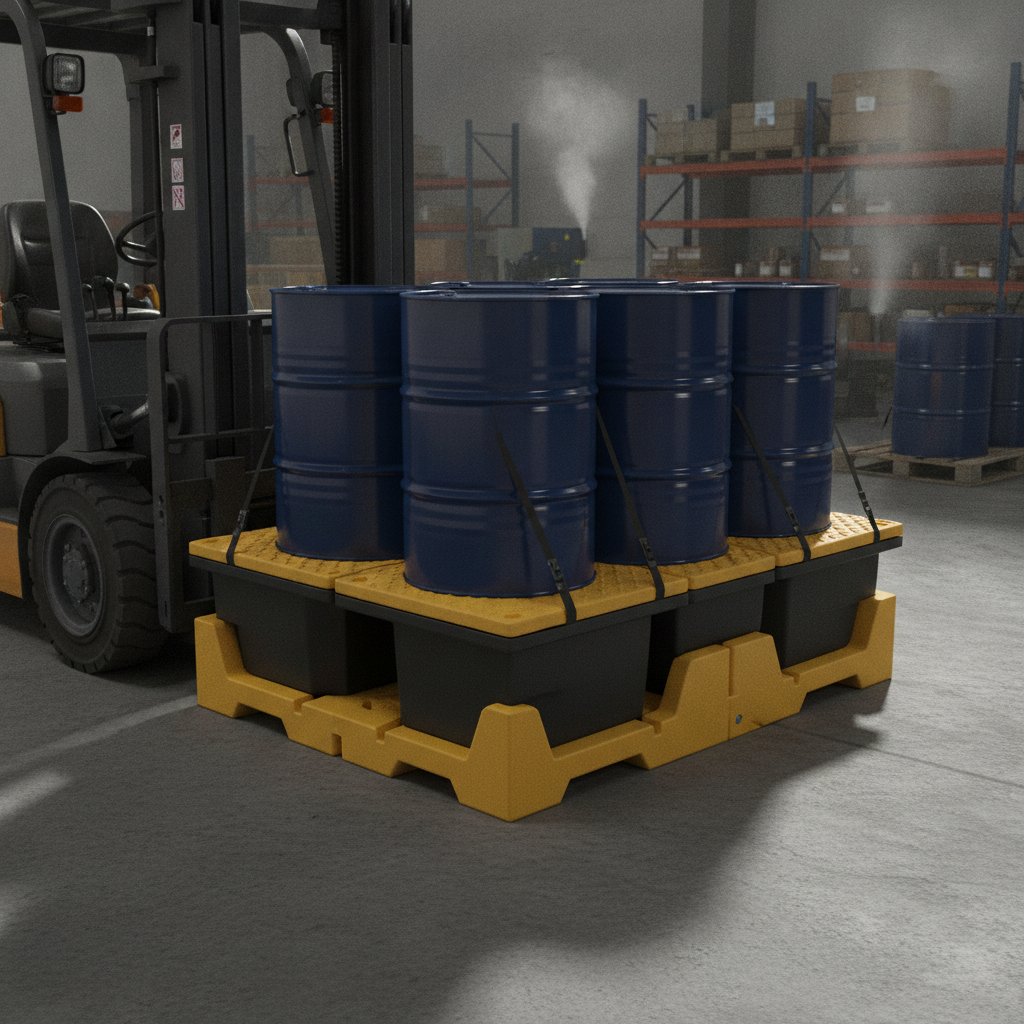
Spill containment pallets provide portable secondary containment for drums, totes, and small tanks. These systems work for facilities that need flexible storage arrangements or temporary compliance solutions.
Spill containment pallets handle 2-4 drums with integrated sump capacity. Most units provide 60-65 gallon containment volume, sufficient for standard 55-gallon drum applications under the 110% rule.
Containment berms create temporary or semi-permanent boundaries around storage areas. Available in collapsible models for emergency response or permanent installations for equipment laydown yards.
IBC containment stations accommodate intermediate bulk containers and large totes. These typically provide 350-gallon capacity minimum to meet containment requirements for standard 275-gallon IBC units.
Concrete containment systems offer permanent solutions for tank farms and fuel dispensing areas. These include formed-in-place walls, precast sections, and vault-style enclosures with integrated drainage.
Flexible containment systems use reinforced fabric or polymer materials for irregular areas or retrofit applications. These work when site constraints prevent rigid containment installation.
Steel containment platforms provide equipment mounting surfaces with integrated containment capacity. Popular for generator sets, pump stations, and equipment that requires both support and spill protection.
Each product category requires certification or documentation showing compliance with EPA imperviousness standards. Don’t assume any containment product meets SPCC requirements without verification of material specifications and testing data.
Maintenance requirements vary by product type. Steel systems need coating inspection and repair. Flexible systems require fabric integrity checks. Concrete requires crack monitoring and joint seal maintenance.
How Do OSHA and EPA Secondary Containment Rules Differ?
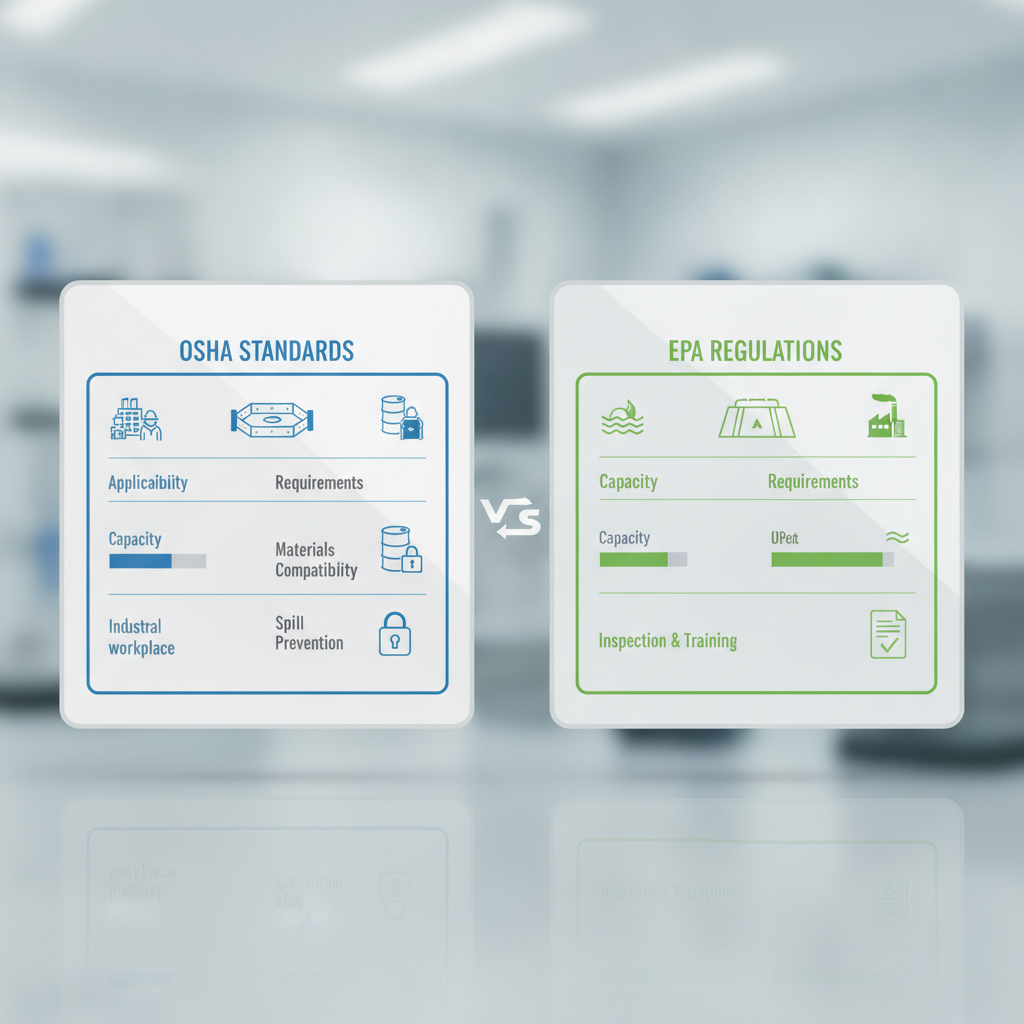
OSHA HazMat secondary containment requirements apply to flammable and combustible liquids regardless of SPCC coverage. This creates overlapping jurisdiction where facilities must satisfy both agencies.
| Requirement | EPA SPCC | OSHA HazMat |
|---|---|---|
| Regulatory authority | Oil discharge prevention | Workplace safety |
| Volume calculation | 110% of largest container | Varies by liquid class |
| Material standards | Impervious to stored oil | Compatible with stored liquid |
| Inspection frequency | Monthly integrity checks | Per facility safety program |
| Drain valve rules | Normally closed, documented opening | Based on liquid classification |
| Training requirements | SPCC plan familiarity | HazMat handling certification |
OSHA 29 CFR 1910.106 applies to flammable liquids regardless of SPCC coverage, creating situations where facilities need containment that meets both standards. The stricter requirement controls in cases of overlap.
Indoor storage under OSHA allows alternative containment methods including special drainage systems and curbing arrangements. EPA typically requires full containment for outdoor storage due to environmental discharge risk.
Employee training differs between agencies. OSHA mandates HazMat handling certification for workers who operate containment systems. EPA requires SPCC plan familiarity but doesn’t specify training credentials.
Enforcement coordination varies by region. Some EPA offices coordinate with OSHA during facility inspections. Others treat violations independently, leading to multiple citations for the same containment deficiency.
Material compatibility requirements may conflict between agencies. EPA focuses on oil resistance and imperviousness. OSHA emphasizes fire resistance and chemical compatibility with specific liquid classes.
What Inspection and Maintenance Requirements Apply to Secondary Containment?
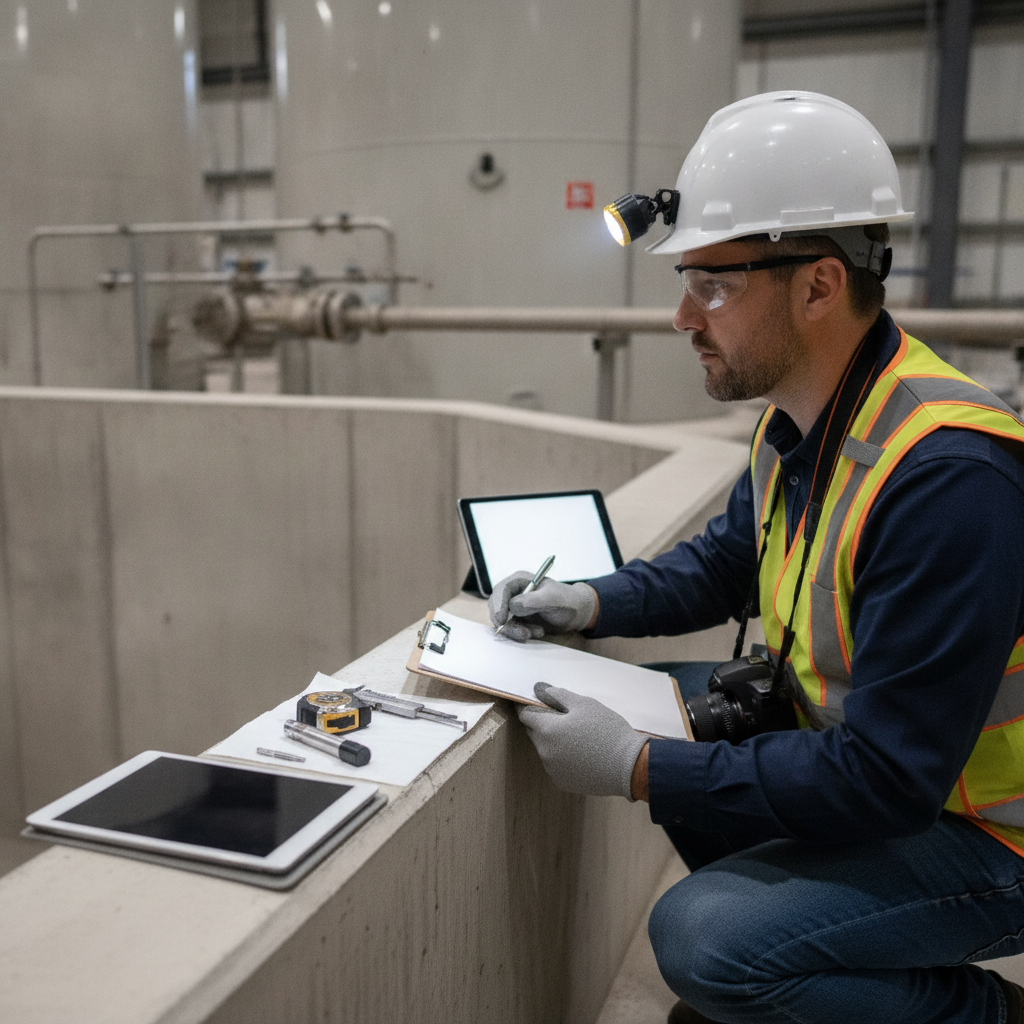
Containment inspection requirements mandate monthly integrity checks per 40 CFR 112.8(d)(3) with written documentation. These inspections verify that your containment system can perform its intended function when primary storage fails.
Monthly inspections must cover containment wall condition, drain valve position and operability, accumulated precipitation or debris, and visible signs of oil contamination. Document each inspection with date, inspector name, findings, and corrective actions taken.
Annual professional assessments require evaluation by qualified personnel familiar with containment system design and performance standards. This goes beyond visual inspection to include structural integrity evaluation and performance testing where applicable.
Repair timelines depend on deficiency severity. Immediate threats to containment integrity require emergency repairs or alternative protective measures. Non-critical maintenance items typically allow 60 days for completion, but your SPCC plan should specify exact timelines.
Documentation standards require three years of inspection records per 40 CFR 112.7. Include photographs of deficiencies, repair work orders, and material certifications for replacement components. EPA inspectors specifically look for inspection record gaps during facility audits.
Non-compliance consequences include daily penalties up to $59,973 per violation under current federal guidelines. Containment system failures during oil releases trigger additional liability under Clean Water Act Section 311.
Product compliance verification means confirming that replacement parts and repair materials meet the same standards as original construction. Don’t assume generic materials work – verify imperviousness and chemical resistance specifications.
Frequently Asked Questions
Do you need secondary containment for oil storage under 1,320 gallons?
Secondary containment requirements under SPCC apply regardless of total facility storage if individual containers exceed certain thresholds and have reasonable potential for discharge. Facilities under 1,320 gallons total don’t need SPCC plans but may still need containment under OSHA or state rules.
Can you use the 110 percent rule for multiple tanks in the same containment area?
Yes, but you must size for the largest single tank volume plus 10%, not the combined volume of all tanks. The 110% rule specifically requires containment equal to the largest individual container plus adequate freeboard for precipitation.
What happens if your secondary containment system fails during inspection?
Failed secondary containment constitutes an SPCC plan deficiency requiring immediate corrective action per 40 CFR 112.4. You must document the failure, implement temporary measures, and complete permanent repairs within the timeline specified in your SPCC plan.
Are there different secondary containment requirements for indoor versus outdoor storage?
Yes, indoor storage may use alternative containment methods like curbing or special drainage systems under certain conditions. Outdoor storage typically requires full secondary containment with precipitation management due to environmental exposure risks.