
SPCC containment volume calculation determines whether your facility faces compliance or catastrophic enforcement costs. Getting the sizing wrong triggers EPA violations, daily fines up to $59,973, and mandatory reconstruction that can exceed $50,000 for commercial operations.
Key Takeaways:
- The 110% rule requires containment volume equal to 110% of your largest tank plus 100% of all other tanks in the containment area
- Precipitation freeboard adds 6-24 inches of additional containment depth depending on your geographic location and rainfall data
- Tank displacement volume reduces your required containment by exactly the volume of tank shells sitting in the containment area
What Is the 110 Percent Rule for SPCC Containment Sizing?
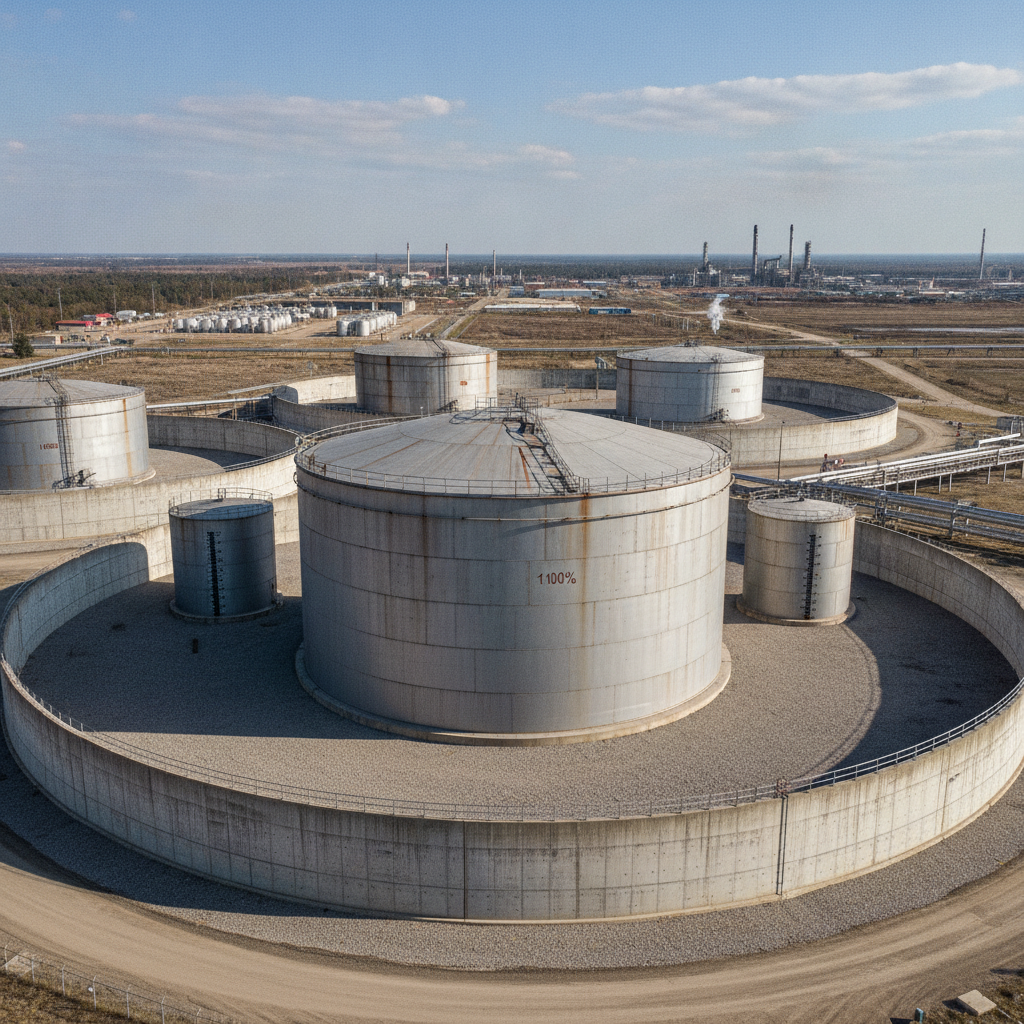
The 110% rule is the EPA’s mathematical formula requiring secondary containment volume equal to 110% of the largest tank plus 100% of all remaining tanks within the containment area. This means your containment must hold more oil than you actually store.
EPA established the 110% requirement instead of 100% because spills rarely happen when tanks are empty. The extra 10% accounts for thermal expansion, overfilling events, and simultaneous releases from multiple tanks during catastrophic failures. Without this buffer, a spill from a full tank would exceed containment capacity and reach navigable waters.
The regulation appears in 40 CFR 112.8(c)(2) with specific language: “Sized to contain the capacity of the largest single container and sufficient freeboard to contain precipitation.” EPA interprets “capacity” as the full tank volume, not just the typical operating level.
For single-tank containment, you multiply the tank capacity by 1.10. A 5,000-gallon diesel tank needs 5,500 gallons of containment volume before adding precipitation allowance. Multi-tank scenarios get more complex because you calculate 110% of the largest tank, then add 100% of each smaller tank.
Most violations happen when facilities calculate 100% of all tanks instead of applying the 110% factor to the largest unit. EPA inspectors verify these calculations during compliance audits and flag undersized containment as an immediate violation requiring corrective action.
How Do You Calculate Total Tank Volume for Containment Sizing?
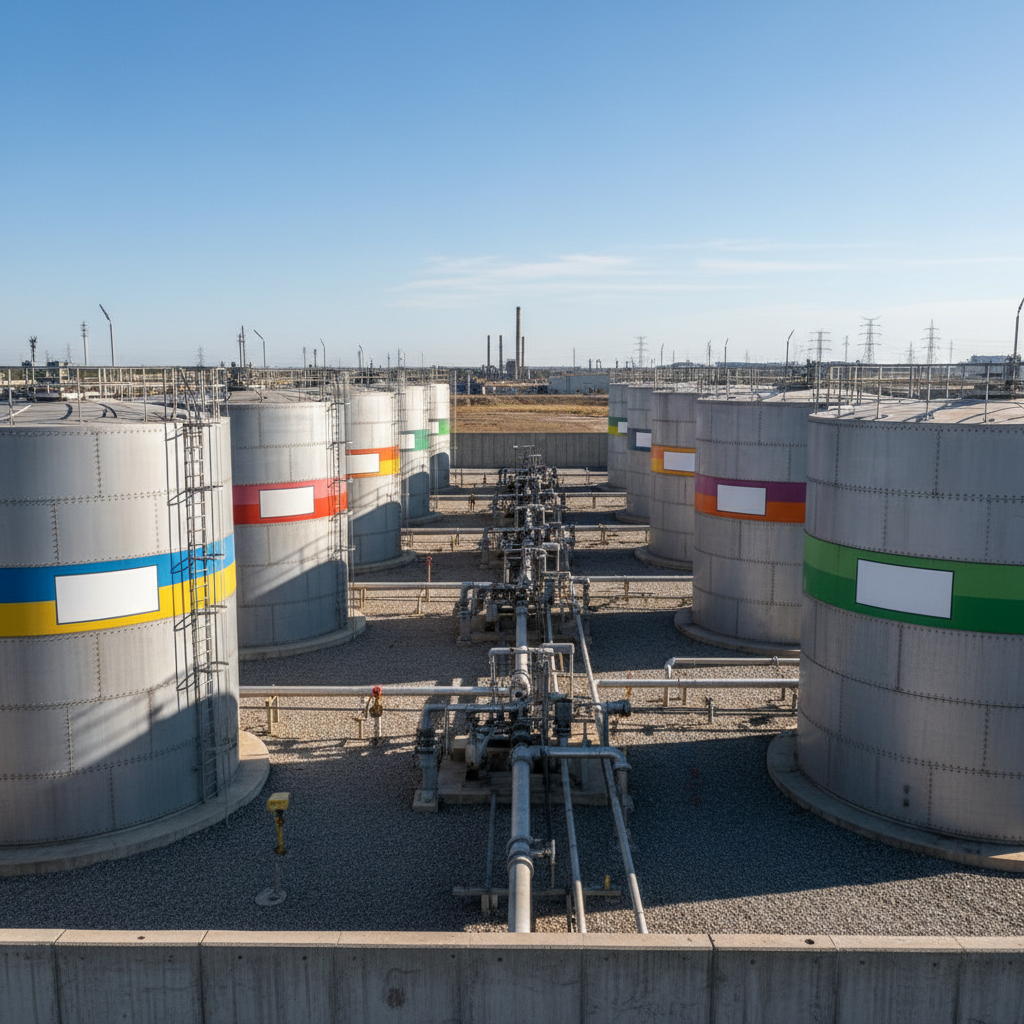
Calculating tank volume for SPCC containment follows a specific sequence that determines which storage counts toward your containment requirements.
Measure all petroleum storage tanks within the containment area. Include diesel, gasoline, heating oil, hydraulic oil, and lubricants stored in permanent tanks. Exclude drums, totes, and portable containers under 55 gallons.
Document the manufacturer nameplate capacity for each tank. Use the maximum rated capacity, not the working capacity or typical fill level. A 10,000-gallon tank rated for 9,500 gallons working capacity still requires containment for 10,000 gallons.
Calculate volume for non-standard tank shapes using geometric formulas. Cylindrical tanks: π × radius² × length. Rectangular tanks: length × width × height. Cone-bottom tanks require separate calculations for the cylindrical section and conical section.
Record all measurements in your SPCC plan with calculation worksheets. EPA requires documentation showing how you arrived at each volume figure. Include manufacturer specifications, field measurements, and calculation methods.
Verify volumes match current tank configurations. Tank modifications, replacements, or additions change your containment requirements. Update calculations within 60 days of any tank changes.
Tanks connected by permanent piping count as separate units for containment sizing. A 3,000-gallon primary tank connected to a 1,000-gallon day tank requires containment for both tanks using the 110% rule calculation. The piping itself doesn’t add to the volume calculation unless it holds more than 55 gallons.
Portable equipment like mobile fuel trucks, forklifts, and generators don’t count toward containment sizing even when parked in the containment area. Only fixed installations trigger SPCC volume requirements.
SPCC Containment Volume Calculation Formula and Worksheet

The complete SPCC containment volume formula accounts for multiple variables that determine your final containment size requirement.
Containment Volume = (Largest Tank × 1.10) + (Sum of Remaining Tanks × 1.00) + Precipitation Allowance – Tank Displacement
Each variable requires specific calculation methods to ensure EPA compliance during inspections.
| Calculation Component | Formula | Example |
|---|---|---|
| Largest Tank (110%) | Tank Capacity × 1.10 | 5,000 gal × 1.10 = 5,500 gal |
| Remaining Tanks (100%) | Sum of all other tank capacities | 2,000 + 1,500 + 800 = 4,300 gal |
| Precipitation Allowance | Area × Depth × 7.48 gal/ft³ | 40′ × 30′ × 1.5′ × 7.48 = 13,464 gal |
| Tank Displacement | Tank Shell Volume Below Wall Height | 450 gal (calculated per tank) |
| Total Required Volume | Sum all components | 23,814 gallons |
The worksheet format ensures consistent calculations across different facilities and simplifies EPA documentation requirements. Each facility must maintain calculation worksheets as part of their SPCC plan records.
Common calculation errors include forgetting to apply 110% to the largest tank, using working capacity instead of maximum capacity, and omitting precipitation allowance from the total. A 10,000-gallon facility with a 9,500-gallon largest tank still requires 110% of 10,000 gallons, not 9,500 gallons.
Actually, the precipitation allowance often represents the largest single component of containment volume for smaller facilities. A 2,000-gallon tank farm in a high-rainfall area might need 8,000 gallons of precipitation allowance, quadrupling the containment size beyond just tank capacity.
Update calculations whenever you modify tank configurations, change tank sizes, or alter containment area dimensions. The formula remains constant, but input variables change with facility modifications.
How Do You Account for Precipitation and Freeboard Requirements?
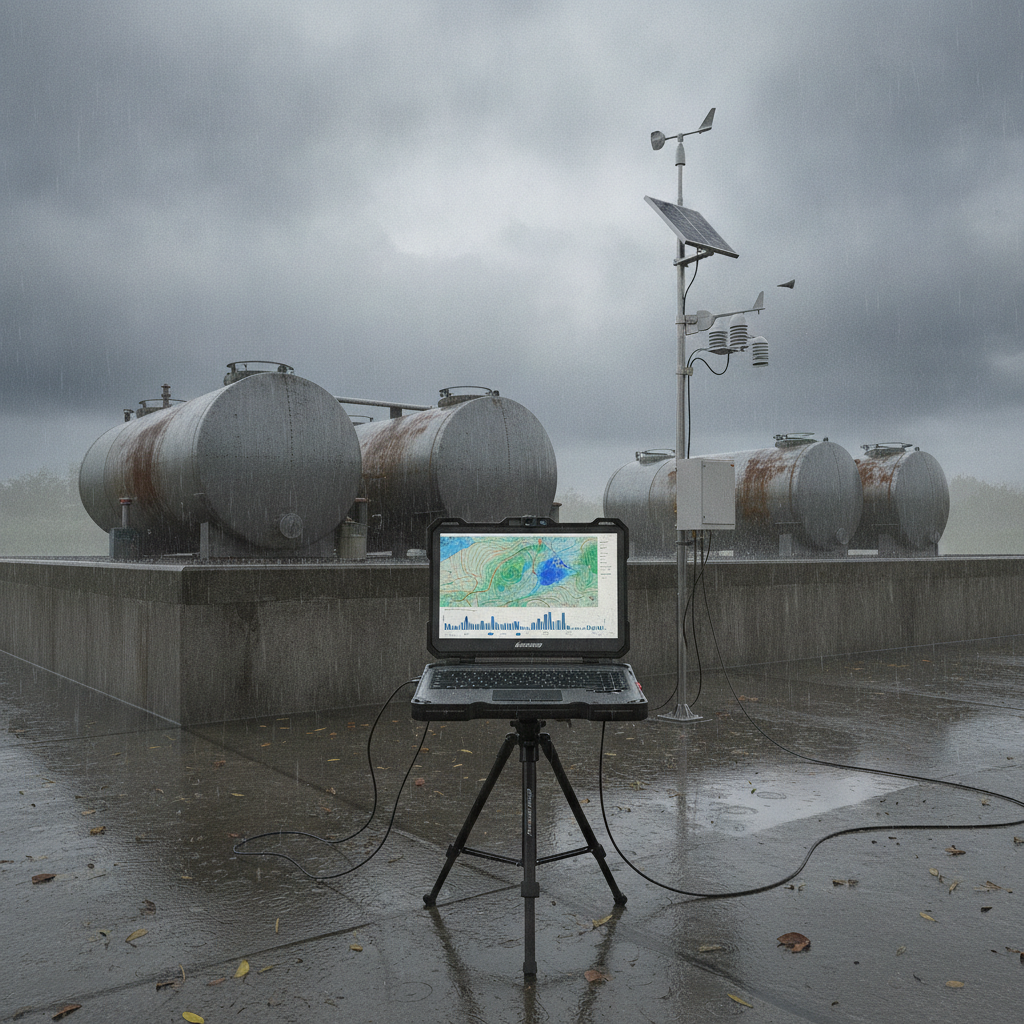
Precipitation freeboard adds significant volume to your containment requirements based on EPA’s 25-year storm data analysis for your geographic location.
Obtain 25-year precipitation data from NOAA Weather Service records for your ZIP code. EPA requires the maximum 24-hour rainfall total with a 4% annual probability of occurrence. This typically ranges from 3-8 inches depending on climate zone.
Calculate containment area in square feet by measuring the interior dimensions of your secondary containment. Include the entire floor area where precipitation can accumulate, not just the tank footprint. A 40′ × 30′ containment area equals 1,200 square feet.
Convert precipitation depth to containment volume using 7.48 gallons per cubic foot. A 1,200 square foot area with 6 inches (0.5 feet) of precipitation requires 4,488 gallons of freeboard capacity.
Add 6-inch minimum freeboard depth beyond the calculated precipitation requirement. EPA interprets this as operational freeboard to prevent overflow during normal precipitation events between storm drainage.
Account for regional climate variations that affect precipitation calculations. Desert facilities in Arizona might need 4 inches total depth while Gulf Coast facilities need 12+ inches for hurricane precipitation.
Include snow load calculations for northern climates where snow accumulation exceeds rainfall totals. Convert snow depth to water equivalent using local meteorological data.
Drainage systems can reduce precipitation requirements if they meet EPA specifications for automatic operation and fail-safe design. The drainage must remove precipitation within 24 hours without operator intervention and shut automatically during spill events.
NOAA Precipitation Atlas provides the required 25-year storm data by county. Use Atlas 14 point precipitation frequency estimates, not general climate averages. Facilities using outdated precipitation data face violations during EPA inspections.
What Tank Displacement Volume Must You Subtract?
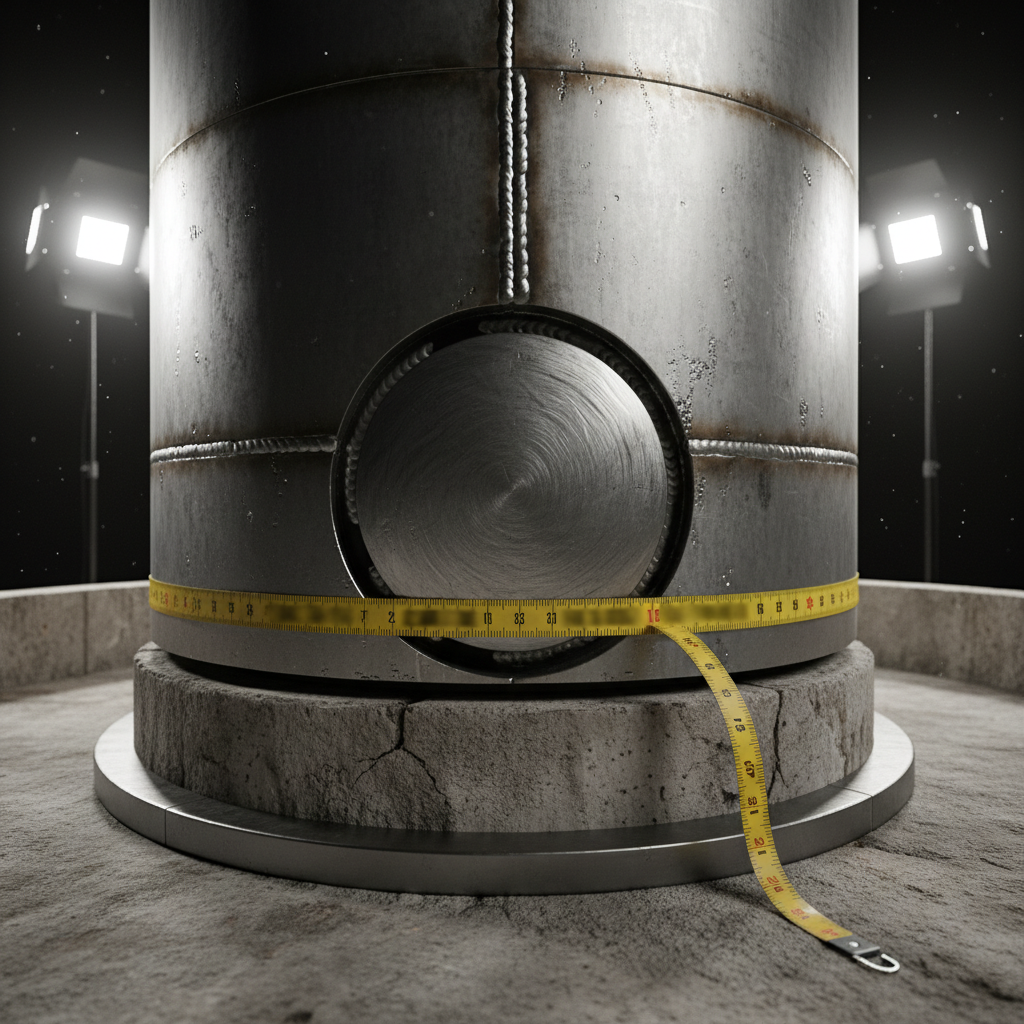
Tank displacement volume reduces your required containment by the exact volume occupied by tank shells and foundations below the containment wall height.
Displacement equals the volume of tank metal, concrete pads, and support structures that sit inside the containment area. A cylindrical tank displaces volume equal to its shell thickness multiplied by surface area. Steel tanks with 1/4-inch walls displace approximately 2% of their total footprint volume.
Calculate displacement for each tank component below the containment wall height. Tank shells above the wall don’t create displacement because spilled oil flows underneath them. Concrete pads under tanks displace their full volume if they sit below the containment floor level.
Displacement calculations don’t apply to tanks mounted on legs or elevated platforms where oil can flow completely underneath. The tank must physically occupy space where spilled oil would otherwise accumulate.
Typical displacement percentages run 1-3% of total containment volume for standard tank installations. A facility requiring 20,000 gallons of containment might reduce this to 19,400 gallons after accounting for tank displacement. The reduction seems small but can eliminate the need for larger containment systems.
Actually, displacement becomes significant for facilities with multiple large tanks in small containment areas. Five 5,000-gallon tanks in a compact containment area might displace 800-1,200 gallons of required volume.
Document displacement calculations with detailed measurements and engineering drawings. EPA inspectors verify these calculations during compliance audits and reject estimates without supporting documentation.
How Do You Size Containment for Multiple Tanks and Irregular Areas?
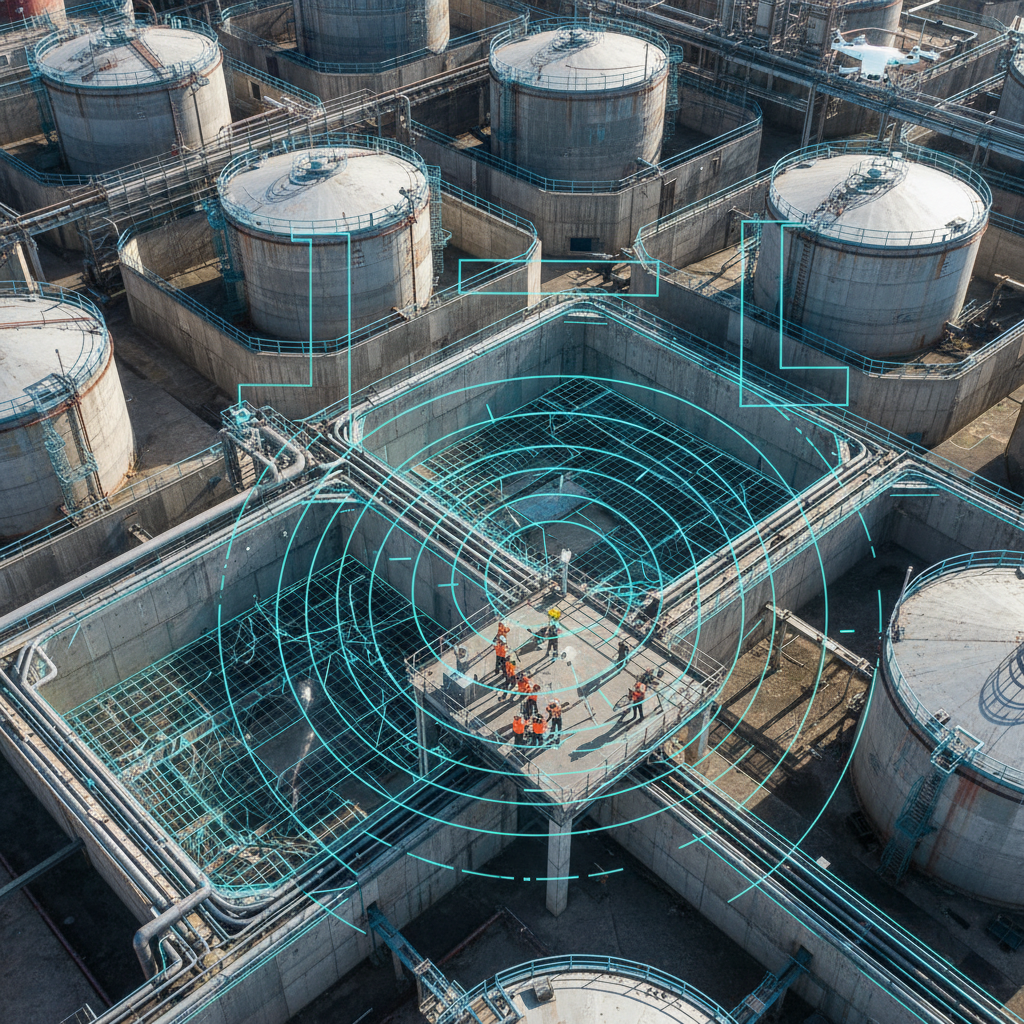
Multi-tank containment requires complex area calculations and analysis of simultaneous spill scenarios that challenge standard sizing methods.
Irregular containment areas need geometric breakdown into calculable sections. L-shaped containment divides into two rectangles. Circular areas use πr² calculations. Complex shapes require professional survey measurements and CAD-based volume calculations.
| Configuration Type | Calculation Method | Design Consideration |
|---|---|---|
| Linear Tank Farm | Individual rectangular sections | Staged overflow between sections |
| Clustered Tanks | Combined irregular perimeter | Worst-case simultaneous release |
| Multi-Level Containment | Stepped volume calculations | Overflow routing and capacity |
| Sloped Containment | Average depth methodology | Low-point volume concentration |
| Complex Geometry | Professional engineering | 3D modeling and flow analysis |
Staged containment systems allow overflow from primary containment into secondary containment areas. Size the primary area for the largest single tank release plus precipitation. Size overflow areas for remaining tank capacity plus additional precipitation allowance.
Multi-tank scenarios require worst-case analysis assuming simultaneous releases from all tanks. This rarely happens in practice, but EPA regulations don’t allow probabilistic risk reduction in containment sizing.
Sloped containment areas concentrate spilled oil at the low point, but you must calculate containment volume assuming uniform distribution across the entire area. The slope helps with cleanup but doesn’t reduce required containment volume.
Containment optimization strategies include dividing large tank farms into separate containment areas, using intermediate containment walls to create staged systems, and positioning tanks to minimize required containment volume while maintaining access for operations.
Complex facilities with irregular shapes, elevation changes, or unusual tank arrangements typically require Professional Engineer calculations. The basic EPA formula works for simple rectangular containment but breaks down for complex geometries.
Frequently Asked Questions
Do I need to hire an engineer to calculate containment volume?
You can calculate containment volume yourself using the EPA formula if your facility qualifies for Tier I or Tier II self-certification. Complex facilities with irregular containment areas or multiple tank farms typically need Professional Engineer calculations for accurate volume determination and regulatory compliance.
What happens if my calculated containment volume is wrong?
Undersized containment violates 40 CFR Part 112 and triggers EPA enforcement action with fines up to $59,973 per day per violation. EPA inspectors verify containment calculations during compliance audits and can require immediate reconstruction of inadequate containment systems.
Does the 110% rule apply to underground storage tanks?
No, the 110% rule only applies to aboveground storage tanks under SPCC regulations in 40 CFR Part 112. Underground storage tanks fall under separate EPA regulations in 40 CFR Part 280 with different containment and leak detection requirements.
Can I use berms instead of walls for secondary containment?
Yes, earthen berms satisfy SPCC containment requirements if properly designed and maintained to prevent seepage. The containment volume calculation remains identical whether you use concrete walls, steel walls, or compacted earthen berms.