110 percent rule SPCC secondary containment is one of the most misunderstood requirements in oil storage compliance. Following it blindly will get you cited during EPA inspections. The regulation never mentions 110%, and your actual requirements vary by location.
Key Takeaways:
- The 110% figure appears nowhere in 40 CFR Part 112,actual requirements range from 110% to 150%+ depending on precipitation
- High-rainfall regions require 125-140% containment capacity when factoring 25-year storm freeboard requirements
- Tank batteries calculate containment differently than single tanks,using largest single tank plus 10% of remaining capacity
Where Does the 110% Secondary Containment Rule Actually Come From?
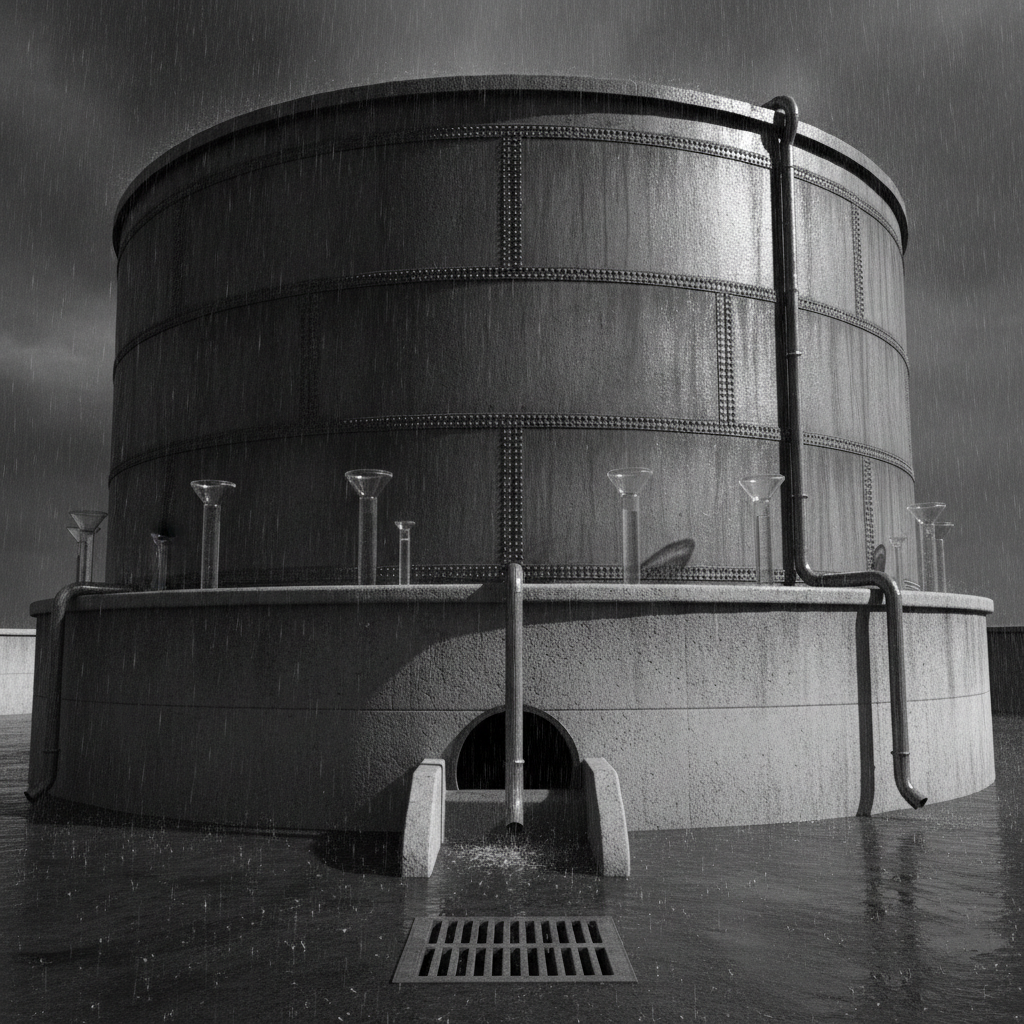
The 110% rule is industry shorthand that doesn’t exist in federal regulation. 40 CFR Part 112.8(c)(2) requires secondary containment to hold “the capacity of the largest single compartment or tank with sufficient freeboard to contain precipitation from a 25-year, 24-hour rainfall event.” This means tank capacity plus local rainfall, not a flat 110%.
The regulation combines two separate requirements. First, you need space for your largest tank’s full contents. Second, you need additional freeboard for the 25-year 24-hour precipitation data determines actual freeboard requirements beyond tank capacity. Most facilities need 15-40% additional capacity for rainfall alone.
Industry consultants started using “110%” as a rule of thumb decades ago when most facilities were in moderate rainfall areas. But 40 CFR Part 112 never specified this percentage. The actual requirement varies dramatically based on your location’s precipitation patterns, from 115% in desert regions to 150% in Gulf Coast areas.
EPA inspectors verify containment against site-specific weather data, not generic percentages. Using 110% without calculating local rainfall requirements violates the regulation’s explicit precipitation freeboard mandate.
How Much Secondary Containment Do You Actually Need?

Containment sizing methodology varies by geographic precipitation zone, requiring calculations beyond simple percentages. The formula combines your largest tank capacity with local 25-year storm data to determine total containment needs.
Here’s how different regions calculate actual requirements:
| Region | 25-Year Rainfall | Tank Capacity | Precipitation Freeboard | Total Required |
|---|---|---|---|---|
| Southwest Desert | 2.8 inches | 100% | 12-15% | 112-115% |
| Great Plains | 4.2 inches | 100% | 18-22% | 118-122% |
| Southeast Coast | 8.1 inches | 100% | 35-40% | 135-140% |
| Gulf Coast | 11.3 inches | 100% | 45-50% | 145-150% |
The calculation starts with your largest tank’s capacity as the base requirement. Then you add freeboard space equal to the rainfall volume that would accumulate in your containment area during a 25-year storm event. This precipitation component varies from 12% in Nevada to over 45% in Louisiana coastal areas.
Rainfall ranges from 2.5 inches (Nevada) to 12+ inches (Louisiana) for 25-year storm events, requiring 110-150% total capacity depending on your facility’s location. EPA inspectors use National Weather Service precipitation frequency data to verify your calculations match local conditions.
Facilities that used generic 110% calculations often discover they’re 20-30% undersized when proper precipitation data gets applied during inspections.
Regional Rainfall Data That Drives Containment Sizing
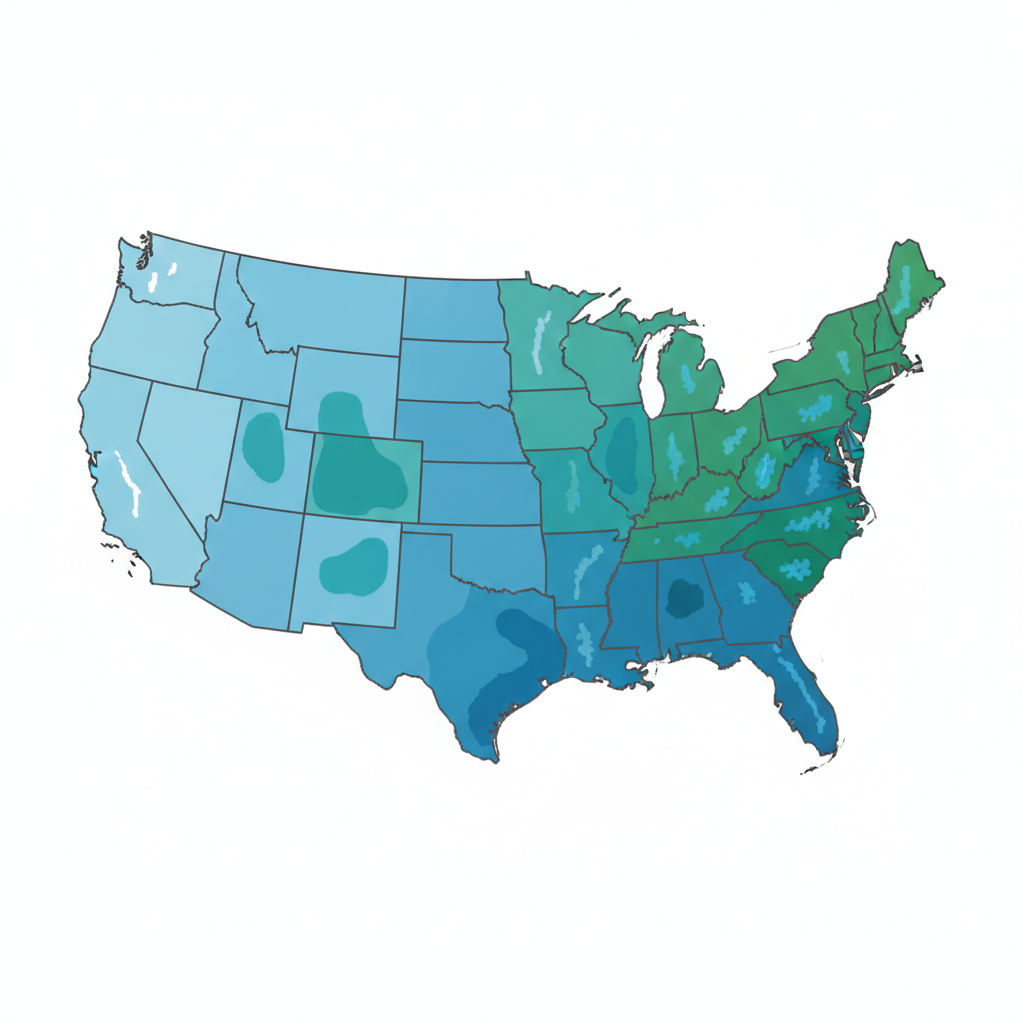
Regional rainfall data determines actual containment percentage required, making location-specific calculations mandatory under 40 CFR Part 112. NOAA maintains precipitation frequency atlases that show dramatic variations across the United States.
Here’s how major regions compare for containment sizing:
| Geographic Zone | 25-Year 24-Hour Rainfall | Typical Freeboard | Total Capacity Needed |
|---|---|---|---|
| Pacific Northwest | 3.1-4.7 inches | 15-20% | 115-120% |
| Mountain West | 1.9-3.2 inches | 10-15% | 110-115% |
| Great Lakes | 3.8-5.1 inches | 18-23% | 118-123% |
| Atlantic Coast | 5.2-7.8 inches | 25-35% | 125-135% |
| Gulf States | 7.9-12.4 inches | 35-50% | 135-150% |
Gulf Coast facilities often need 135-145% capacity while Southwest facilities stay closer to 115-120%, reflecting the five-fold difference in regional precipitation patterns. Florida and Louisiana consistently require the highest containment percentages due to intense tropical storm activity.
Texas facilities show wide variation within the state. West Texas desert locations need 115% capacity while Houston-area facilities require 140%+ due to Gulf moisture patterns. Using statewide averages violates the regulation’s site-specific requirements.
Inspectors reference NOAA Atlas 14 precipitation data during containment verification. This database provides precise rainfall figures for any location using longitude and latitude coordinates, eliminating guesswork about local requirements.
Why Tank Batteries Calculate Containment Differently
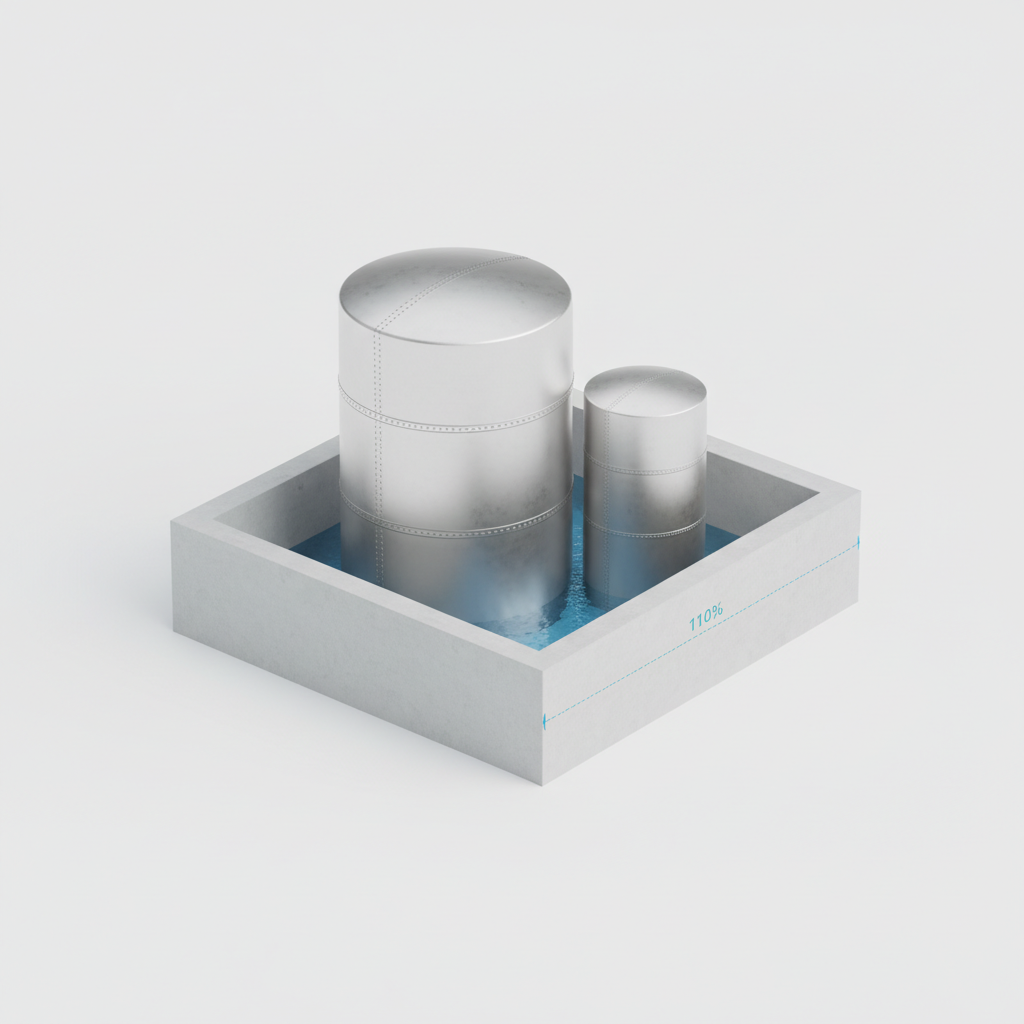
Tank battery sizing follows largest tank plus 10% formula under 40 CFR Part 112.8(c)(2), creating different calculations than individual tank containment. This method recognizes that simultaneous failures of multiple tanks are statistically improbable.
Here’s the step-by-step tank battery calculation process:
Identify your largest single tank capacity. This becomes your primary containment volume requirement, typically the base 100% figure.
Calculate 10% of all remaining tank capacities combined. Add up every other tank in the battery, then multiply by 0.10 for the secondary volume.
Add precipitation freeboard for your specific location. Use 25-year 24-hour rainfall data to determine additional volume needed above tank capacities.
Verify total containment volume meets the combined requirement. Your system must hold largest tank + 10% of others + precipitation freeboard.
Document the calculation methodology in your SPCC plan. Include specific tank volumes, rainfall data source, and total containment capacity.
This approach differs significantly from individual tank sizing where each tank needs separate containment equal to its full capacity plus freeboard. Tank batteries use largest single tank capacity plus 10% of remaining tanks, not 110% of total capacity.
For example, a battery with tanks of 10,000, 8,000, and 5,000 gallons needs containment for 10,000 gallons (largest) plus 1,300 gallons (10% of the 13,000 remaining) plus local precipitation freeboard, not 110% of the 23,000 total capacity.
Is 110% Enough for SPCC Compliance?
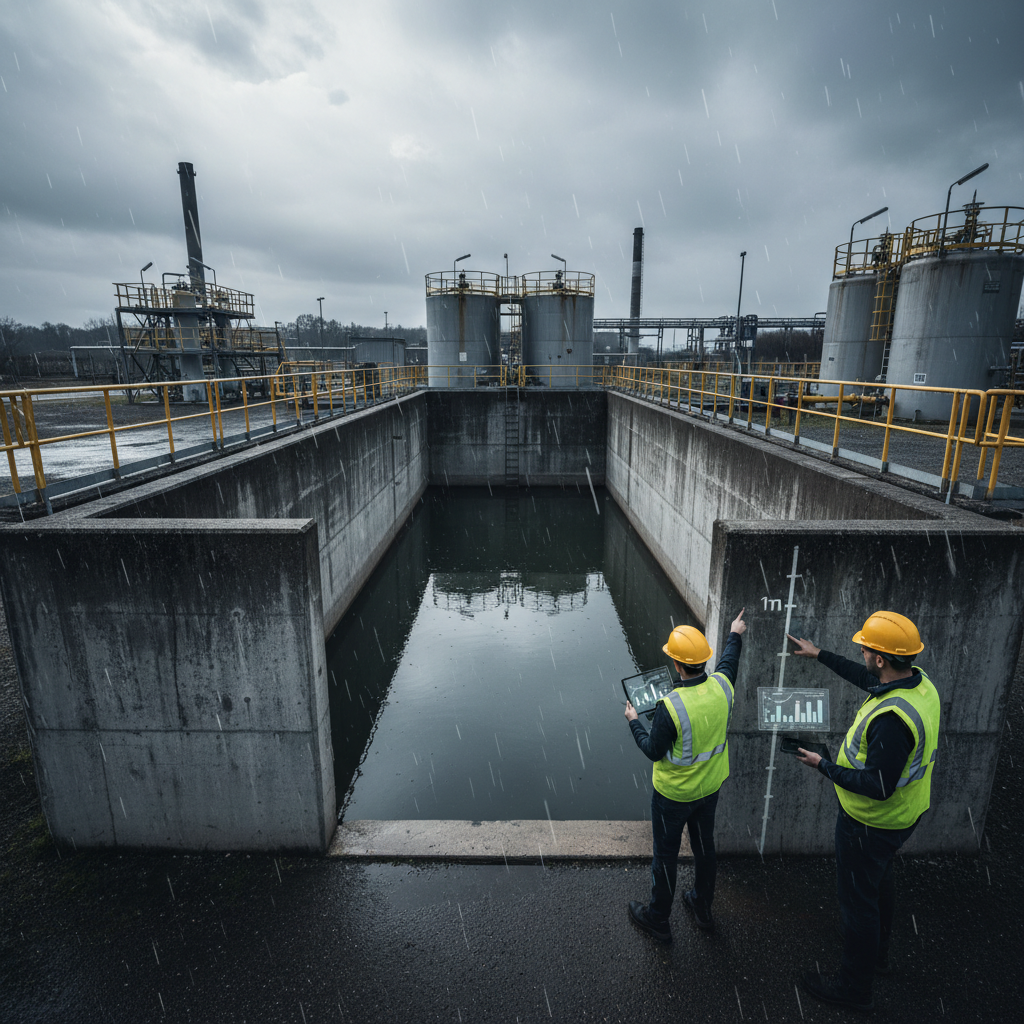
The 110% rule misapplication causes common inspection failures when facilities ignore precipitation freeboard requirements and site-specific rainfall data. EPA Region 6 inspection data shows 60% of containment violations involve undersized systems using generic 110% calculations.
Here are specific scenarios where 110% proves inadequate:
- Gulf Coast facilities need 135-150% capacity due to intense rainfall patterns from tropical systems and thunderstorms
- Mountain facilities with large drainage areas require additional freeboard when containment systems collect runoff from extensive surrounding surfaces
- Facilities using outdated rainfall data from pre-1990 weather stations that don’t reflect current climate patterns and storm intensities
- Tank batteries with multiple small tanks where 10% of remaining capacity plus precipitation exceeds simple 110% calculations
- Sites with poor drainage that can’t discharge accumulated precipitation quickly enough during extended storm events
Facilities that rely on 110% assumptions face enforcement actions when inspectors verify containment against current NOAA precipitation data. The calculation error typically ranges from 15-40% undersizing in moderate to high rainfall areas.
Consult a PE familiar with SPCC requirements when your facility stores more than 10,000 gallons or operates in high-rainfall regions. Professional engineers can verify your containment calculations meet both base capacity and precipitation freeboard requirements for your specific location.
Common 110% Rule Mistakes That Trigger EPA Violations
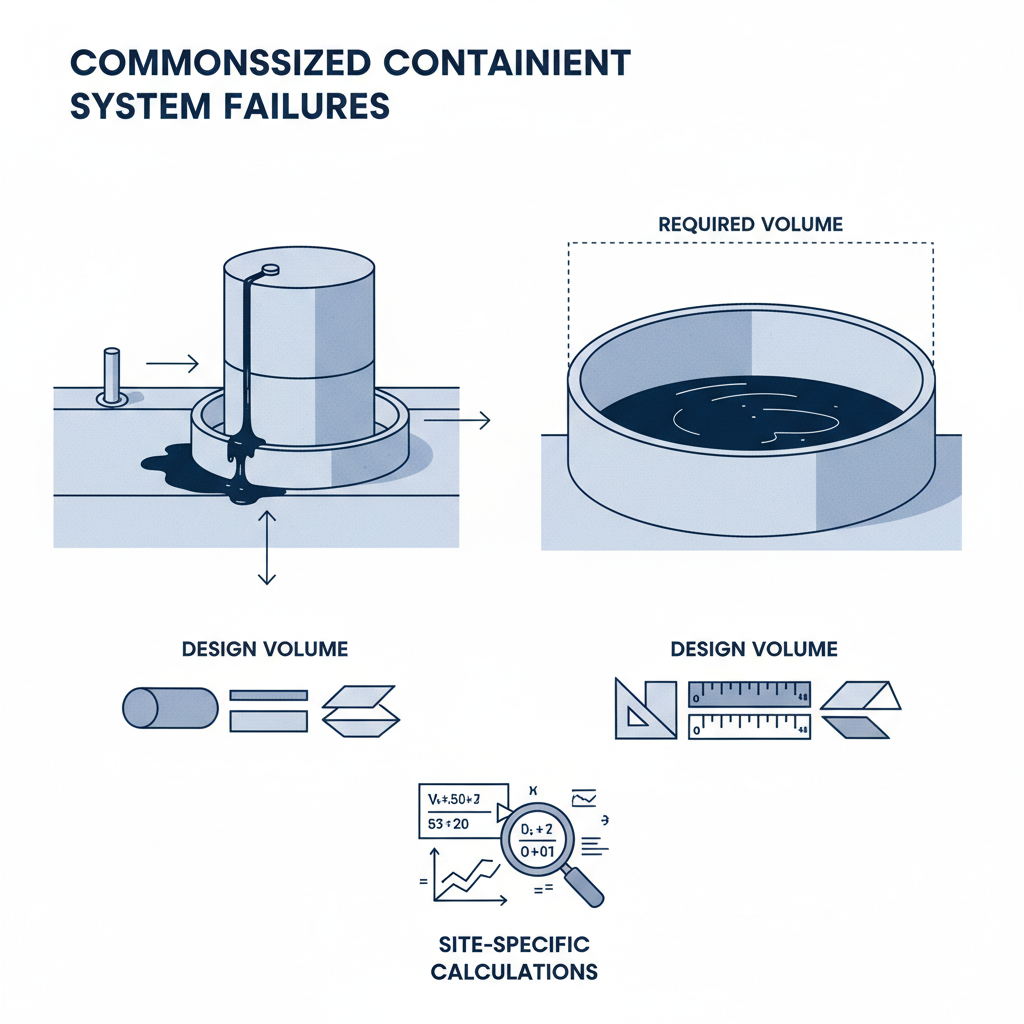
Common 110% failures result from ignoring precipitation freeboard requirements and using generic industry assumptions instead of site-specific calculations. EPA enforcement patterns show consistent citation themes around containment undersizing in facilities that never verified their local rainfall requirements.
The most frequent mistake involves using 110% as a universal standard without checking local precipitation data. Facilities in Texas, Florida, and Louisiana regularly get cited because their actual requirements range from 135-150% due to intense Gulf Coast rainfall patterns.
Another common violation occurs when facilities use outdated weather data or national averages instead of site-specific 25-year storm calculations. 40 CFR Part 112 explicitly requires precipitation data for your exact geographic location, not regional estimates.
Tank battery facilities often miscalculate by applying 110% to total capacity instead of using the largest tank plus 10% formula. This error typically results in significant over-design in some cases and dangerous under-design in others, depending on tank size distribution.
Based on EPA enforcement patterns showing consistent citation themes around containment undersizing, facilities should verify their calculations against current NOAA Atlas 14 data and consult qualified professionals when local rainfall requirements exceed 125% of tank capacity.
Frequently Asked Questions
Does the EPA actually use the phrase 110% rule in SPCC regulations?
No. The term ‘110% rule’ appears nowhere in 40 CFR Part 112. The regulation requires tank capacity plus precipitation freeboard, which varies by location and often exceeds 110%.
What happens if my containment is exactly 110% but doesn’t account for local rainfall?
You’ll face an EPA violation during inspection. Inspectors verify containment against actual precipitation data for your specific location, not generic 110% assumptions.
Can I use national average rainfall data for my containment calculations?
No. 40 CFR Part 112 requires site-specific 25-year 24-hour precipitation data for your exact geographic location. Using national averages violates the regulation.