
Spill containment berms protect your facility from EPA violations that average $50,000 per incident. Choose wrong and a simple hydraulic leak becomes a regulatory nightmare.
Key Takeaways:
- Foam-wall berms work for 95% of vehicle maintenance applications under 1,000 gallons
- Drive-through berms cost 40-60% more than standard foam walls but eliminate forklift positioning issues
- SPCC compliance requires 110% containment volume plus regional rainfall freeboard calculations
What Are the Three Main Types of Spill Containment Berms?
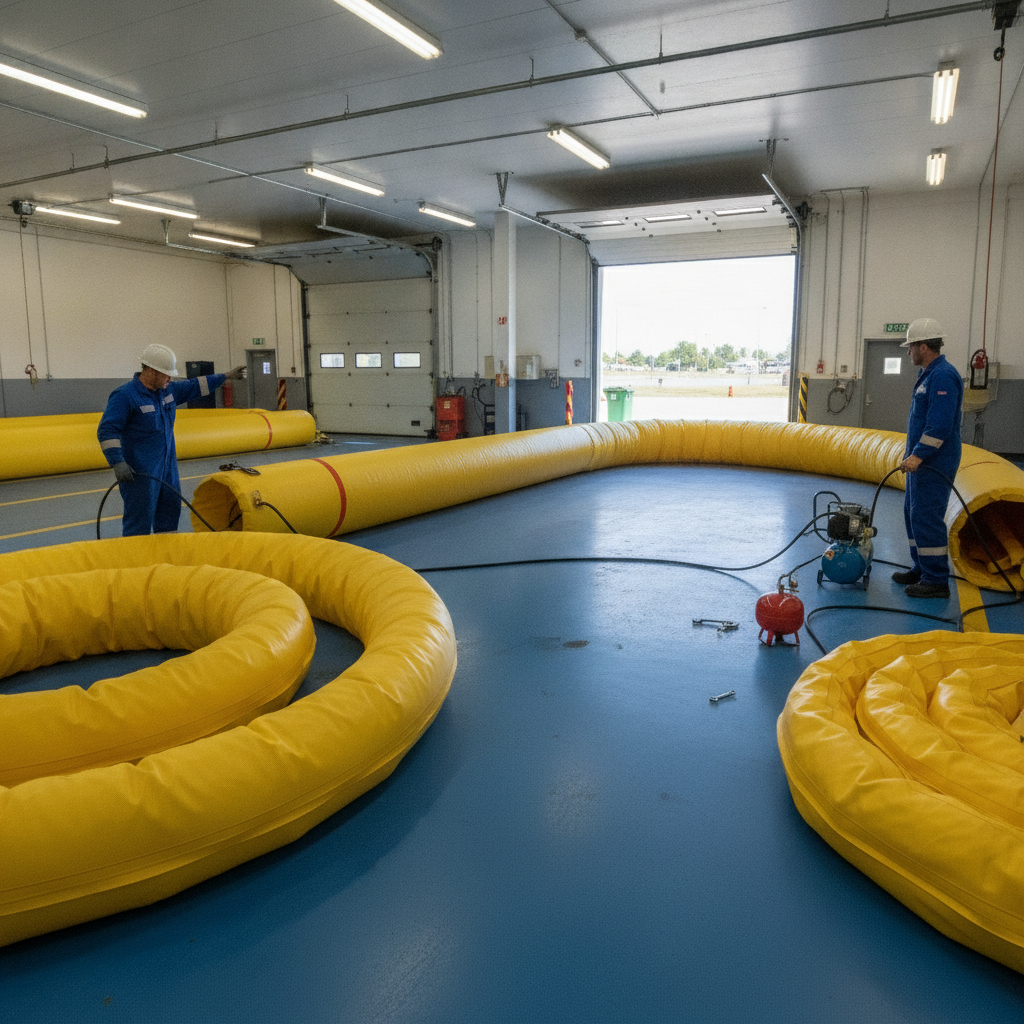
Foam-wall berms are inflatable containment systems with air-filled sidewalls that create temporary spill barriers. This means you get portable secondary containment that sets up in minutes without permanent construction. Foam-wall berm options inflate in 2-3 minutes using standard shop air, making them ideal for maintenance bays and temporary equipment staging.
Drive-through berms use reinforced ramp systems that allow vehicles to enter the containment area without deflating the sidewalls. These systems handle up to 80,000 pounds of vehicle weight while maintaining spill containment integrity. Drive-through berm options require 15-20 minutes for complete setup versus 2-3 minutes for foam-wall systems, but they eliminate the need to position equipment inside an already-inflated containment area.
Flexible PVC berms consist of collapsible sidewalls made from chemical-resistant vinyl materials without inflatable components. This design creates containment areas through rigid corner brackets and flexible wall panels that fold flat for storage. Flexible PVC berm options work best for large-area containment where foam-wall systems would require excessive air volume to maintain structural integrity.
Which Berm Type Works Best for Vehicle Maintenance Operations?
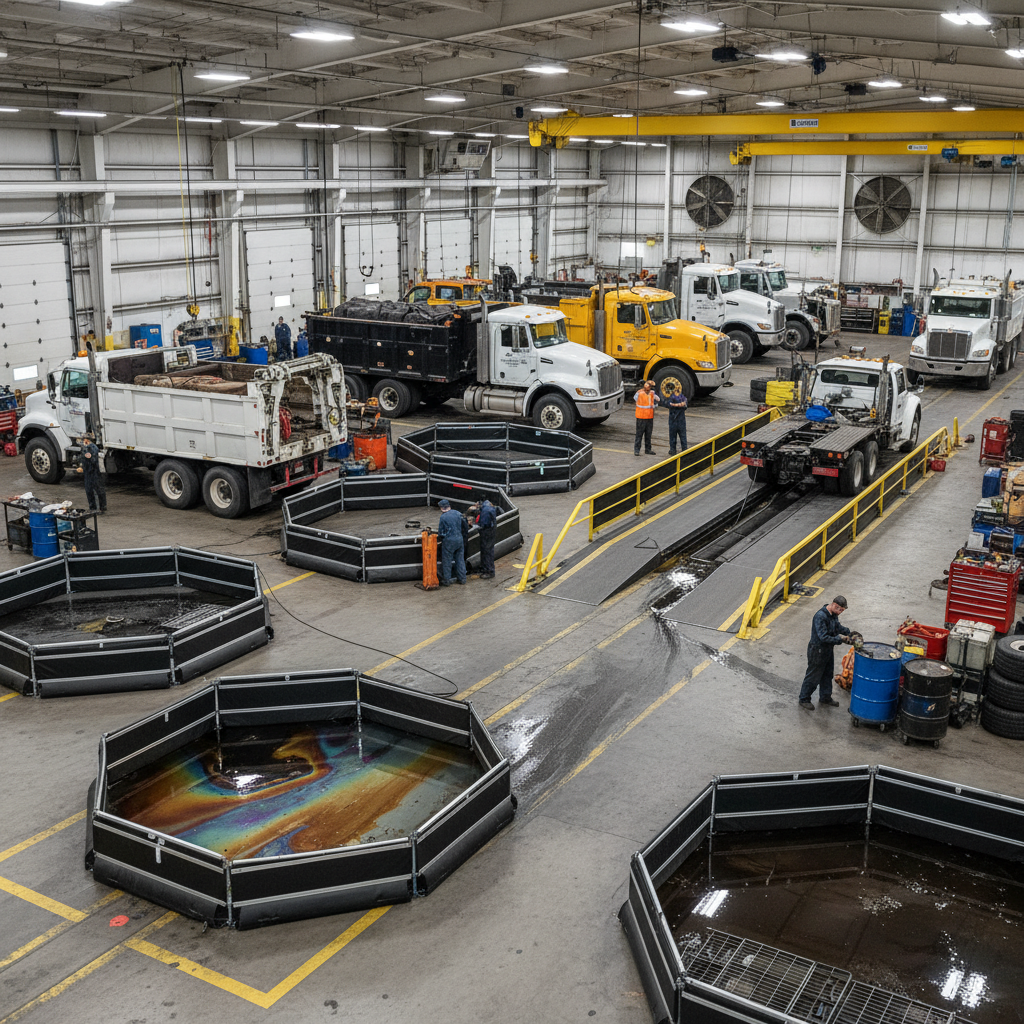
Vehicle spill berms contain hydraulic fluid and diesel spills during maintenance operations. Standard vehicle maintenance berms range from 10×20 feet (1,200 gallon capacity) to 20×40 feet (6,000+ gallons), with foam-wall and drive-through options dominating this application.
| Feature | Foam-Wall Vehicle Berms | Drive-Through Vehicle Berms |
|---|---|---|
| Setup Time | 2-3 minutes inflation | 15-20 minutes assembly |
| Vehicle Access | Equipment positioned inside after inflation | Vehicles drive directly into containment |
| Weight Capacity | Equipment only (no vehicle traffic) | Up to 80,000 lbs vehicle weight |
| Cost Range | $800-$2,500 for 10×20 to 20×30 | $1,200-$4,000 for equivalent sizes |
| Storage Space | Compact (fits in utility closet) | Requires larger storage area |
| Maintenance Frequency | Monthly air pressure check | Quarterly ramp/bracket inspection |
Foam-wall berm options work for 95% of vehicle maintenance where you can position trucks, forklifts, or equipment inside the containment area before starting fluid changes or repairs. The quick setup time makes them practical for daily use in busy maintenance facilities.
Drive-through berm options solve the positioning problem when vehicles must enter containment under their own power. Fleet operations washing multiple vehicles or maintenance yards servicing large trucks benefit from the drive-through design despite the 40-60% cost premium.
How Do You Size Berms for Large Tank Storage and Equipment Areas?
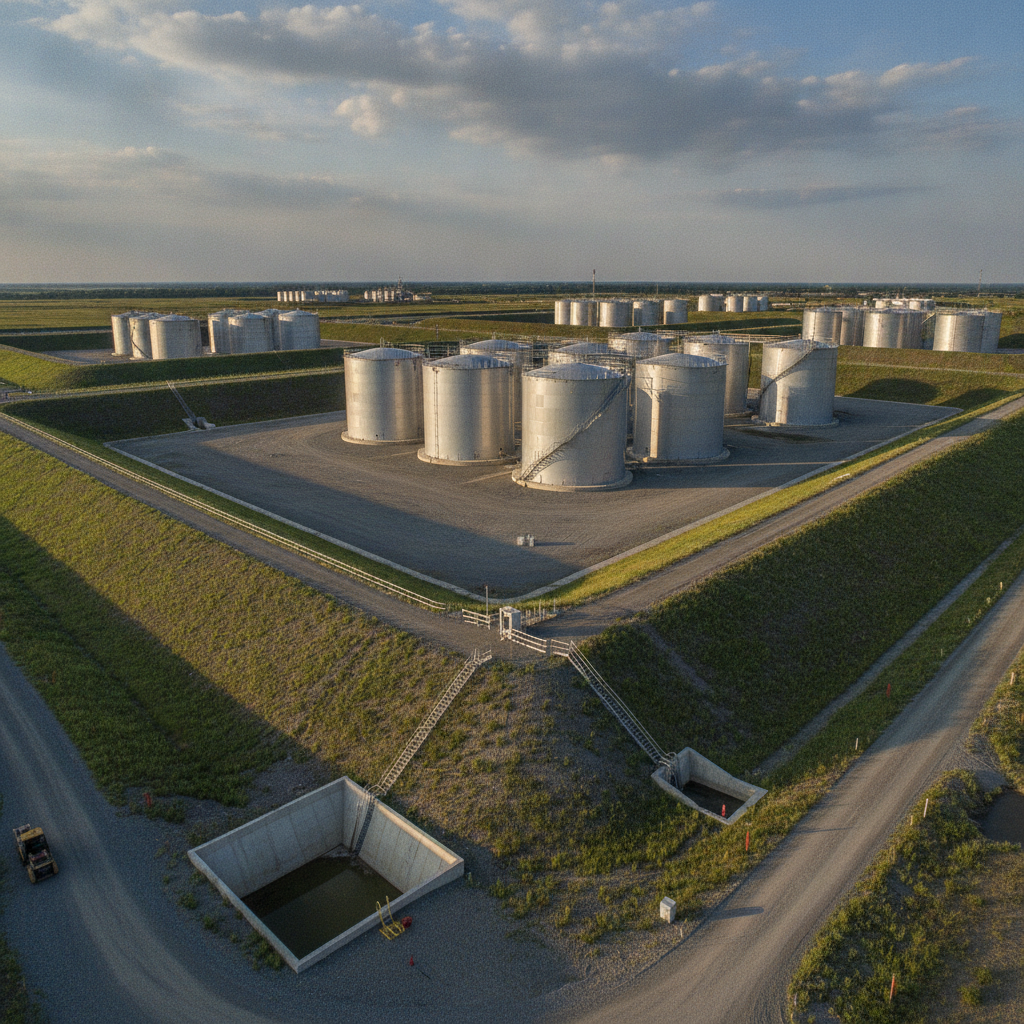
Large tank berms must contain 110% of largest tank plus precipitation volume. SPCC regulations under 40 CFR Part 112 require this minimum for secondary containment compliance.
Calculate the largest single tank capacity at your site in gallons. Multiply by 1.10 to get the base containment requirement.
Add precipitation volume using your region’s 25-year storm data. Contact your state environmental agency for local rainfall calculations, which typically add 200-400 gallons to a 1,000-gallon tank requirement.
Measure the available containment area and divide total volume by square footage to determine required berm height. Most portable berms max out at 18-24 inch wall height.
Verify chemical compatibility between stored materials and berm construction materials. PVC berms handle petroleum products but may degrade with certain solvents or acids.
Document the sizing calculation and material specifications in your SPCC plan. Include berm manufacturer specifications and installation photos for EPA inspection purposes.
A 1,000-gallon tank requires minimum 1,100 gallons containment plus regional rainfall data, bringing total requirements to 1,300-1,500 gallons in most regions. This translates to roughly 175-200 square feet of containment area with 12-inch berm walls.
Portable vs Permanent Berm Installation: Cost and Performance Comparison
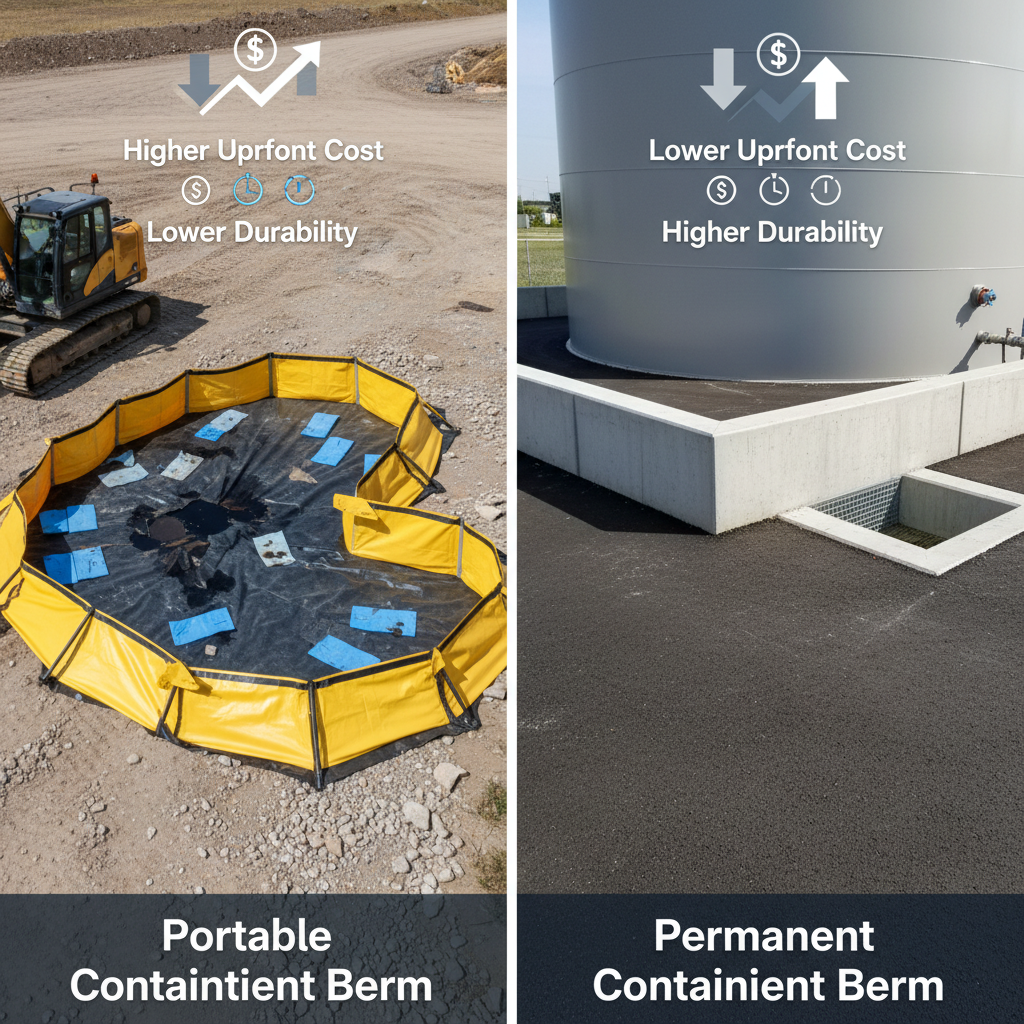
Portable containment berms cost 30-50% less than permanent concrete containment systems. The cost difference makes portable options attractive for temporary operations and budget-conscious facilities.
| Feature | Portable Berms | Permanent Concrete |
|---|---|---|
| Initial Cost | $2-8 per gallon capacity | $15-25 per gallon capacity |
| Installation Time | 15-60 minutes | 2-4 weeks construction |
| Relocation Ability | Full portability | Fixed permanent location |
| Lifespan | 5-10 years with maintenance | 25+ years with proper construction |
| Chemical Resistance | Limited to PVC compatibility | Unlimited with proper coatings |
| Inspection Requirements | Visual checks monthly | Annual structural assessment |
| Removal Cost | Zero (deflate and store) | $5,000-$15,000 demolition |
Portable foam-wall berms excel in facilities with changing layouts or temporary operations. Manufacturing plants that relocate equipment benefit from containment systems that move with the operation.
Drive-through portable berms work for vehicle maintenance operations that lack permanent wash bays or service pits. The portability allows different work areas to share the same containment system.
Flexible PVC systems handle the largest containment areas among portable options, covering up to 50×100 feet when space requirements exceed foam-wall capabilities.
Permanent concrete containment makes sense for fixed tank farms, permanent equipment installations, and facilities with aggressive chemical storage that exceeds PVC compatibility limits.
What Material Specifications Matter for Chemical Compatibility?
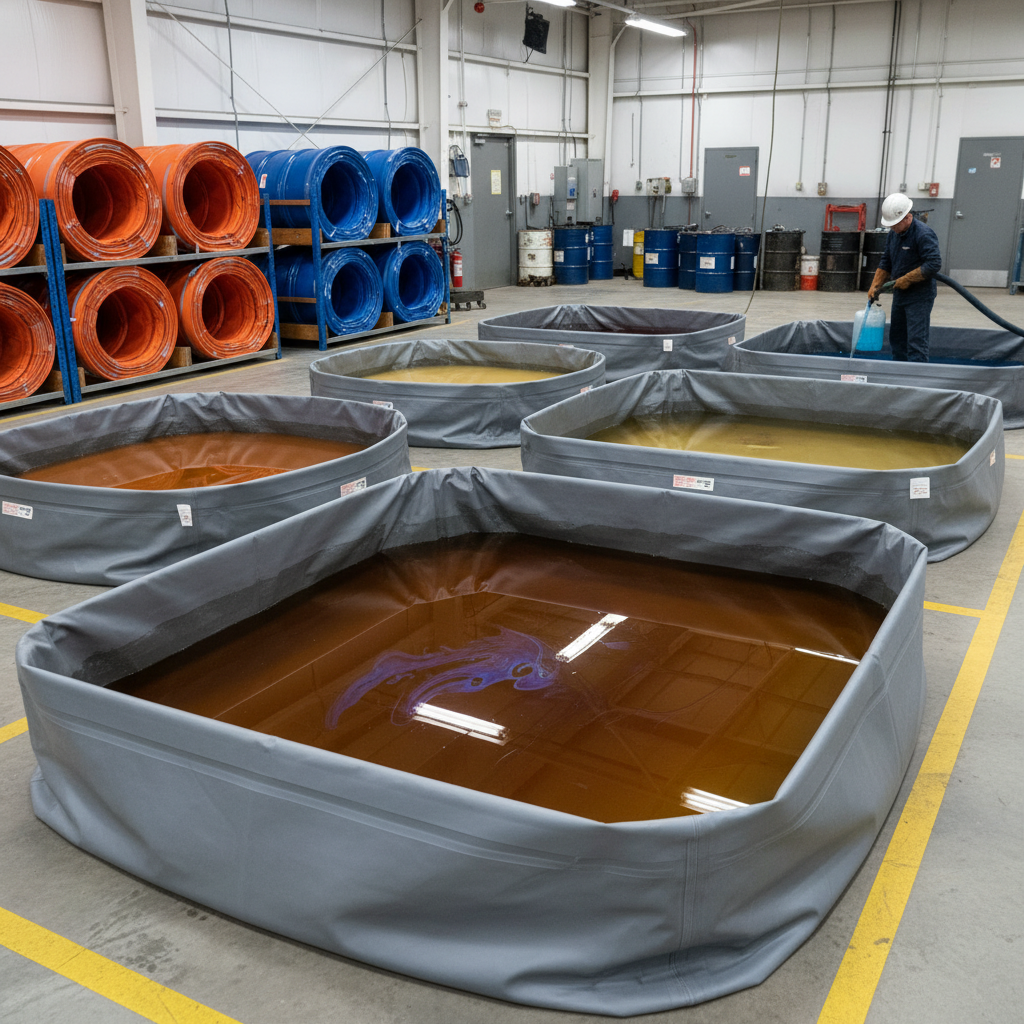
PVC berm materials resist petroleum products and most industrial chemicals used in maintenance operations. Standard PVC berms handle temperatures from -20°F to 140°F and resist gasoline, diesel, hydraulic oils, and most acids.
- Polyurethane-coated fabrics provide superior puncture resistance for rough industrial environments but cost 25-40% more than standard PVC construction
- UV-resistant coatings extend outdoor lifespan from 5-7 years to 8-10 years by preventing material degradation from sunlight exposure
- Reinforced seam construction using radio-frequency welding creates stronger joints than adhesive bonding, reducing failure rates in high-stress applications
- Chemical compatibility charts from manufacturers specify resistance to specific fluids, with petroleum products generally compatible but chlorinated solvents causing rapid degradation
- Temperature ratings vary by material, with standard PVC failing below -20°F while specialized arctic formulations work to -40°F in cold climate facilities
Flexible PVC berm options use thicker material gauges (30-40 mil) compared to foam-wall systems (20-30 mil) because they rely on material strength rather than air pressure for structural integrity.
UV resistance becomes critical for berms stored outdoors or used in areas with skylights or large windows. Indoor storage between uses can double the effective lifespan of any portable containment system.
Do Containment Berms Meet SPCC Secondary Containment Requirements?
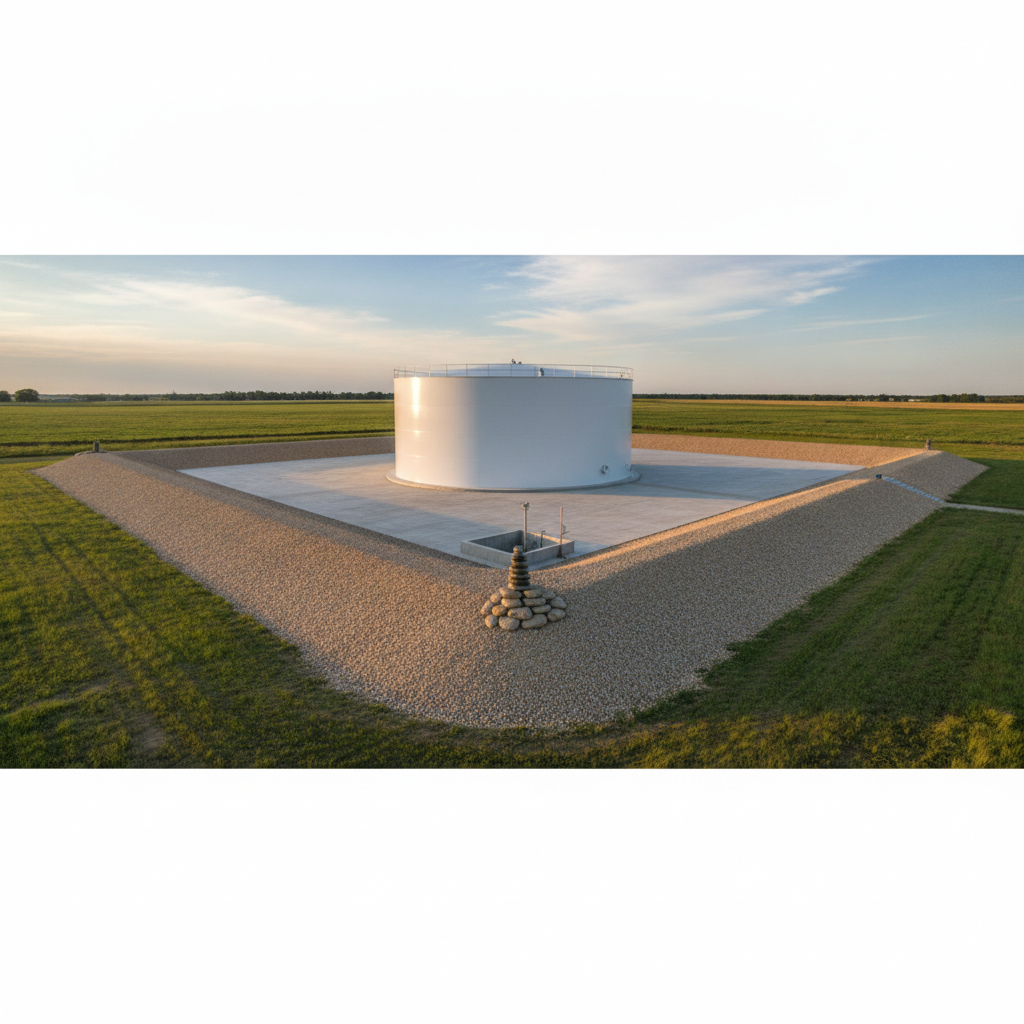
SPCC regulations accept properly sized containment berms as secondary containment under 40 CFR Part 112. The regulations require 110% of largest tank capacity plus regional 25-year storm precipitation, which berms can satisfy when correctly sized.
SPCC certification for berms requires documentation proving containment volume calculations, material compatibility with stored fluids, and installation procedures that maintain containment integrity. Your SPCC plan must include berm specifications, setup procedures, and inspection schedules.
Secondary containment berm systems must demonstrate they can contain spills for the time required to implement cleanup procedures. EPA typically expects containment for 72 hours minimum, which requires considering evaporation rates and potential precipitation during the containment period.
Proper installation matters for SPCC compliance. Berms must sit on level surfaces free of sharp objects that could puncture the containment material. Ground preparation and regular inspection become part of your SPCC compliance obligations.
Frequently Asked Questions
How long do portable spill containment berms last outdoors?
Quality PVC berms last 5-7 years with continuous UV exposure and proper maintenance. UV-resistant coatings extend life to 8-10 years, while indoor storage between uses can double the lifespan.
Can you drive vehicles over foam-wall berms without damaging them?
No, foam-wall berms deflate under vehicle weight and are designed for equipment positioning inside the containment area. Drive-through berms with reinforced ramps handle vehicle traffic up to 80,000 pounds.
What’s the largest containment area you can create with portable berms?
Flexible PVC berms can contain areas up to 50×100 feet (approximately 30,000 gallons capacity). Larger areas require multiple connected berm sections or permanent concrete containment systems.