
Secondary containment for 55-gallon drums gets overlooked because facilities focus on price instead of actual sump capacity requirements. Most drum storage setups fail SPCC inspections not because they lack containment, but because the containment holds 55 gallons when regulations demand 66.
Key Takeaways:
- 55-gallon drums require 66-gallon minimum sump capacity per 40 CFR Part 112.7
- 2-drum pallets typically hold 66 gallons; 4-drum pallets hold 66-68 gallons despite larger footprint
- Stacking drum containment systems must calculate cumulative volume for all stacked levels
How Much Sump Capacity Do 55-Gallon Drums Actually Need?
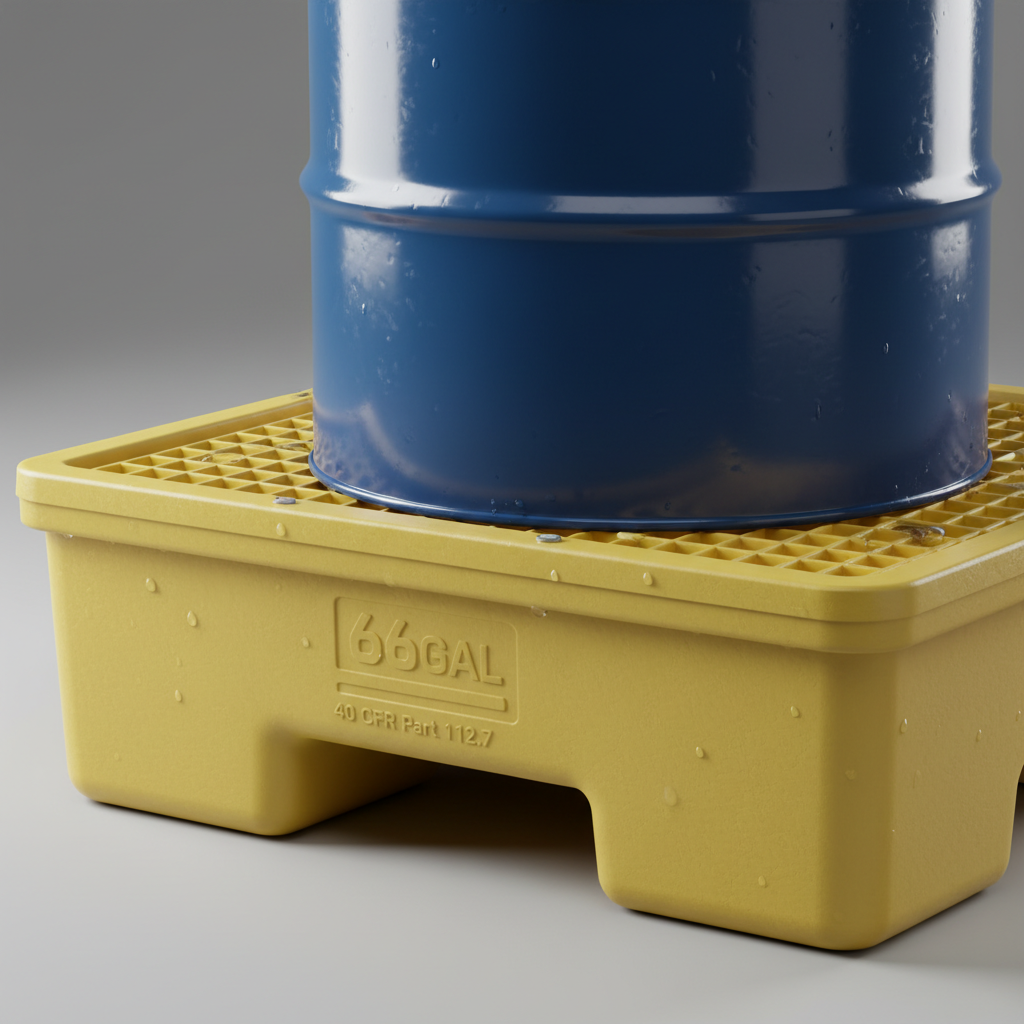
Sump capacity is the volume of liquid a containment system can hold before overflowing. This means your containment must accommodate more than just the drum contents.
55-gallon drums require 66-gallon minimum sump capacity under 40 CFR Part 112.7. EPA applies the 110% rule to drum containment: you need 110% of the largest container’s volume, which equals 60.5 gallons for a 55-gallon drum. Manufacturers round up to 66 gallons to provide a compliance buffer.
Most facilities miss the precipitation factor. If your drums sit outdoors, the containment must hold the 110% volume plus accumulated rainwater. A 2-drum pallet in Seattle needs more freeboard than one in Phoenix. The regulation doesn’t specify exact precipitation allowances, but PE-certified plans typically add 10-20% capacity for weather exposure.
Facilities storing multiple drum sizes face a different calculation. If you store 55-gallon and 30-gallon drums on the same pallet, you still need 66-gallon sump capacity because the largest container drives the requirement. The 30-gallon drum doesn’t reduce your containment obligation.
Here’s what catches facilities during inspections: damaged sump capacity. A 66-gallon pallet with a 6-gallon oil stain drops to 60 gallons of usable capacity, creating a violation. Monthly containment inspections should verify actual available volume, not just check for cracks.
2-Drum vs 4-Drum Pallet Capacity: Which Size Meets SPCC Requirements?
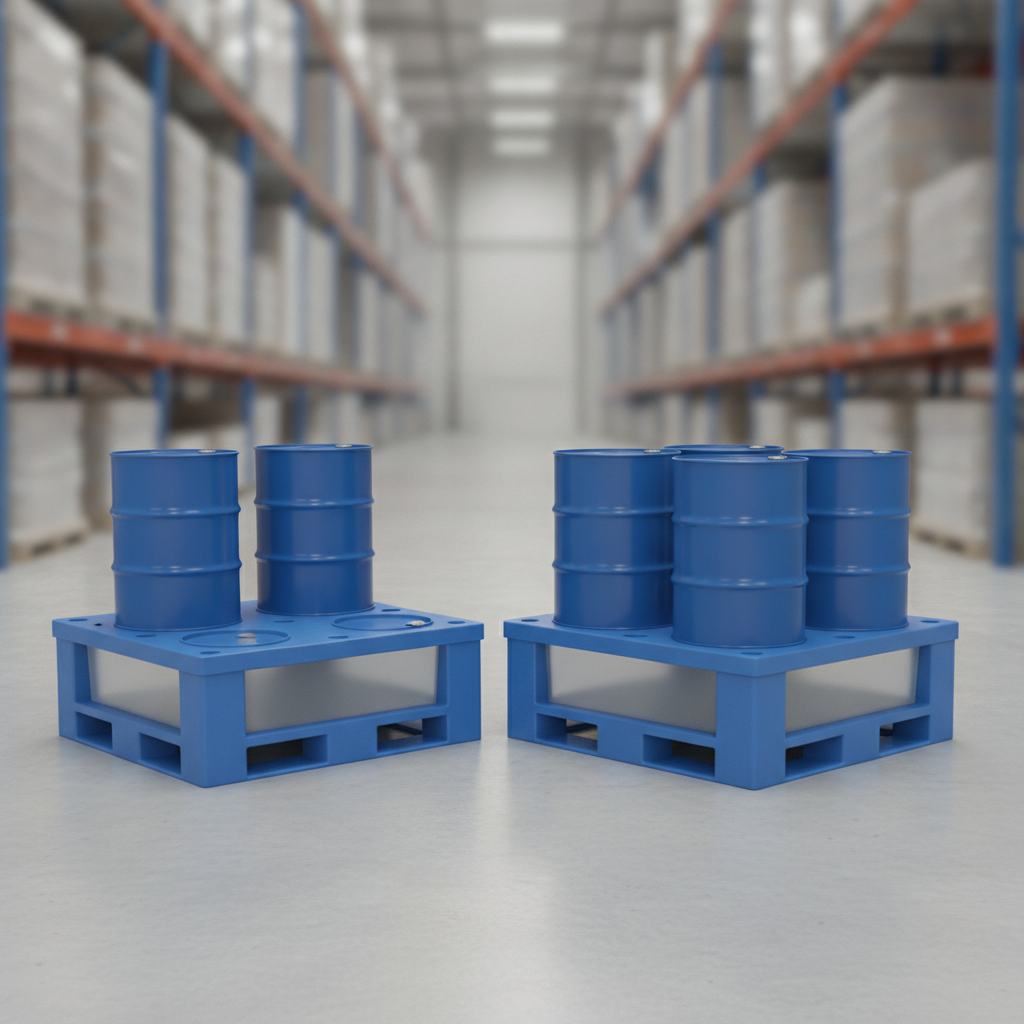
2-drum pallets provide the same sump capacity as most 4-drum configurations, despite the size difference. Here’s the breakdown:
| Pallet Type | Footprint | Sump Capacity | Cost Range | Best Use |
|---|---|---|---|---|
| 2-drum standard | 51″ x 25″ | 66 gallons | $200-600 | Limited space, frequent drum access |
| 4-drum standard | 51″ x 51″ | 66-68 gallons | $400-1200 | High volume, stable storage |
| 4-drum low-profile | 53″ x 53″ | 78 gallons | $500-1400 | Stacking capability, extra capacity |
The 4-drum pallet doesn’t automatically mean more containment. Standard 4-drum pallets hold 66-68 gallons because manufacturers optimize for material costs, not maximum sump volume. You’re paying for footprint and drum capacity, not containment volume.
Low-profile 4-drum pallets break this pattern. They sacrifice drum access height for 78-gallon sump capacity, giving you the extra volume for precipitation or multi-drum spill scenarios. These cost 20-40% more but work for facilities with forklift access and weather exposure.
Footprint matters for facility planning. A 2-drum pallet fits through standard doorways and around tight corners. 4-drum pallets need wider aisles and stronger flooring but reduce the number of containment units to track during inspections.
Material handling drives the real decision. Facilities with drum pumps and frequent access choose 2-drum pallets. Warehouses with forklift operations prefer 4-drum systems for efficiency.
What Drum Cabinet Containment Options Work for Indoor Storage?
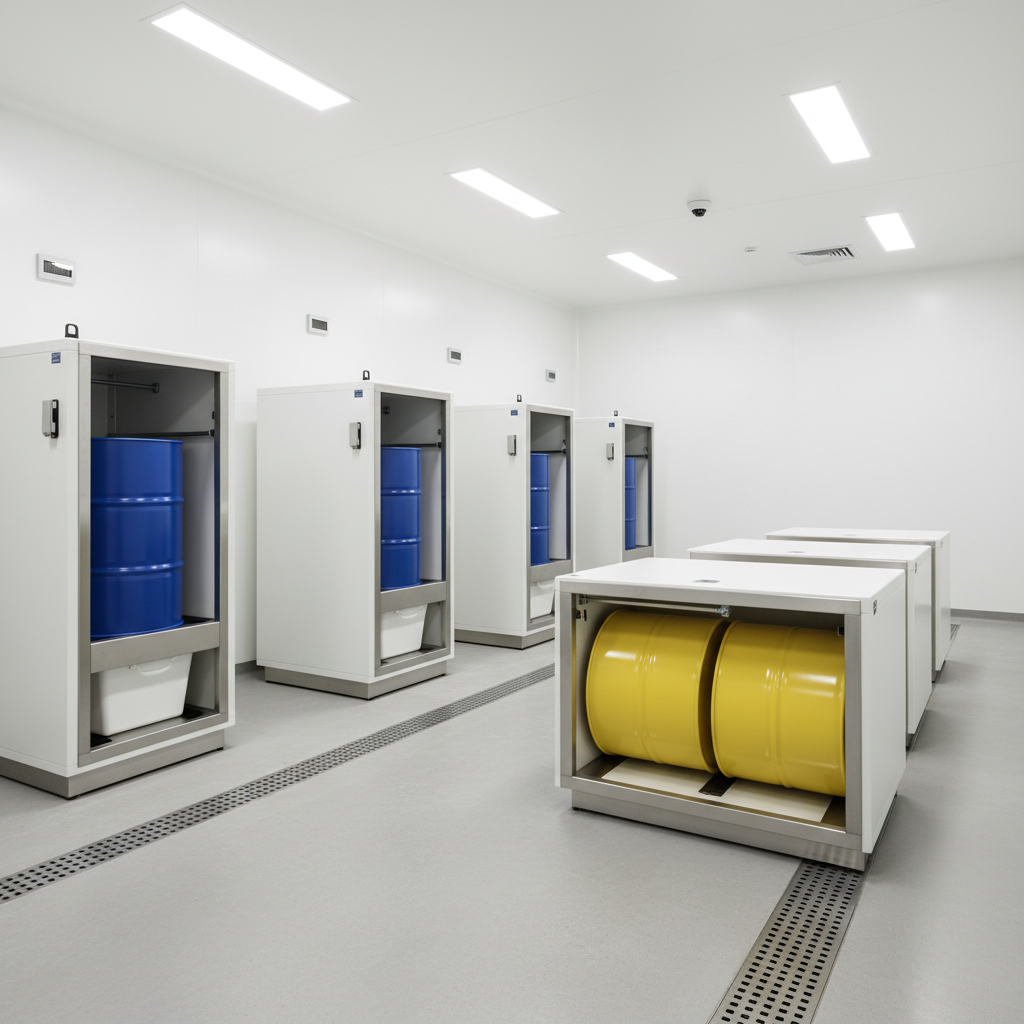
Drum cabinets provide integrated containment for indoor storage where pallets won’t fit. These work for climate-controlled areas with fire rating requirements:
- 2-drum vertical cabinets hold drums upright with 110-gallon sump capacity and meet OSHA fire rating requirements for flammable storage
- 4-drum horizontal cabinets store drums on their side with pump access but require 220-gallon sump capacity for compliance
- Safety cabinets with secondary containment combine fire protection with spill containment but cost $2,000-4,000 per unit
- Modular cabinet systems allow expansion from 2-drum to 8-drum configurations with connected sump capacity
- Vented drum storage buildings provide weather protection with integrated containment floors sized for total drum volume
Fire-rated drum cabinets typically provide 110-gallon sump capacity for compliance margin. This exceeds SPCC requirements but satisfies both EPA secondary containment and OSHA flammable storage rules with one system.
Cabinets work when you need climate control or fire ratings. They don’t work when you need forklift access or frequent drum rotation. The contained environment protects products but limits handling efficiency.
Venting requirements add complexity. Drums containing VOCs need cabinet ventilation to prevent vapor buildup, but vented cabinets cost more and require ductwork connections.
Most facilities use cabinets for small-volume storage (2-4 drums) and switch to pallet systems above that threshold. The per-drum cost of cabinet storage becomes prohibitive at scale.
How Do You Calculate Containment for Stacked Drum Storage?
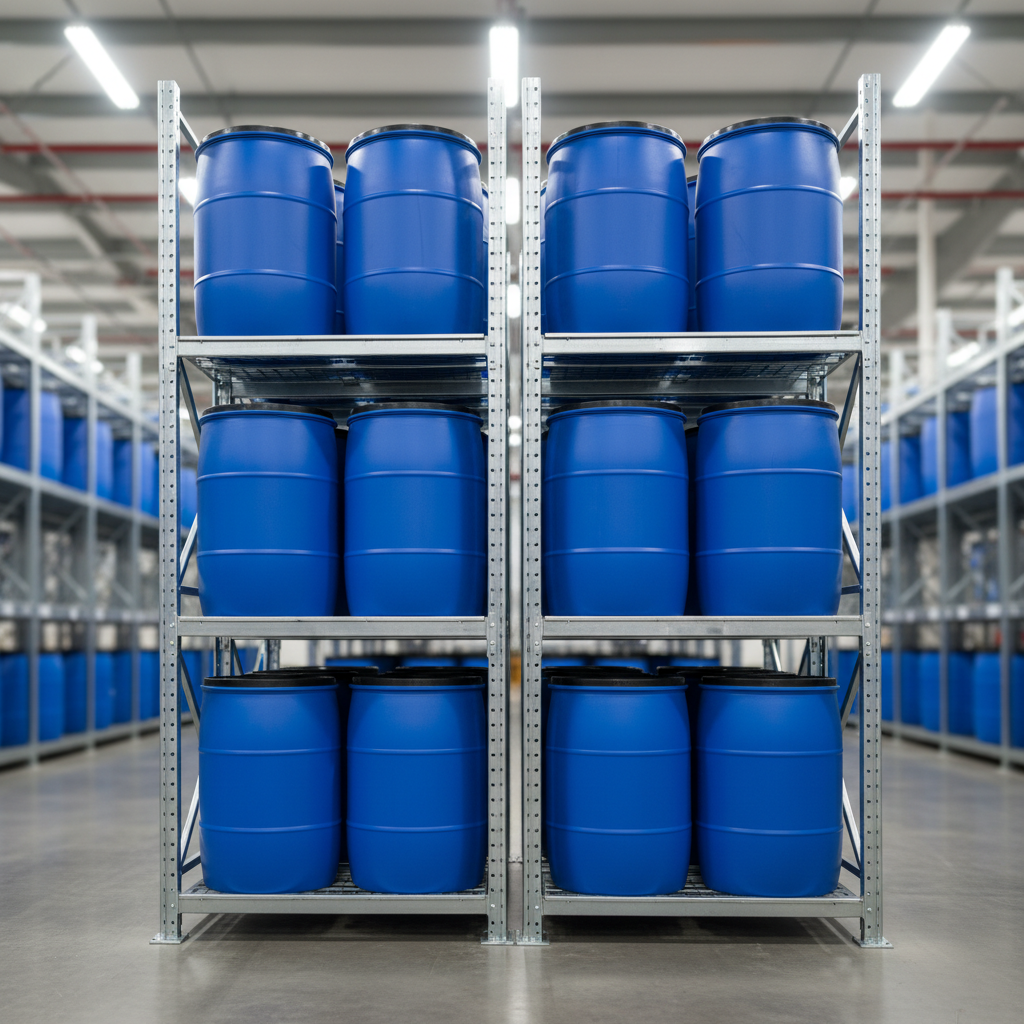
Stacked drum systems require cumulative volume calculation for all levels. Follow these steps:
Count total drums across all stack levels. A 2-level, 4-drum system holds 8 drums total, not 4 drums.
Multiply total drums by 55 gallons each. 8 drums × 55 gallons = 440 gallons of stored liquid.
Calculate 110% of total volume. 440 gallons × 1.10 = 484 gallons minimum sump capacity required.
Verify manufacturer system capacity. Most 2-level stacking systems provide 500-600 gallons to meet this requirement.
Add precipitation allowance for outdoor systems. Include 10-20% additional capacity for weather exposure.
Check load ratings for stacked configuration. Standard pallets support 8,000-12,000 pounds; verify this covers your drum weight plus stack loading.
Manufacturer stacking systems include reinforced bases and connecting hardware rated for vertical loads. Custom stacking of standard pallets violates most warranty terms and creates inspection violations if the system fails.
2-level 4-drum stacks require 220-gallon minimum sump capacity when calculated per drum (4 drums × 55 gallons × 110%). But stacked systems often hold more drums than the base footprint suggests, driving higher capacity requirements.
Safety access becomes critical with stacked systems. You need drum handling equipment rated for the lift height and secure stacking that won’t shift during drum removal.
Most facilities limit stacking to 2 levels for handling reasons. 3-level systems require specialized lifting equipment and create fall hazards during drum access.
What Polyethylene vs Steel Drum Containment Products Actually Cost?
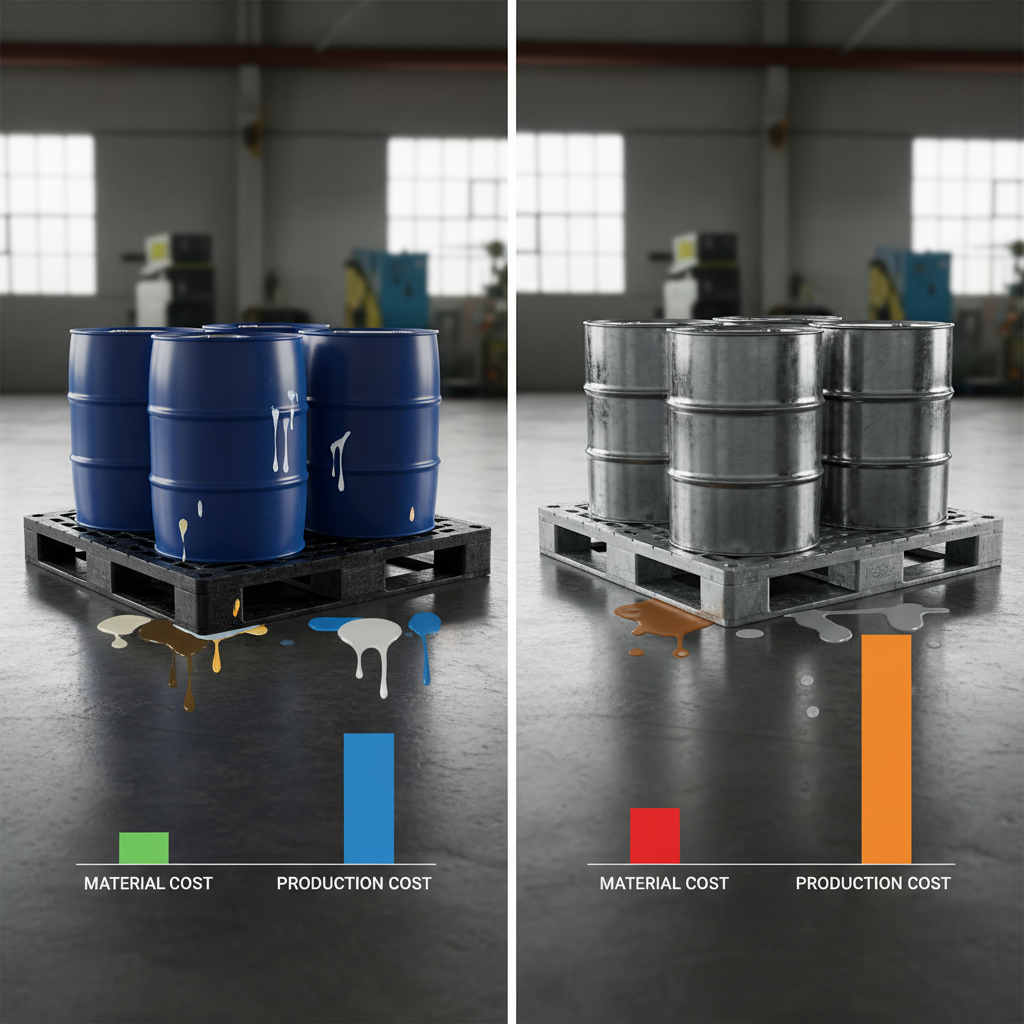
Polyethylene pallets cost 40-60% less than steel equivalents but have different performance characteristics:
| Feature | Polyethylene | Steel |
|---|---|---|
| 2-drum pallet cost | $200-400 | $600-1200 |
| Chemical compatibility | Resistant to most acids, bases | Universal chemical resistance |
| Load capacity | 3,000-6,000 pounds | 8,000-15,000 pounds |
| UV resistance | Requires UV stabilizers | Not affected by sunlight |
| Forklift durability | Prone to cracking | Handles fork impact |
| Temperature range | -20°F to 140°F | -40°F to 200°F |
Polyethylene works for most drum storage applications. It resists corrosion, won’t rust, and handles standard chemical spills without degrading. The lower cost makes it attractive for large facilities with dozens of containment units.
Steel becomes necessary for heavy drums, forklift operations, or extreme chemical compatibility. Stainless steel pallets handle acids that would destroy polyethylene, but cost $1,500-3,000 per 2-drum unit.
Load capacity drives material choice for many facilities. A 2-drum steel pallet supports 8,000+ pounds while polyethylene maxes out around 6,000 pounds. Full 55-gallon drums weigh 460 pounds each, so you’re looking at 920 pounds plus pallet weight for a 2-drum setup.
UV degradation affects outdoor polyethylene installations. Standard poly pallets become brittle after 2-3 years of sun exposure without UV stabilizers. UV-stabilized versions cost 15-25% more but last 5-7 years outdoors.
Maintenance costs favor polyethylene for most applications. Steel pallets need periodic repainting and rust treatment. Polyethylene pallets need replacement when they crack but require no ongoing maintenance.
Warranty terms reflect these differences. Steel pallets carry 5-10 year structural warranties while polyethylene typically covers 2-3 years against manufacturing defects.
Frequently Asked Questions
Do drum containment pallets count as secondary containment under SPCC?
Yes, drum containment pallets satisfy SPCC secondary containment requirements under 40 CFR Part 112 when they provide adequate sump capacity. The pallet must hold 110% of the largest drum’s volume plus accommodate precipitation if used outdoors. Standard pallets meeting these criteria qualify as engineered secondary containment systems.
Can you stack drums on containment pallets safely?
You can stack drums on containment pallets if the pallet is rated for the load and you calculate total containment volume for all stacked drums. Most standard pallets support 2-high stacking with proper drum handling equipment. Verify the manufacturer’s load rating covers your specific drum weight and stacking configuration before implementation.
What happens if your drum containment fails an SPCC inspection?
Failed drum containment during SPCC inspection typically results in violation notices requiring immediate corrective action. EPA can issue penalties of $1,100-$40,000 per violation depending on severity and environmental impact risk. Common violations include inadequate sump capacity, damaged containment, or missing precipitation allowances for outdoor storage.