
Transformer oil secondary containment SPCC compliance catches most utilities and industrial facilities off guard. Most don’t realize their transformers count as oil storage under SPCC regulations until they get hit with a violation notice.
Key Takeaways:
- Transformers containing 55+ gallons of oil count toward SPCC thresholds under 40 CFR 112.7
- The impracticability alternative allows inspection programs instead of physical containment for transformers
- Large power transformers can contain 5,000-15,000 gallons of oil, triggering strict containment requirements
Do Transformers Count as Oil Storage Under SPCC?
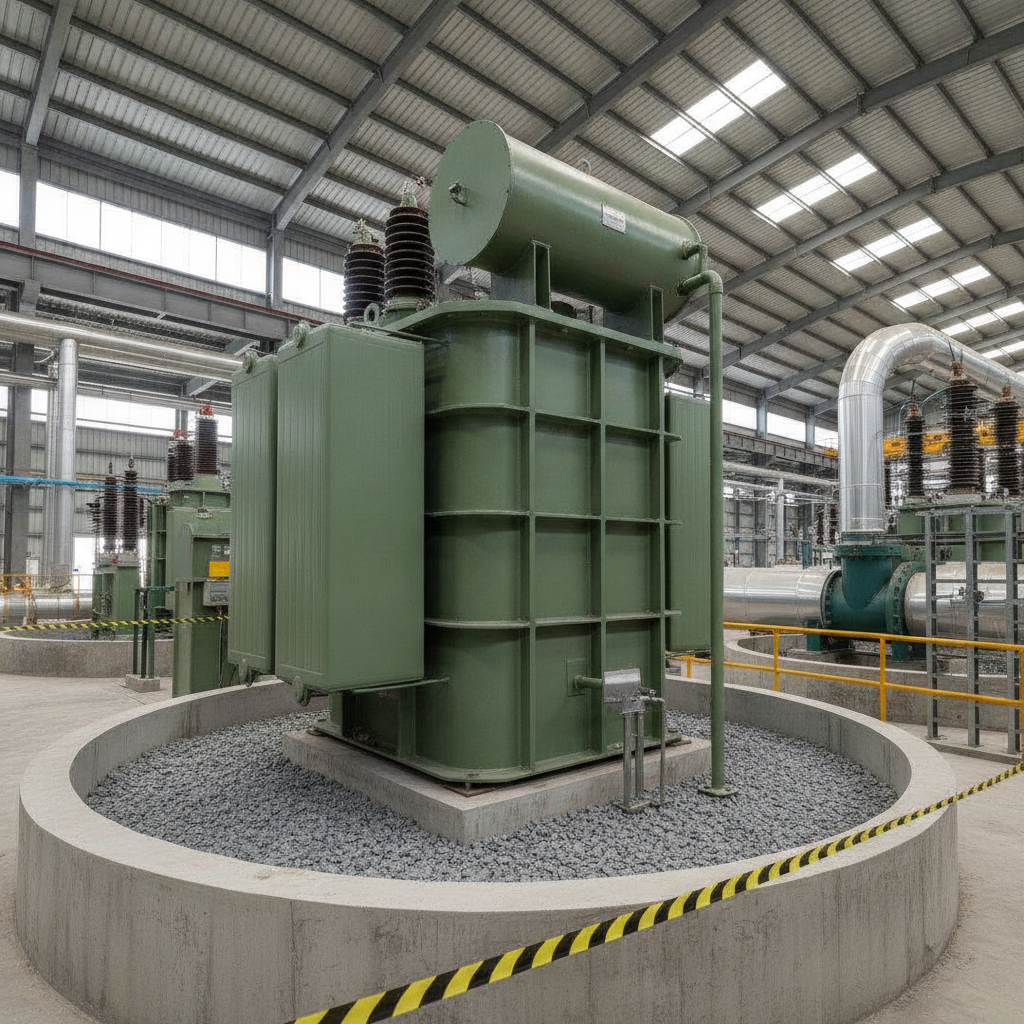
Transformer oil is a regulated petroleum product under 40 CFR Part 112. This means any transformer containing 55 gallons or more counts toward your facility’s total oil storage capacity for SPCC threshold calculations.
The regulation specifically covers “oil-filled operational equipment” under 40 CFR 112.7(e). Transformers fall squarely into this category. The 55-gallon minimum threshold applies to each individual transformer, not your total transformer oil inventory.
Most facility managers miss this because they think of transformers as electrical equipment, not oil storage. But EPA considers the oil inside transformers the same as oil in any other container. If your facility stores 1,320 gallons or more of oil in aggregate – including transformer oil – you need an SPCC plan.
Utilities with multiple pad-mounted transformers often exceed the 1,320-gallon threshold without realizing it. A single substation transformer can contain 3,000 gallons of dielectric fluid. That’s more than double the SPCC threshold by itself.
How Much Oil Do Different Transformer Types Actually Contain?
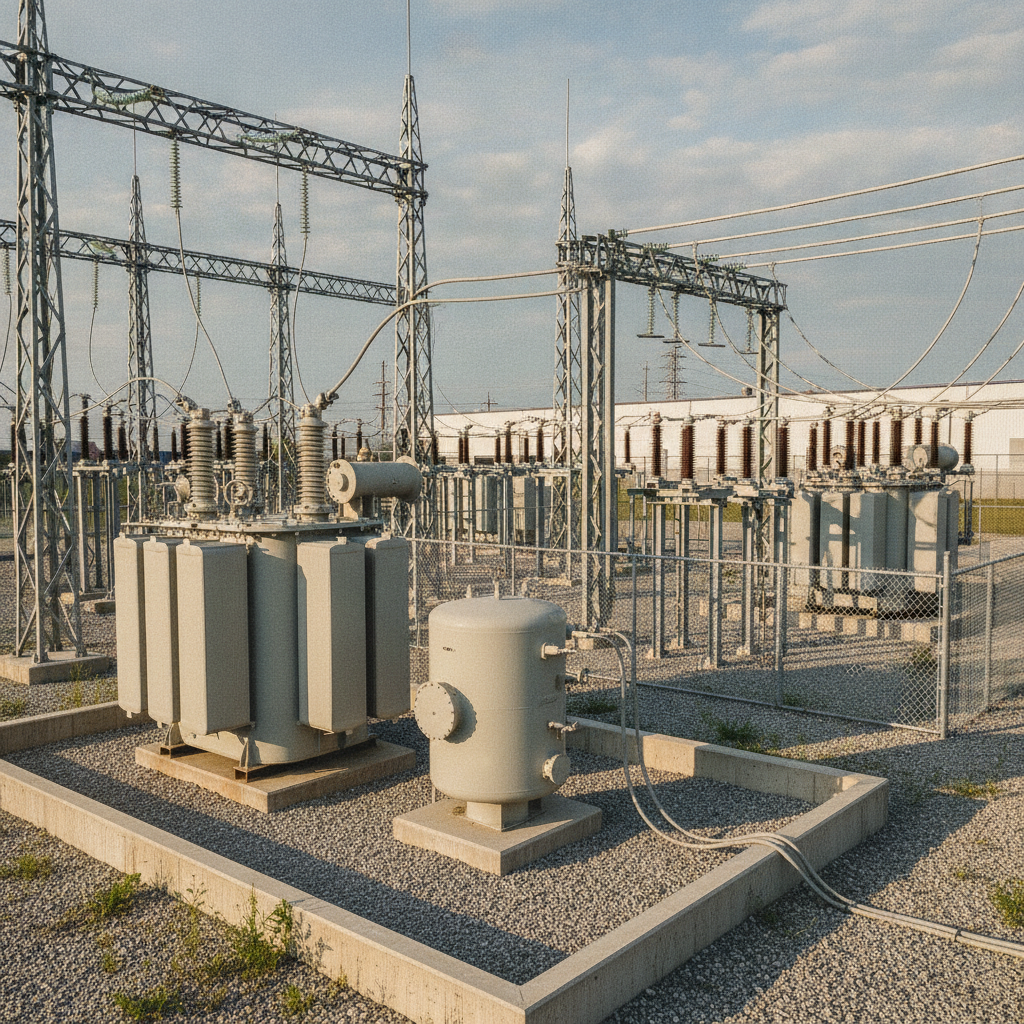
Transformer oil volumes vary dramatically by application and size. Here’s what different transformer types typically contain:
| Transformer Type | Typical Oil Volume | SPCC Impact |
|---|---|---|
| Distribution (pad-mounted) | 30-300 gallons | Individual units may not trigger, but multiple units often exceed 1,320-gallon facility threshold |
| Substation power | 500-5,000 gallons | Single unit often exceeds SPCC threshold |
| Utility transmission | 3,000-8,000 gallons | Always triggers SPCC requirements |
| Power plant main | 8,000-15,000 gallons | Requires PE-certified SPCC plan due to volume |
| Industrial process | 100-1,500 gallons | Depends on facility’s total oil storage |
Distribution transformers cause the most confusion. Individual units under 100 gallons seem small, but facilities often have dozens. A data center with 20 transformers averaging 75 gallons each stores 1,500 gallons of oil – well over the SPCC threshold.
Substation transformers eliminate any threshold questions. Most contain 2,000-4,000 gallons of dielectric fluid. That volume alone triggers SPCC plan requirements, regardless of what other oil your facility stores.
What Is the Impracticability Alternative for Transformer Containment?
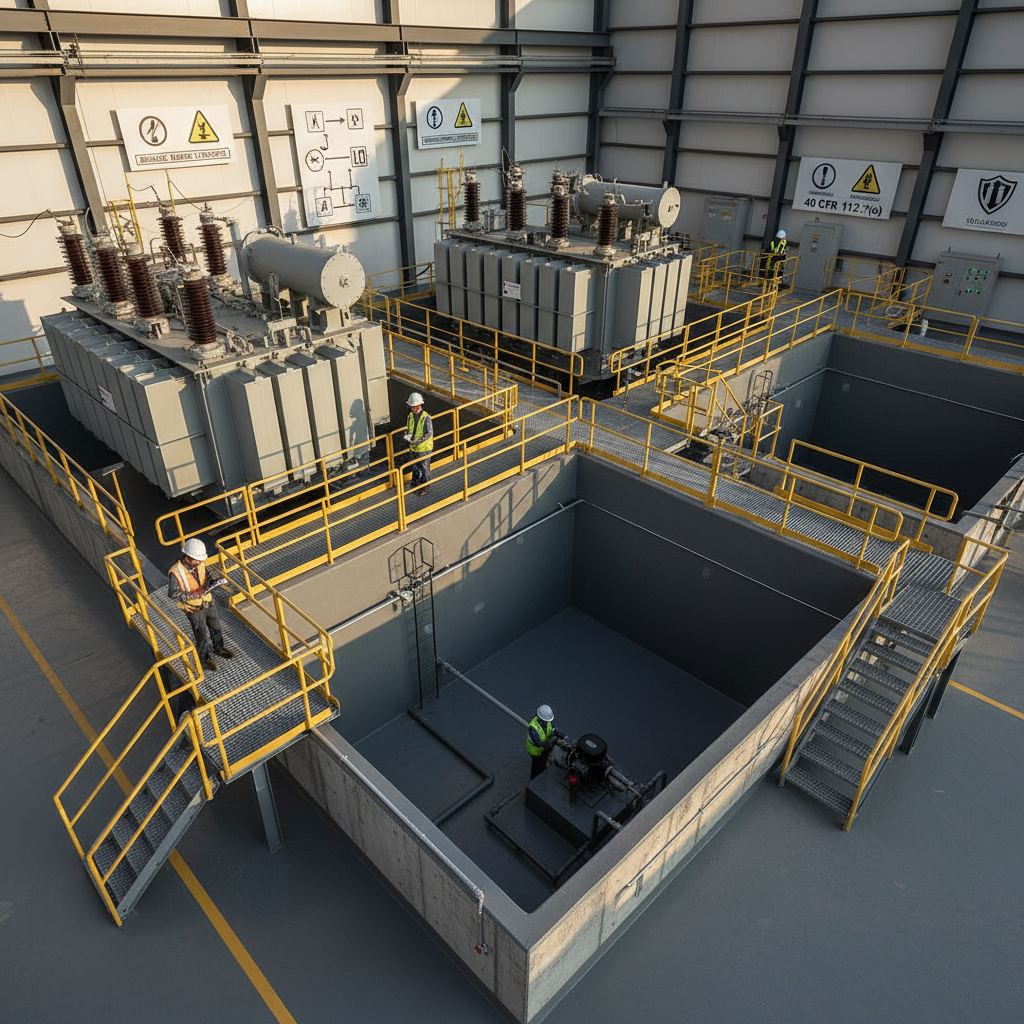
The impracticability alternative is a regulatory provision under 40 CFR 112.7(c) that allows facilities to use enhanced inspection programs instead of physical secondary containment. This means you can implement alternative compliance methods when traditional containment is not feasible.
EPA allows the impracticability alternative when physical containment would interfere with equipment operation or create safety hazards. For transformers, this often applies to energized equipment where containment berms could create electrical hazards or prevent emergency access.
To use the impracticability alternative, you must document why physical containment is not feasible and implement an alternative program that provides equivalent environmental protection per 40 CFR 112.7(c). The alternative must include enhanced inspections, leak detection systems, and rapid response procedures.
The documentation requirement is specific. You need engineering analysis showing containment would create operational problems or safety risks. “It’s expensive” or “it’s inconvenient” don’t qualify as impracticability under EPA interpretation.
Most utilities use the impracticability alternative for transmission-level transformers where physical containment would interfere with switching operations or emergency access. Distribution transformers rarely qualify because portable containment pallets don’t create operational constraints.
How Do You Design Transformer Pad Containment Systems?
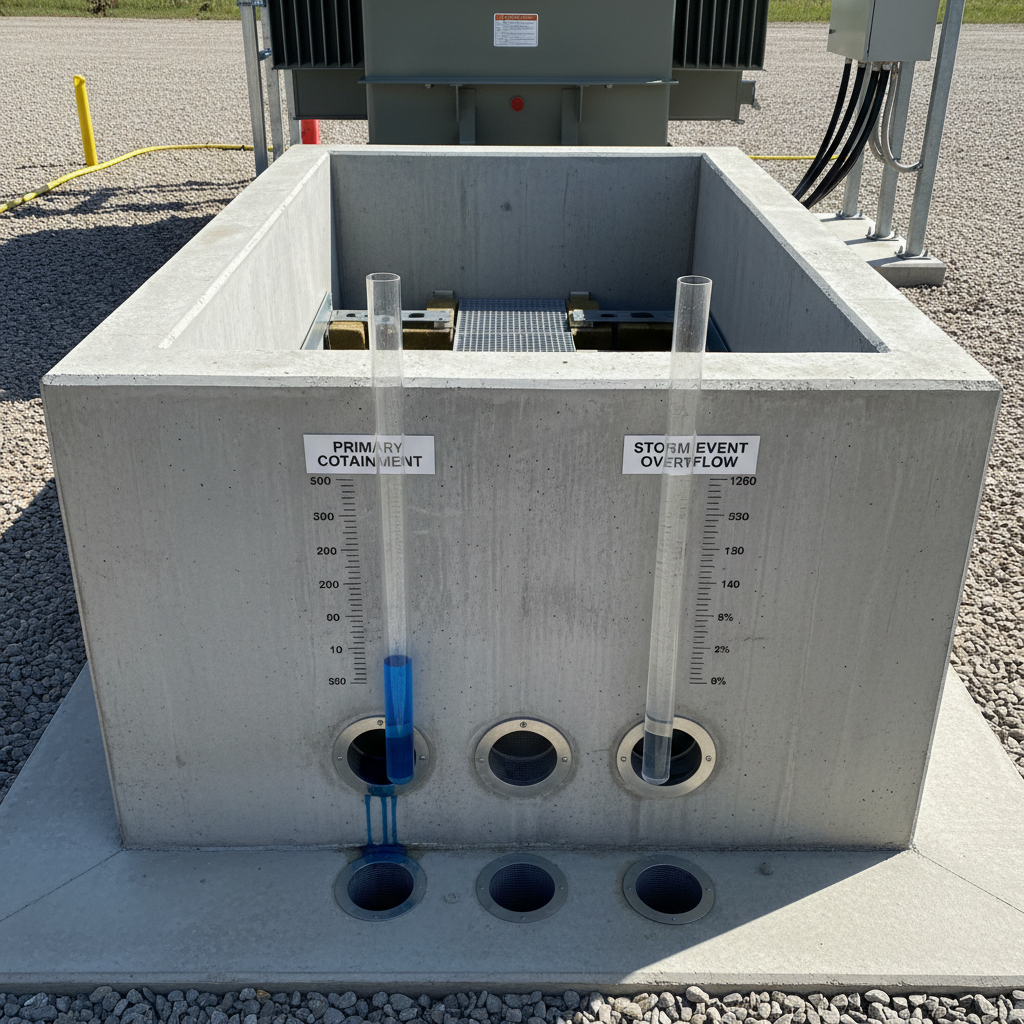
Designing transformer containment requires specific steps to handle both oil spills and electrical safety:
Calculate the containment volume requirement. You need 110% of the largest transformer’s oil capacity plus precipitation volume based on your region’s 25-year, 24-hour storm event. A 3,000-gallon transformer needs 3,300 gallons of containment capacity minimum.
Design the pad with integrated containment. Pour a concrete pad with 6-inch curbed edges or install modular containment around the existing pad. The containment must be oil-resistant and electrically non-conductive.
Install proper drainage controls. Include manually-operated drain valves that stay closed during normal operation. Valves must be accessible but secured to prevent accidental opening during inspections.
Specify electrical-grade materials. Containment systems near energized equipment need dielectric strength ratings. Standard polyethylene berms may not provide adequate electrical isolation for high-voltage transformers.
Plan for maintenance access. Containment can’t interfere with transformer cooling, cable connections, or emergency shutoff access. Design walkways and lifting points for equipment maintenance.
Document the design calculations. SPCC plans require containment volume calculations and engineering drawings. Include precipitation data sources and safety factor justifications.
Transformer containment differs from standard tank containment because of electrical safety requirements. Materials must resist dielectric breakdown, and designs must maintain safe working clearances around energized equipment.
What Containment Products Actually Work for Transformer Applications?
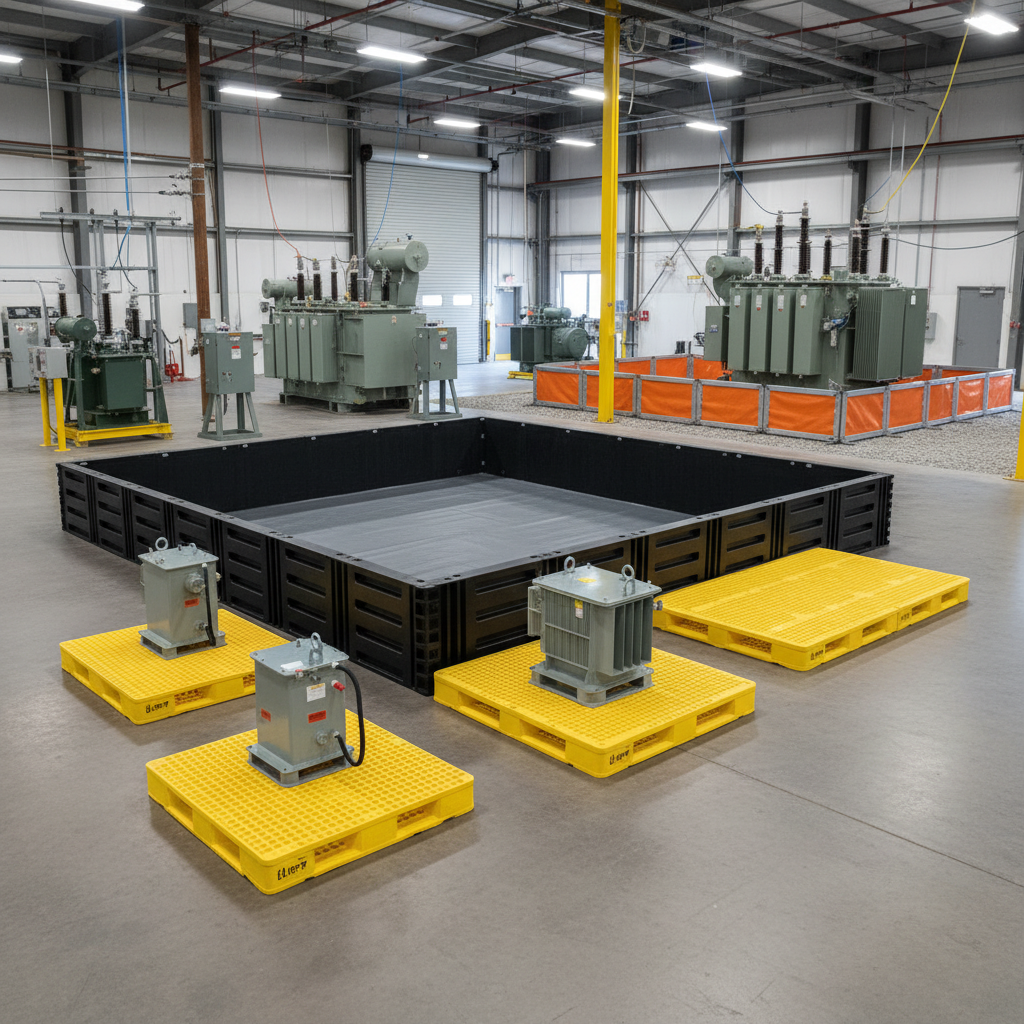
Transformer containment products must handle both oil spills and electrical environments. Here are the main options:
| Containment Type | Capacity Range | Best Applications |
|---|---|---|
| Portable spill pallets | 30-400 gallons | Small distribution transformers, temporary installations |
| Modular berm systems | 500-5,000 gallons | Substation transformers, retrofit applications |
| Permanent concrete containment | 1,000-20,000 gallons | Large power transformers, new construction |
| Inflatable berms | 200-2,000 gallons | Emergency response, maintenance containment |
Spill containment pallets work for smaller transformers but must be rated for electrical applications. Standard warehouse pallets lack the dielectric strength needed near high-voltage equipment. Look for units tested to ASTM D149 standards for electrical insulation.
Modular berm systems offer flexibility for existing installations. You can install them around existing transformer pads without major construction. Quality systems use urethane-coated fabric that resists both oil and electrical breakdown.
Permanent concrete containment provides the best long-term solution for large transformers. The concrete pad integrates containment curbing with equipment mounting points. This approach works best for new installations or major renovations.
Transformer-rated containment systems must handle 15,000+ volts and resist dielectric breakdown. Standard industrial containment products often fail electrical safety testing and create hazards around energized equipment.
Frequently Asked Questions
Do pad-mounted transformers need secondary containment?
Pad-mounted transformers containing 55+ gallons of oil require secondary containment or an approved impracticability alternative under 40 CFR 112.7. Most distribution transformers under 100 gallons can use portable containment pallets rated for electrical equipment. Check your specific transformer nameplate for oil volume – many newer pad-mounted units contain 75-150 gallons.
Can you use the impracticability alternative for all transformers?
The impracticability alternative applies when physical containment is not feasible due to operational constraints, not cost or convenience. You must document why containment is impracticable and implement an alternative inspection and maintenance program that provides equivalent environmental protection. Most distribution transformers don’t qualify because portable pallets don’t create operational problems.
What happens if transformer oil spills outside containment?
Transformer oil spills trigger immediate reporting requirements under SPCC regulations and may require EPA notification within 24 hours if the spill reaches navigable waters. The facility must implement response procedures per their SPCC plan and may face penalties up to $59,973 per day for inadequate secondary containment. Document all spill response actions and containment system performance for EPA review.
This article provides general guidance on SPCC compliance for transformer installations. Consult a qualified Professional Engineer for site-specific containment design and regulatory compliance advice.