
SPCC online training platforms mostly sell generic environmental courses that skip oil storage requirements. Most facilities waste money on broad compliance training that won’t help during EPA inspections.
Key Takeaways:
- SPCC-specific training platforms cost $45-95 per user vs $150+ for generic environmental courses
- Only 3 platforms offer SPCC-focused content that covers 40 CFR Part 112 requirements in detail
- Group licensing reduces per-user costs by 30-60% for facilities with 10+ employees needing training
What SPCC Training Content Must Your Platform Actually Cover?
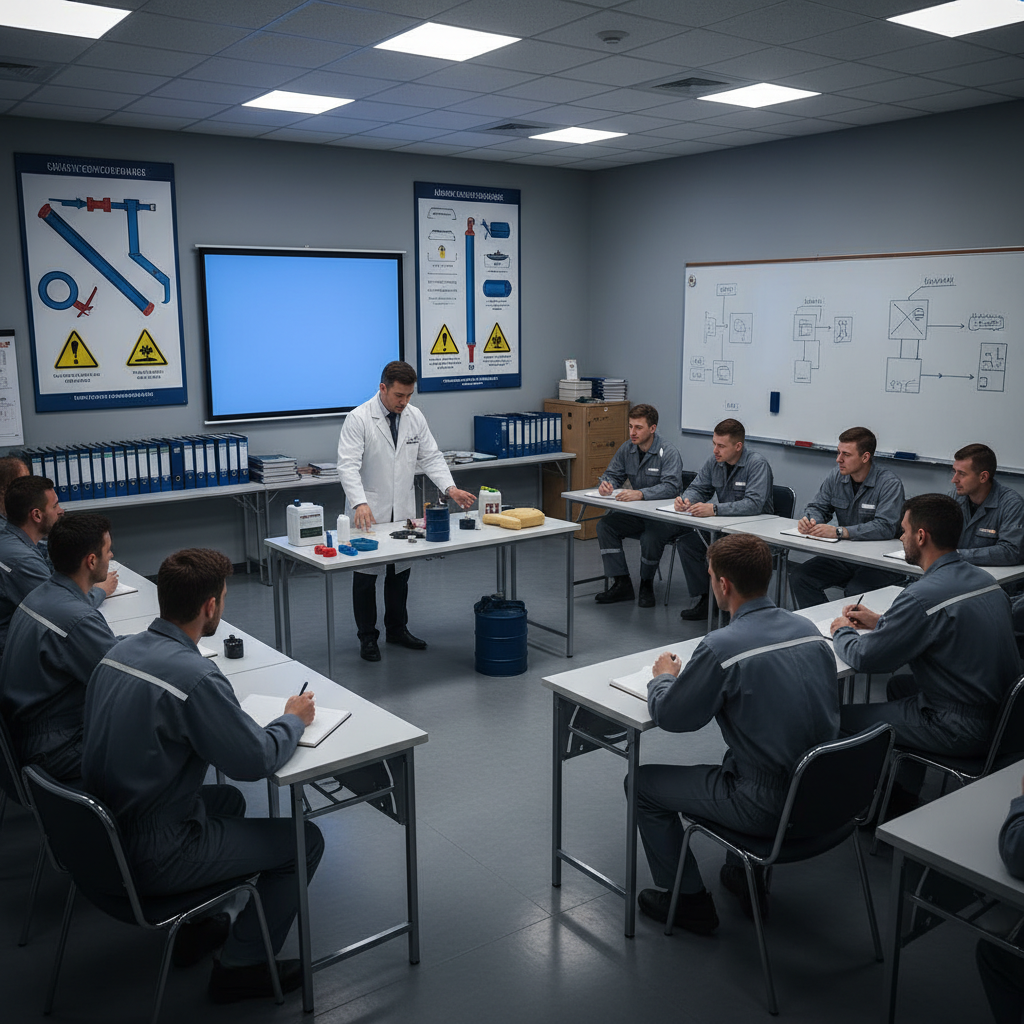
SPCC training requirement is the obligation under 40 CFR Part 112.7 for facilities to train personnel in oil-handling procedures and spill response. This means your training platform must cover specific regulatory elements, not just general spill cleanup procedures.
Compliant SPCC training covers eight specific elements from 40 CFR Part 112.7. These include operation and maintenance of equipment, discharge procedure notification protocols, contact information for cleanup contractors, and facility-specific response actions. Generic environmental training skips these SPCC-specific requirements.
Most platforms selling “spill response training” focus on OSHA hazmat procedures. SPCC training covers different ground. You need training that addresses oil storage inspection schedules, secondary containment maintenance, and the specific notification requirements under the Clean Water Act.
The training platform must address your facility’s actual SPCC plan elements. Cookie-cutter environmental courses can’t do this. Your personnel need to understand the specific procedures documented in your facility’s plan, including which equipment requires monthly inspection and how to document those inspections properly.
SPCC Online Training Platform Comparison: Features and Pricing

| Platform | SPCC-Specific Content | Cost Per User | Group Discount Threshold |
|---|---|---|---|
| ComplianceOnline | Dedicated SPCC course | $89 | 10+ users (25% off) |
| Environmental Training Solutions | SPCC module in broader course | $67 | 15+ users (20% off) |
| Safety Unlimited | General spill response only | $195 | 20+ users (30% off) |
| Pure Safety | SPCC-focused training | $45 | 5+ users (35% off) |
Platform pricing ranges from $45-195 per user with group discounts starting at different user thresholds. ComplianceOnline offers the most detailed SPCC content but costs more than Pure Safety’s focused approach.
Pure Safety provides the best value for SPCC-specific content at $45 per user. Their course covers all eight required elements from 40 CFR Part 112.7 without padding the curriculum with unrelated environmental topics. Group discounts start at just 5 users.
Safety Unlimited charges $195 per user for general spill response training that barely mentions SPCC requirements. You’re paying for content you don’t need while missing the specific regulatory elements EPA expects your personnel to understand.
Environmental Training Solutions splits the difference with SPCC content embedded in a broader environmental compliance course. This works if your facility needs multiple environmental training programs, but you pay for extra content beyond SPCC requirements.
Which Platforms Offer SPCC-Specific vs General Environmental Training?
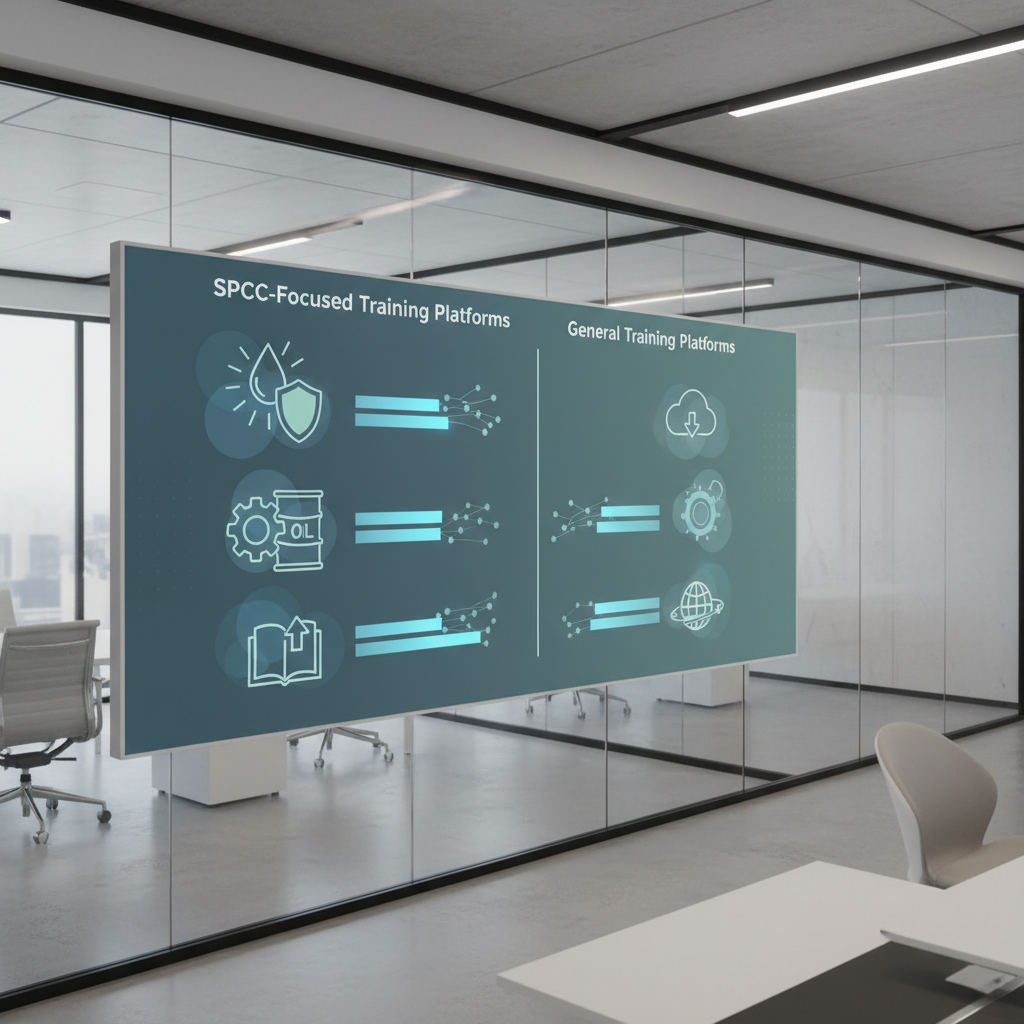
| Training Type | Platform Examples | SPCC Content Depth |
|---|---|---|
| SPCC-Specific | Pure Safety, ComplianceOnline | Covers all 8 required elements |
| Embedded SPCC | Environmental Training Solutions | SPCC module within broader course |
| General Spill Response | Safety Unlimited, most others | Mentions SPCC briefly or not at all |
Only 3 major platforms offer courses dedicated exclusively to SPCC compliance. SPCC-specific training covers monthly inspection requirements and 3-year record retention rules that generic environmental courses ignore.
Pure Safety and ComplianceOnline build entire courses around 40 CFR Part 112 requirements. Their training covers facility inspection schedules, secondary containment maintenance, and spill response procedures specific to oil storage operations. Personnel learn the actual regulatory requirements rather than general spill cleanup methods.
Embedded SPCC training platforms like Environmental Training Solutions include SPCC content as one module in a broader environmental compliance course. This approach works for facilities that need multiple environmental training programs but may not provide enough depth on SPCC-specific inspection and recordkeeping requirements.
General spill response platforms mention SPCC in passing while focusing on OSHA hazmat procedures. Safety Unlimited’s course spends 15 minutes on SPCC requirements in a 4-hour general spill response program. Your personnel get minimal exposure to the specific regulatory elements they need to understand.
How Do SPCC Training Certificate Formats Affect EPA Compliance?

Completion certificate format must document annual training documentation requirements under EPA’s recordkeeping expectations. EPA requires certificates to show completion date, training content covered, and employee identification for proper audit documentation.
Compliant SPCC training certificates include the employee’s name, completion date, specific course content outline, and trainer credentials. Generic certificates that just say “Environmental Training Completed” don’t provide the detail EPA expects during facility inspections.
The certificate should list the specific 40 CFR Part 112 elements covered in the training. This shows EPA that your personnel received training on actual SPCC requirements rather than general environmental topics. Detailed certificates demonstrate compliance with training requirements during inspections.
Certificate tracking affects audit preparation significantly. Platforms that provide searchable certificate databases and automated renewal reminders help facilities maintain the 3-year training record retention requirement. Manual certificate tracking systems often result in missing documentation during EPA visits.
What Group Licensing Options Actually Save Money for Multi-Site Operations?

Calculate your facility’s total training needs across all sites and oil-handling personnel to determine group licensing breakeven points.
Compare platform discounts starting at different user thresholds – Pure Safety offers 35% off at 5 users while others require 10-20 users for significant savings.
Evaluate enterprise features like centralized reporting and multi-site management that justify higher per-user costs for complex operations.
Factor in training coordination costs when comparing individual licenses versus group administration through a single platform.
Review certificate tracking and renewal reminder systems that reduce administrative overhead for facilities with high personnel turnover.
Group licensing typically breaks even at 8-12 users depending on platform discount structures. Pure Safety’s aggressive discount threshold makes group licensing cost-effective for smaller facilities, while larger operations benefit from the enterprise features offered by higher-priced platforms.
Multi-site operations save the most money through centralized training administration. Group licensing includes shared reporting dashboards that track completion across locations and automated reminders for renewal training. These administrative features reduce the hidden costs of training coordination.
Frequently Asked Questions
Do online SPCC training courses meet EPA requirements?
Yes, online SPCC training meets EPA requirements if it covers the specific elements in 40 CFR Part 112.7. The training format doesn’t matter – EPA accepts online, classroom, or self-study formats as long as the content addresses SPCC plan elements and facility-specific procedures.
How often do employees need SPCC training?
EPA doesn’t specify SPCC training frequency, but most facilities conduct annual training to maintain current knowledge. Training should occur whenever SPCC plans are updated, new employees are hired for oil-handling positions, or after spill incidents.
Can I use the same SPCC training for all facility types?
Generic SPCC training covers basic requirements, but facility-specific training works better for compliance. Different facility types like farms, data centers, and fleet yards have unique SPCC requirements that generic courses don’t address adequately.