Double wall aboveground storage tank SPCC compliance promises to eliminate expensive berms and containment pads, but EPA rules don’t automatically accept double-wall construction as secondary containment. Tank design alone won’t satisfy federal requirements.
Key Takeaways:
- Double-wall ASTs must have UL 142 listing with continuous interstitial monitoring to qualify as SPCC secondary containment
- Single-wall tanks require separate berms sized at 110% tank capacity or dike walls capable of containing the largest tank volume
- Double-wall construction costs 40-60% more than single-wall but eliminates $15,000-50,000 in concrete containment construction
Does Double-Wall Construction Satisfy SPCC Secondary Containment Requirements?
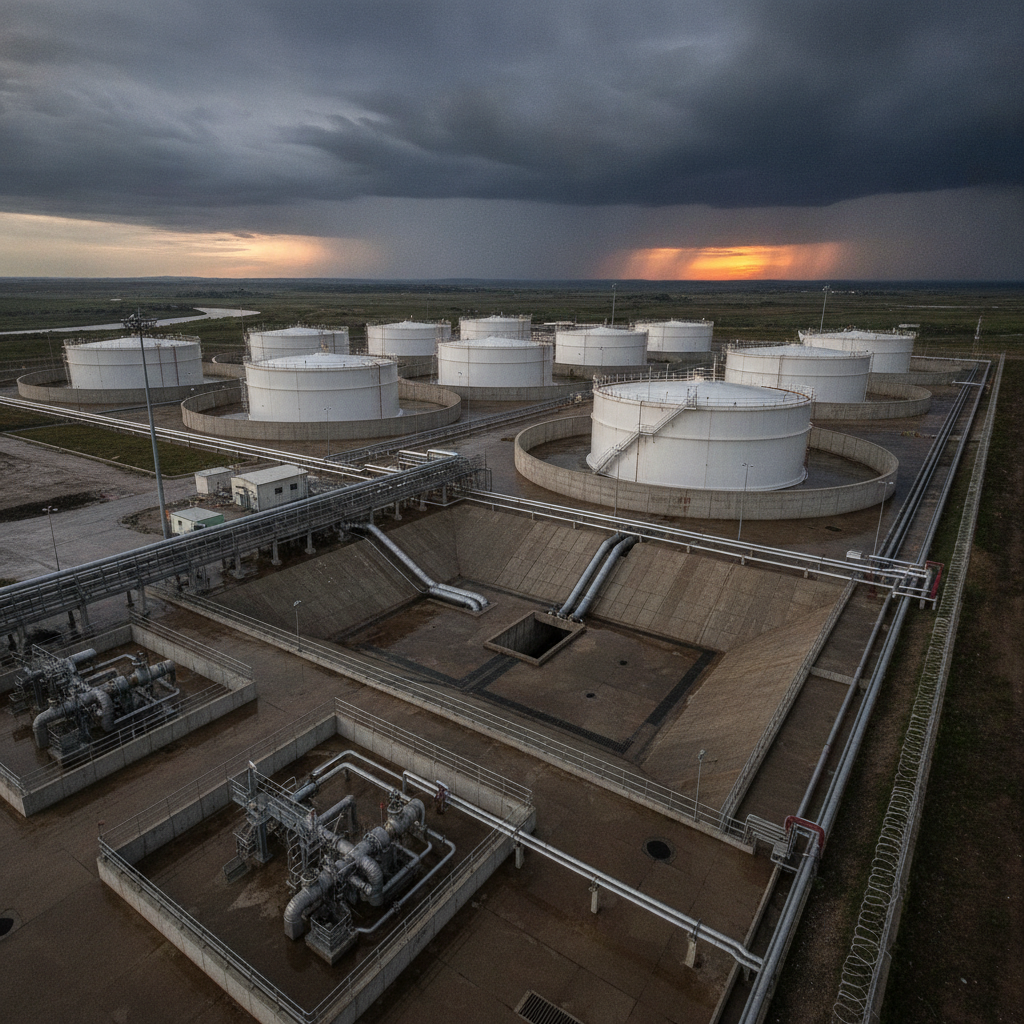
Secondary containment is any structure designed to capture oil releases and prevent them from reaching navigable waters. This means your facility must contain 100% of the largest tank’s contents plus precipitation from a 25-year, 24-hour storm event.
Double-wall ASTs qualify as secondary containment under 40 CFR Part 112 only when they meet three specific criteria. First, the tank must carry UL 142 listing for double-wall construction with interstitial space. Second, continuous interstitial monitoring must detect releases between the tank walls. Third, the monitoring system must trigger immediate response when pressure changes or liquid accumulates in the interstitial space.
EPA accepts double-wall tanks because the outer shell serves as the containment barrier. When oil leaks from the primary tank, the secondary wall prevents environmental release while monitoring systems alert operators. However, generic double-wall construction without UL 142 certification fails SPCC requirements.
Single-wall tanks require separate secondary containment sized at 110% of tank capacity. You build berms, install containment pads, or construct dike walls around the tank area. The 110% rule accounts for displaced volume from the tank itself plus precipitation accumulation during storm events.
Double-Wall vs Single-Wall Tank Construction: Complete SPCC Comparison
| Feature | Double-Wall AST | Single-Wall AST |
|---|---|---|
| Secondary Containment | Built-in outer shell with interstitial space | Requires separate berm or containment pad |
| UL Listing Required | UL 142 double-wall certification mandatory | UL 142 single-wall standard |
| Monitoring System | Continuous interstitial pressure/liquid monitoring | Visual inspection of external containment |
| Steel Thickness | Inner wall: 1/4″ minimum, Outer wall: 3/16″ minimum | Single wall: 1/4″ minimum per API 650 |
| Installation Footprint | Tank footprint only | Tank plus containment area (typically 125% of tank area) |
| Containment Volume | Interstitial space sized for full tank volume | External containment at 110% tank capacity |
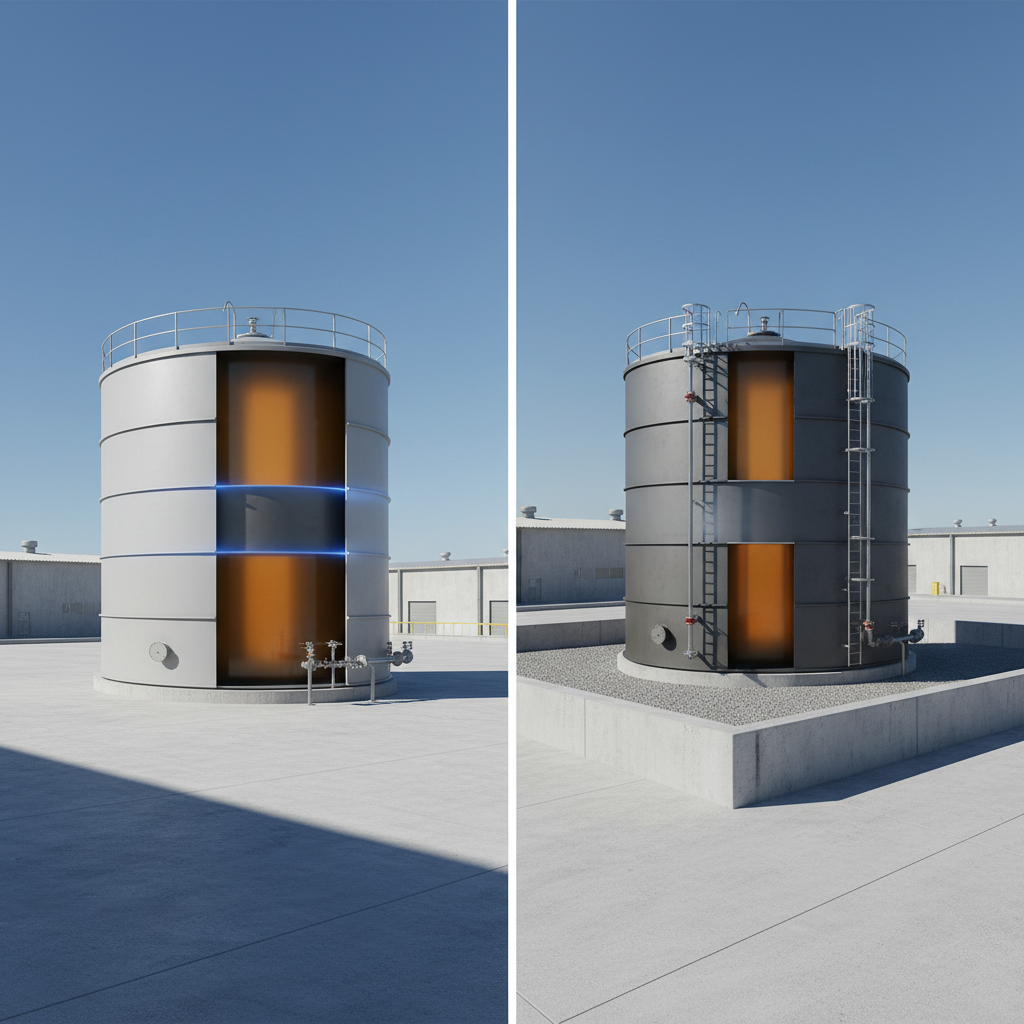
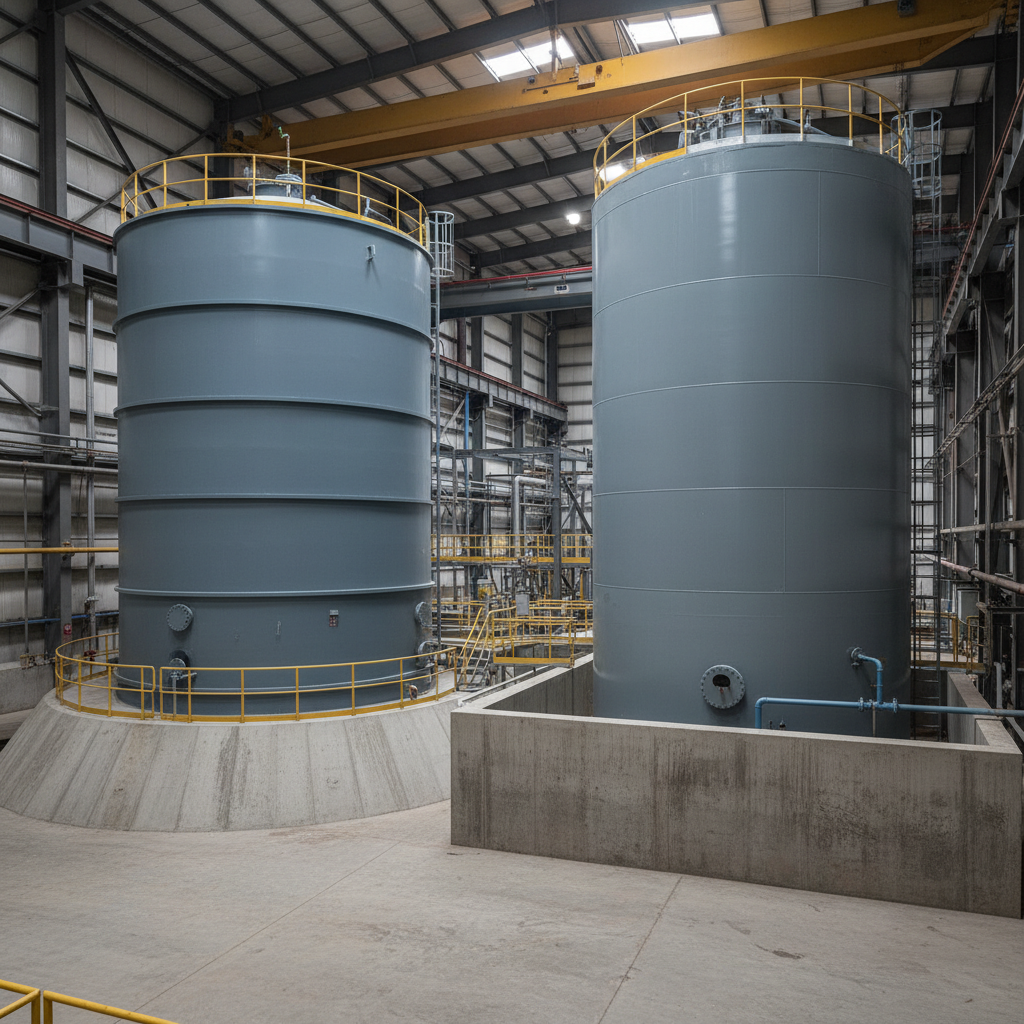
Double-wall construction creates two separate steel shells with monitored space between them. The inner tank holds the oil product while the outer tank serves as secondary containment. Interstitial space typically ranges from 2-6 inches depending on tank diameter and manufacturer specifications.
Single-wall tanks use one steel shell meeting API 650 construction standards. You install these tanks inside separate containment systems. Berms use earthwork and liner materials. Containment pads use concrete or steel construction. Both methods require drainage systems and regular inspection access.
Steel specifications differ between construction types. Double-wall tanks use thinner outer shells since they don’t experience internal pressure from stored product. Single-wall tanks require full structural thickness to contain product pressure and environmental loads.
What Interstitial Space Monitoring Requirements Apply to Double-Wall ASTs?
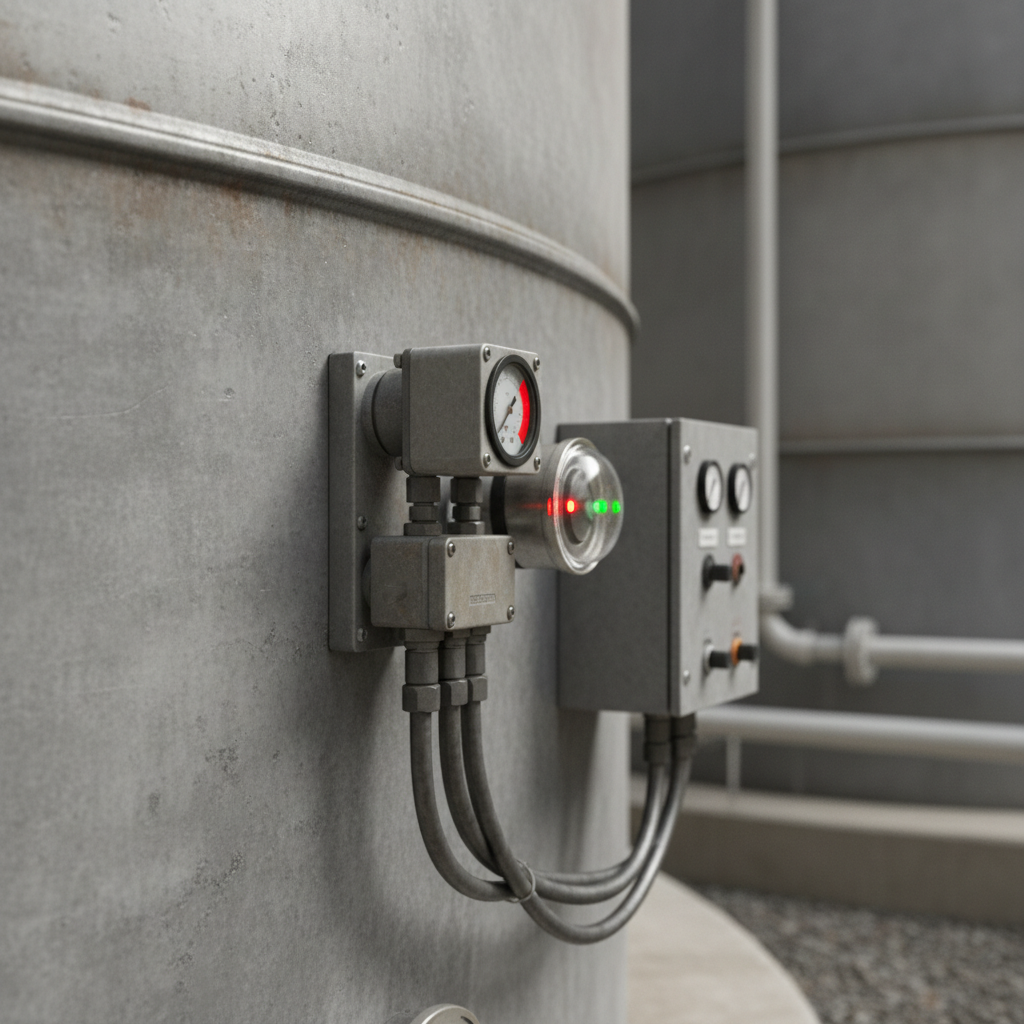
Interstitial monitoring ensures leak detection between tank walls. SPCC rules require continuous monitoring systems that detect pressure changes or liquid accumulation in the interstitial space.
Install pressure monitoring sensors in the interstitial space that detect vacuum loss indicating outer wall damage or pressure increase indicating inner wall leaks.
Connect liquid detection sensors at low points in the interstitial space to identify product accumulation from inner tank releases.
Set up continuous alarm systems that alert operators within 15 minutes of detection threshold breach, meeting typical industry response time standards.
Program automatic tank shutdown systems that stop product flow when interstitial alarms activate, preventing continued release during response delays.
Document monthly calibration checks of all monitoring equipment and maintain test records for three years per SPCC inspection requirements.
Establish written response procedures that specify immediate actions when interstitial alarms activate, including isolation procedures and emergency contacts.
Monitoring system failure eliminates the tank’s secondary containment qualification under SPCC rules. You must install temporary containment or shut down operations until monitoring restoration. Most facilities maintain backup monitoring components to prevent extended shutdowns.
How Do Inspection Requirements Differ Between Double-Wall and Single-Wall Tanks?
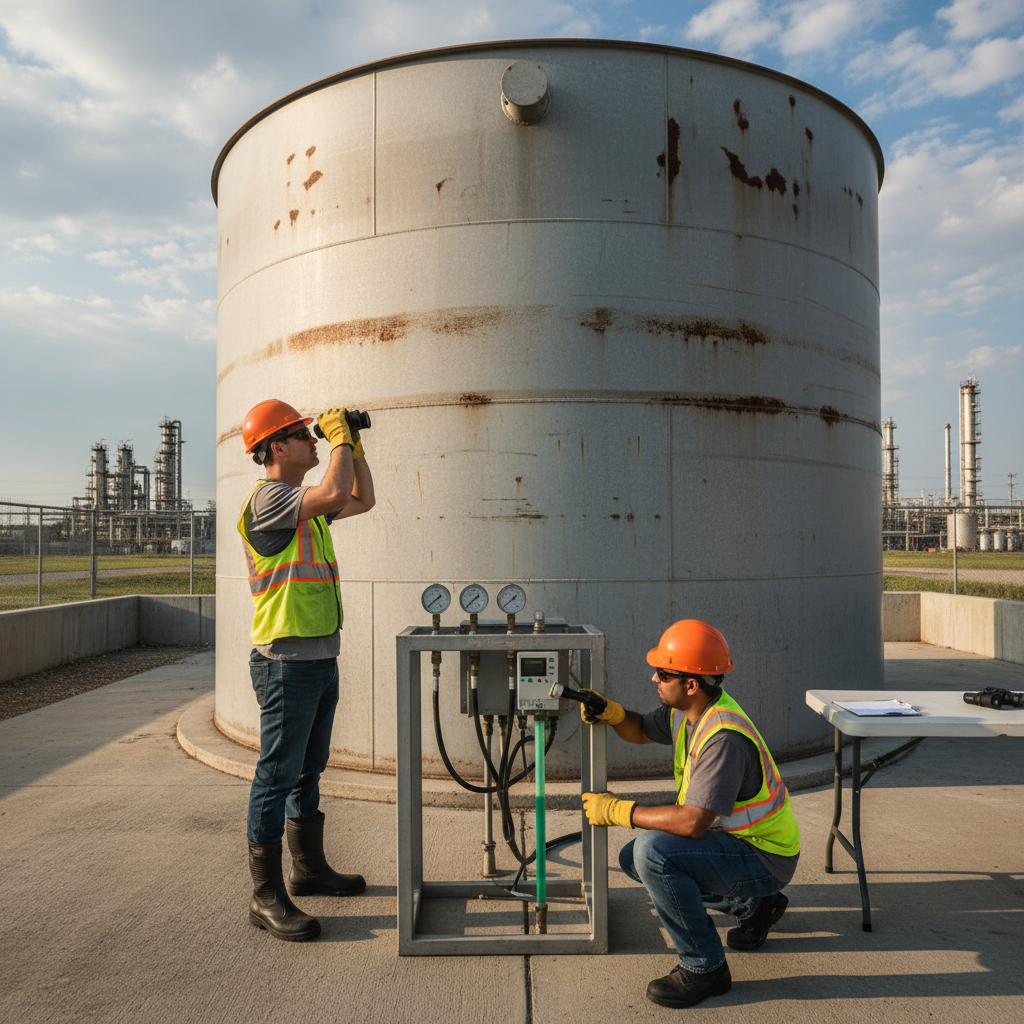
Tank inspection varies by construction type because access points and failure modes differ between single-wall and double-wall systems.
External visual inspection: Double-wall tanks require monthly inspection of outer shell condition, monitoring equipment function, and interstitial alarm testing, while single-wall tanks need monthly checks of tank exterior plus separate containment area drainage and structural integrity
Internal inspection frequency: API 653 requires 20-year intervals for double-wall tanks with functioning interstitial monitoring versus 15-year intervals for single-wall tanks due to enhanced leak detection capabilities in double-wall systems
Specialized testing methods: Double-wall tanks need annual interstitial space integrity testing using pressure decay or helium leak detection costing $2,000-4,000 per test, while single-wall tanks require standard ultrasonic thickness testing at $1,200-2,500 per inspection
Documentation requirements: Double-wall facilities must maintain continuous monitoring data logs, alarm response records, and interstitial test results, while single-wall facilities document visual inspections, containment area condition, and drainage system function
Professional inspection costs: Certified tank inspectors charge 25-40% more for double-wall assessments due to specialized equipment and interstitial testing requirements compared to standard single-wall inspection procedures
Double-wall construction extends inspection intervals because continuous monitoring detects problems before they become environmental releases. Single-wall tanks rely on periodic inspection to catch developing issues.
Double-Wall vs Single-Wall Cost Analysis for SPCC Compliance
| Cost Component | Double-Wall AST | Single-Wall AST |
|---|---|---|
| Tank Purchase (10,000 gallon) | $45,000-65,000 | $28,000-42,000 |
| Installation Labor | $8,000-12,000 | $6,000-9,000 |
| Secondary Containment Construction | $0 (built-in) | $15,000-50,000 |
| Monitoring System | $12,000-18,000 | $2,000-4,000 |
| Annual Maintenance | $3,500-5,000 | $2,000-3,500 |
| Inspection Costs (per cycle) | $4,000-6,500 | $2,500-4,000 |
| Total 10-Year Cost | $110,000-145,000 | $85,000-125,000 |
Double-wall tanks cost 40-60% more upfront but eliminate separate containment construction. For facilities with space constraints or difficult soil conditions, double-wall construction often costs less than excavation and concrete work for traditional containment systems.
Payback periods vary by site conditions. Facilities requiring extensive excavation, concrete placement, or environmental remediation during containment construction see 3-5 year payback on double-wall investment. Sites with simple earthwork containment may never recover the double-wall premium.
Ongoing costs favor single-wall systems due to simpler maintenance requirements. However, double-wall tanks reduce insurance premiums at many facilities because enhanced leak detection prevents environmental releases. Insurance savings of $2,000-5,000 annually offset higher maintenance costs.
Regulatory compliance costs remain similar between construction types. Both require SPCC plan updates, professional inspections, and documentation maintenance. Double-wall facilities avoid containment area maintenance but increase monitoring system upkeep.
Frequently Asked Questions
Do all double wall aboveground storage tanks automatically meet SPCC requirements?
No, double-wall tanks must have UL 142 listing and continuous interstitial monitoring to qualify as SPCC secondary containment. Generic double-wall construction without proper certification doesn’t satisfy EPA requirements. The tank manufacturer must specifically design and test the interstitial space for containment purposes.
Can I retrofit a single-wall tank to double-wall for SPCC compliance?
Retrofitting single-wall tanks to double-wall construction is typically not feasible or cost-effective. The process requires complete tank reconstruction and rarely meets UL 142 certification standards. Most facilities choose to install separate secondary containment systems like berms or containment pads instead.
What happens if the interstitial monitoring system fails on a double-wall tank?
Failed interstitial monitoring eliminates the tank’s qualification as secondary containment under SPCC rules. Facilities must immediately install temporary secondary containment or shut down tank operations until monitoring is restored. EPA considers this a serious compliance violation that can result in penalties during inspections.