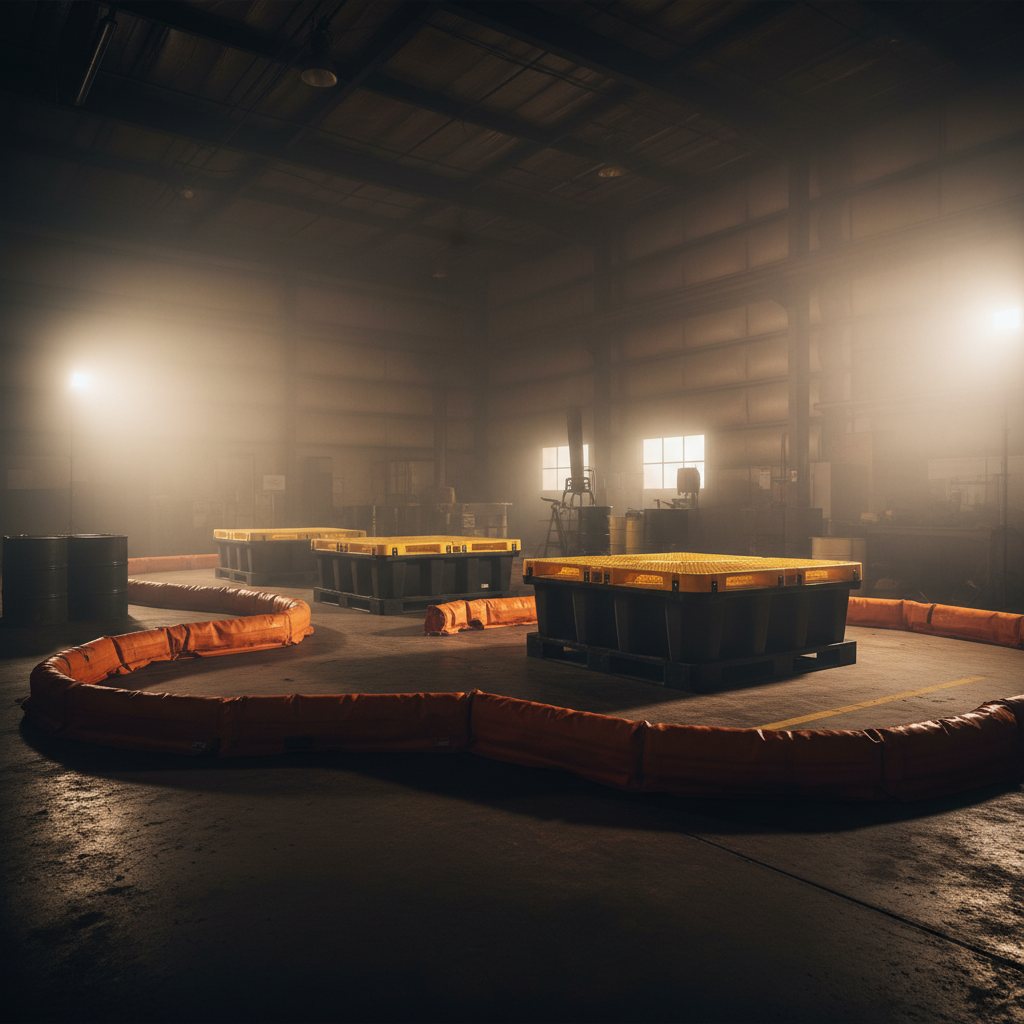
Spill pallet vs containment berm SPCC decisions affect your compliance status and violation risk. Choose wrong and face $59,973 daily penalties. Choose right and handle everything from 55-gallon drums to 50,000-gallon tank batteries with proper secondary containment.
Key Takeaways:
- Spill pallets handle drum and IBC storage up to 350 gallons per unit, while berms accommodate large ASTs and equipment weighing 50+ tons
- SPCC compliance verification differs: pallets require individual capacity labeling, berms need engineered volume calculations for tank batteries
- Cost comparison shows pallets at $150-800 per unit versus berms at $2,000-15,000 for permanent installations
What Are Spill Containment Pallets vs Containment Berms?
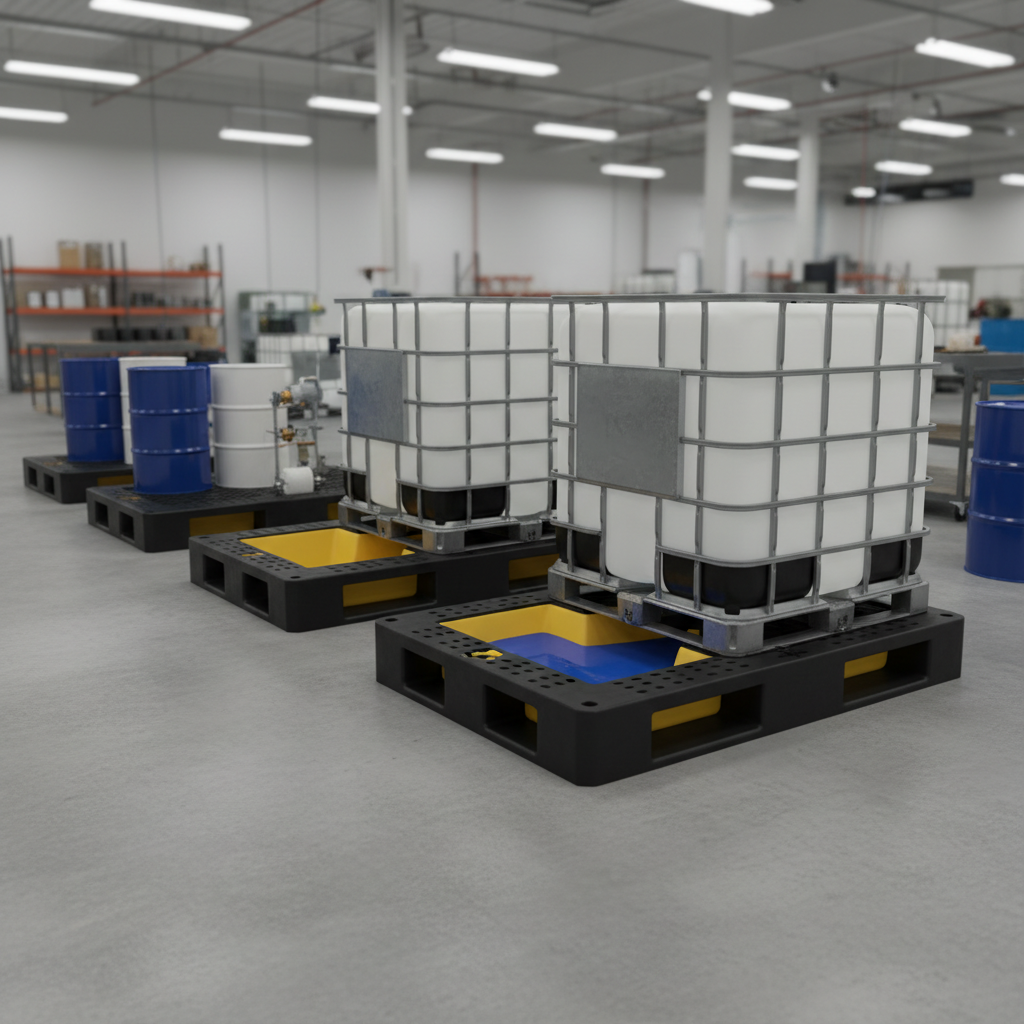
Spill containment pallets are elevated platforms with integrated sumps designed for drum and IBC storage. This means facilities can place containers directly on the platform while the built-in sump captures spills and meets SPCC secondary containment requirements.
Containment berms are flexible or rigid barrier systems that create containment areas around larger storage equipment. Berms encircle aboveground storage tanks, pump stations, and equipment clusters to contain spills at the source.
The fundamental difference comes down to storage scale and container type. Pallets handle individual drums and intermediate bulk containers weighing up to 8,000 pounds total. Berms accommodate everything from small portable tanks to massive 50,000-gallon ASTs and industrial equipment weighing 200,000 pounds.
Standard spill pallet capacity reaches 66 gallons for four-drum configurations. Most models use polyethylene construction with removable grating for easy drum access. The integrated sump eliminates the need for separate drainage systems.
Berms use fabric, steel, or concrete construction depending on the application. Portable fabric berms deploy quickly for temporary storage. Steel berms provide permanent solutions for fixed installations. Concrete berms offer the highest capacity and durability for large tank farms.
Secondary containment regulations under 40 CFR Part 112 apply equally to both product types. The difference lies in how facilities calculate, verify, and maintain compliance for each containment method.
Which Storage Types Work With Pallets vs Berms?
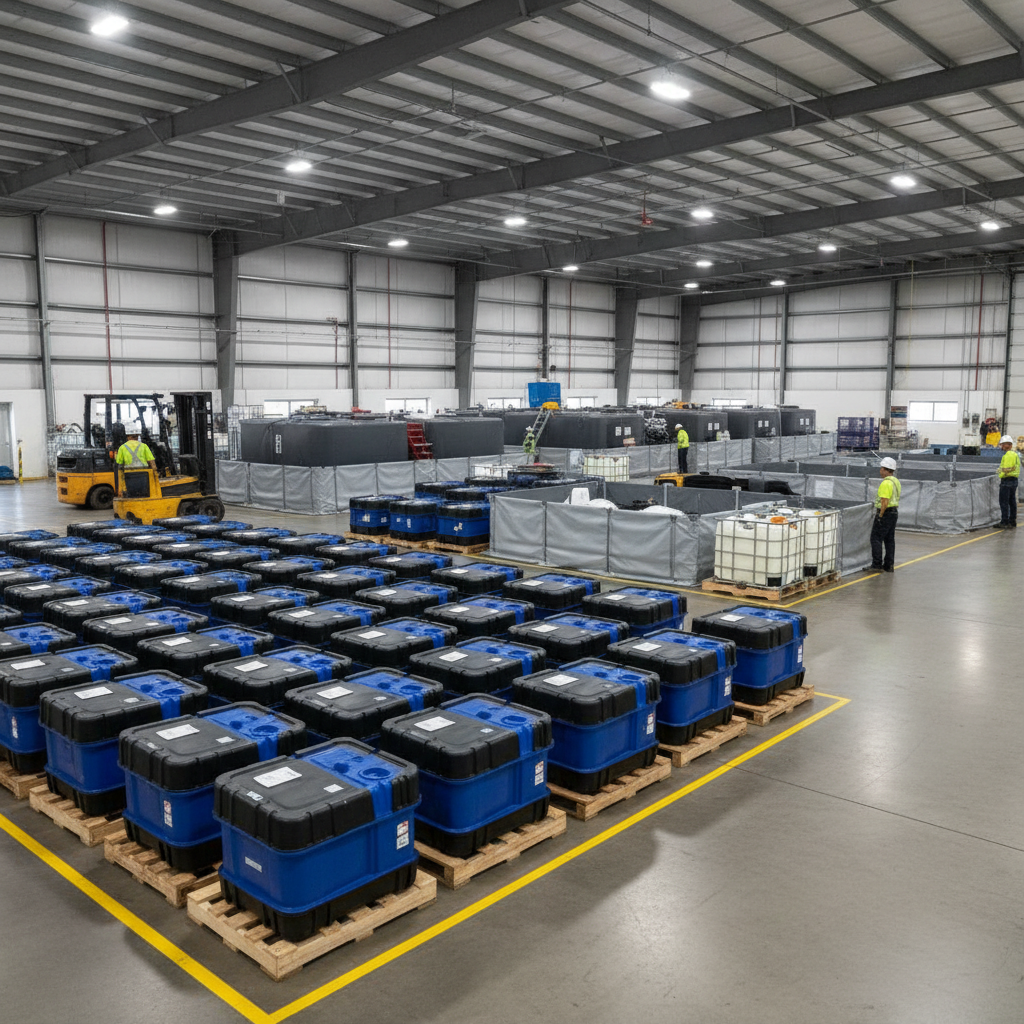
Containment selection depends on what you store and how much it weighs. Pallets work for portable containers. Berms handle everything else.
| Storage Type | Weight Limit | Pallet Compatible | Berm Compatible |
|---|---|---|---|
| 55-gallon drums | 500 lbs each | Yes | Yes |
| IBC totes (275-330 gal) | 3,000 lbs loaded | Yes | Yes |
| Portable fuel tanks (500-1,000 gal) | 8,000 lbs maximum | No | Yes |
| Aboveground storage tanks (1,000+ gal) | 50,000+ lbs | No | Yes |
| Equipment skids and pump stations | Variable | No | Yes |
| Transformer and electrical equipment | Up to 200,000 lbs | No | Yes |
Drum and IBC containment solutions favor pallets because of the weight distribution and access requirements. Four-drum pallets handle 2,000 pounds of loaded containers while maintaining forklift compatibility. The elevated design allows drum rotation and easy inspection access.
IBC storage presents a middle ground. Single-IBC pallets work well for 275-gallon totes. Multiple IBC installations often require berm systems to handle the combined weight and provide adequate containment volume.
Berm weight capacity reaches 200,000 pounds for large AST installations. Steel and concrete berms distribute loads across foundation systems. Fabric berms use ground contact for weight distribution but limit capacity to equipment under 50,000 pounds.
Portable containment product selection considers mobility needs alongside storage compatibility. Pallets move easily with forklifts. Small berms fold for transport. Large berm systems require permanent installation with engineered foundations.
Storage density affects containment choice. Facilities with multiple small containers benefit from pallet organization. Tank farms with large vessels require berm systems that can contain the largest single tank plus precipitation.
How Do SPCC Compliance Requirements Differ Between Pallets and Berms?
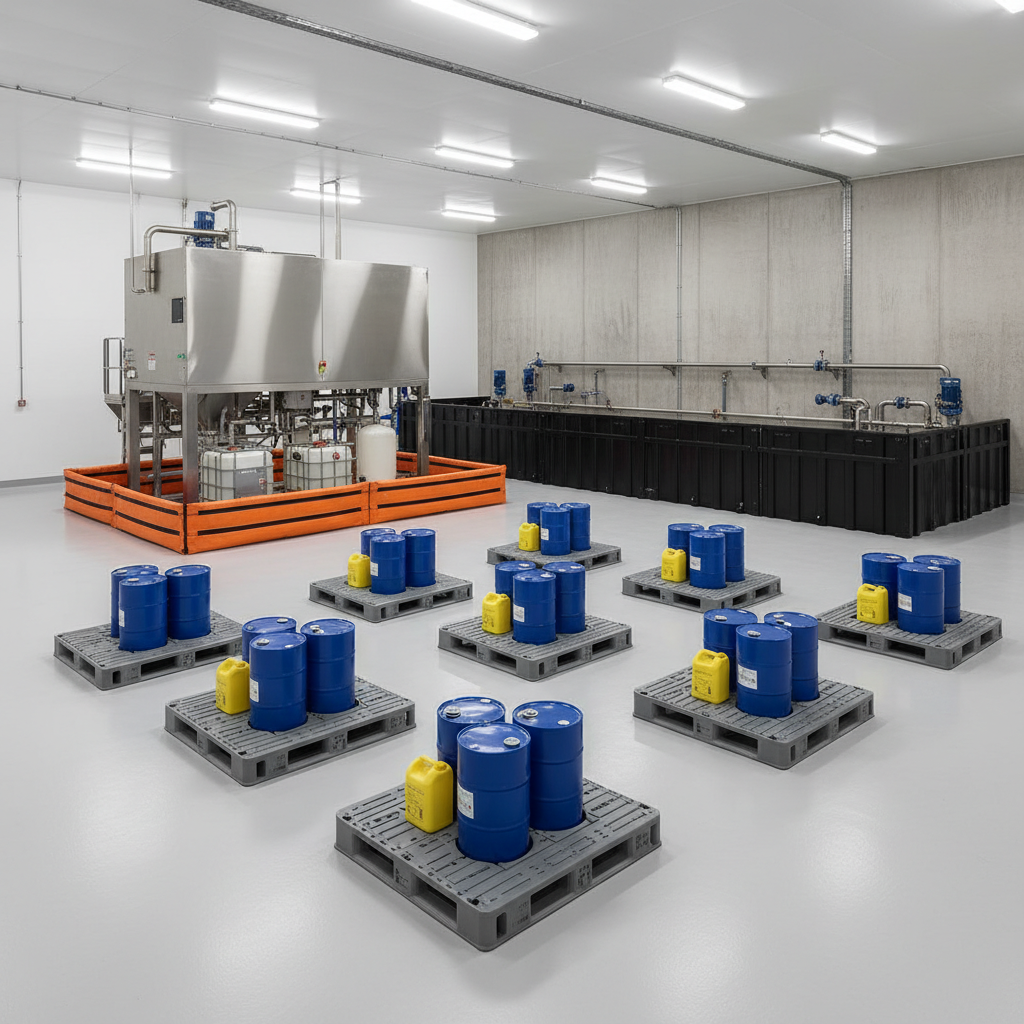
SPCC regulations require different verification methods for each containment type. Pallets use manufacturer certification. Berms need engineering calculations.
| Requirement | Spill Containment Pallet | Containment Berm |
|---|---|---|
| Volume verification | Manufacturer capacity label | Engineering calculation required |
| Documentation | Product specification sheet | Professional engineer stamp |
| Inspection frequency | Quarterly visual inspection | Monthly structural assessment |
| Drain management | Manual plug removal | Valve system with lock-out |
| Capacity calculation | 110% of largest container | 110% of largest tank + precipitation |
| Record retention | Purchase receipt + specs | Engineering drawings + certifications |
Secondary containment volume calculations follow the 110% rule but apply differently. Pallet manufacturers certify capacity during production. The specification sheet provides SPCC documentation. Facilities verify the label matches storage requirements.
Containment berms require site-specific engineering for SPCC compliance. Professional engineers calculate volume based on tank dimensions, berm geometry, and local precipitation data. The calculation includes freeboard requirements and accounts for displacement from piping and equipment.
Spill containment pallet inspection protocols focus on structural integrity and drain status. Quarterly visual inspections check for cracks, drain plug security, and accumulated liquids. Monthly drainage ensures the sump remains empty during normal operations.
Berm inspection requirements depend on construction type. Fabric berms need tear inspection and UV degradation monitoring every 30 days. Steel berms require corrosion assessment and joint integrity checks. All berms need drain valve testing and volume verification.
Labeling requirements differ significantly. Pallets display capacity ratings on permanent labels attached during manufacturing. Berms require posted signs showing maximum storage volume, emergency contacts, and drain valve locations.
The 110% containment rule application varies between individual pallet certification and engineered berm calculations. Pallets meet the rule through tested capacity ratings. Berms require mathematical proof that total volume exceeds 110% of the largest tank plus anticipated precipitation.
What Are the Cost Differences Between Pallets and Berms?
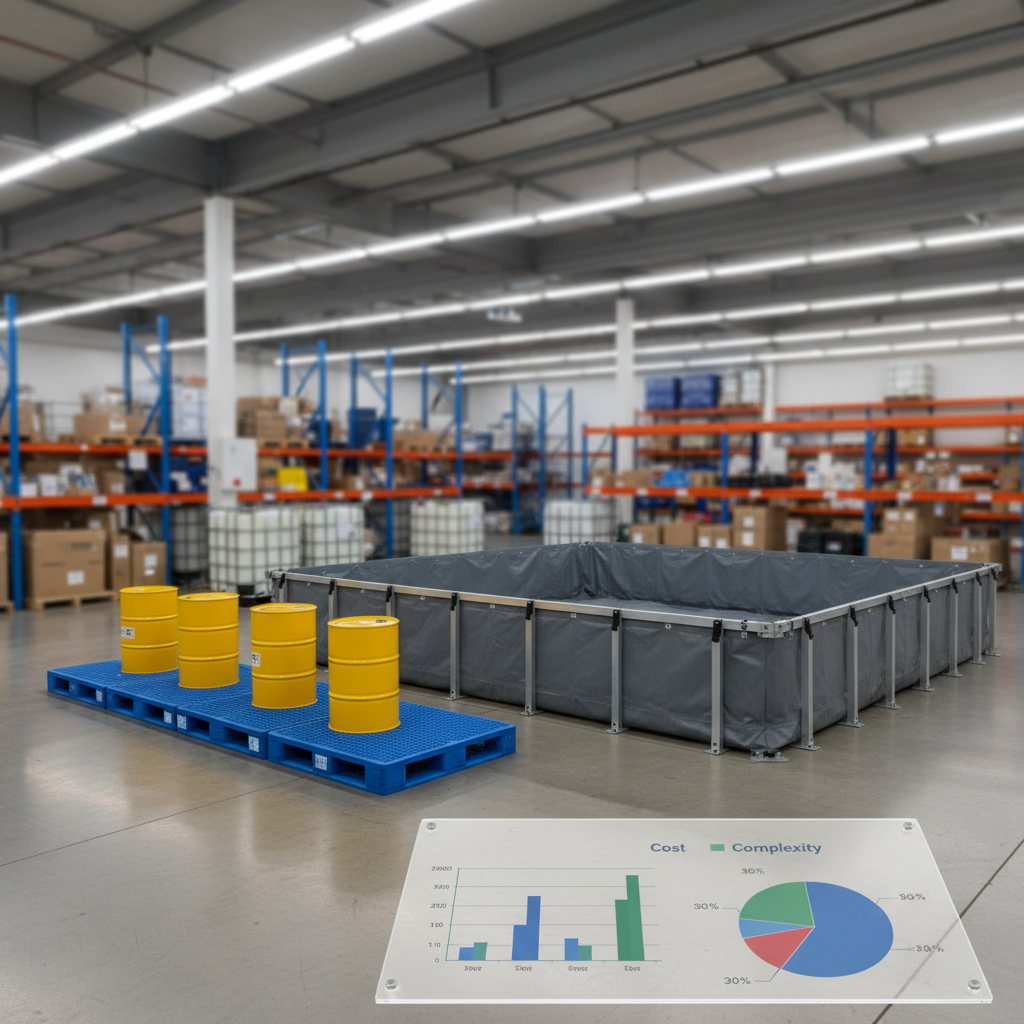
Containment cost analysis depends on storage volume and installation requirements. Initial purchase price tells only part of the story.
| Cost Factor | Spill Pallets | Containment Berms |
|---|---|---|
| Initial purchase | $150-800 per unit | $2,000-15,000 installed |
| Installation labor | None (forklift placement) | $500-5,000 depending on size |
| Engineering costs | $0 (pre-certified) | $1,000-3,000 for PE calculations |
| Annual maintenance | $50-100 per pallet | $200-800 per berm system |
| Replacement timeline | 10-15 years typical | 15-25 years for permanent systems |
| Cost per gallon contained | $2.30-4.60 per gallon | $0.50-2.00 per gallon |
Portable berms cost $0.50-2.00 per gallon of containment capacity versus pallets at $2.30-4.60 per gallon. This difference reflects economies of scale. Large containment areas cost less per unit volume.
Installation expenses favor pallets for small storage operations. Forklift placement eliminates installation labor. Berms require site preparation, foundation work, and connection systems that add thousands to project costs.
Engineering costs hit berm installations exclusively. PE calculations for SPCC compliance range from $1,000 for simple installations to $3,000 for complex tank farms. Pallets use manufacturer certifications that eliminate engineering expenses.
Maintenance costs reflect complexity differences. Pallet maintenance involves quarterly inspections and drain cleaning. Berm systems require fabric repairs, valve maintenance, and structural monitoring that increase annual costs.
Lifecycle cost analysis shows berms winning for large installations and pallets winning for small operations. The breakeven point occurs around 2,000-3,000 gallons of total containment capacity.
Replacement timing affects total cost of ownership. Quality pallets last 10-15 years in normal service. Permanent berms operate 15-25 years before major component replacement. Fabric berms require replacement every 8-12 years depending on UV exposure.
Which Secondary Containment Do You Need for Your Facility?
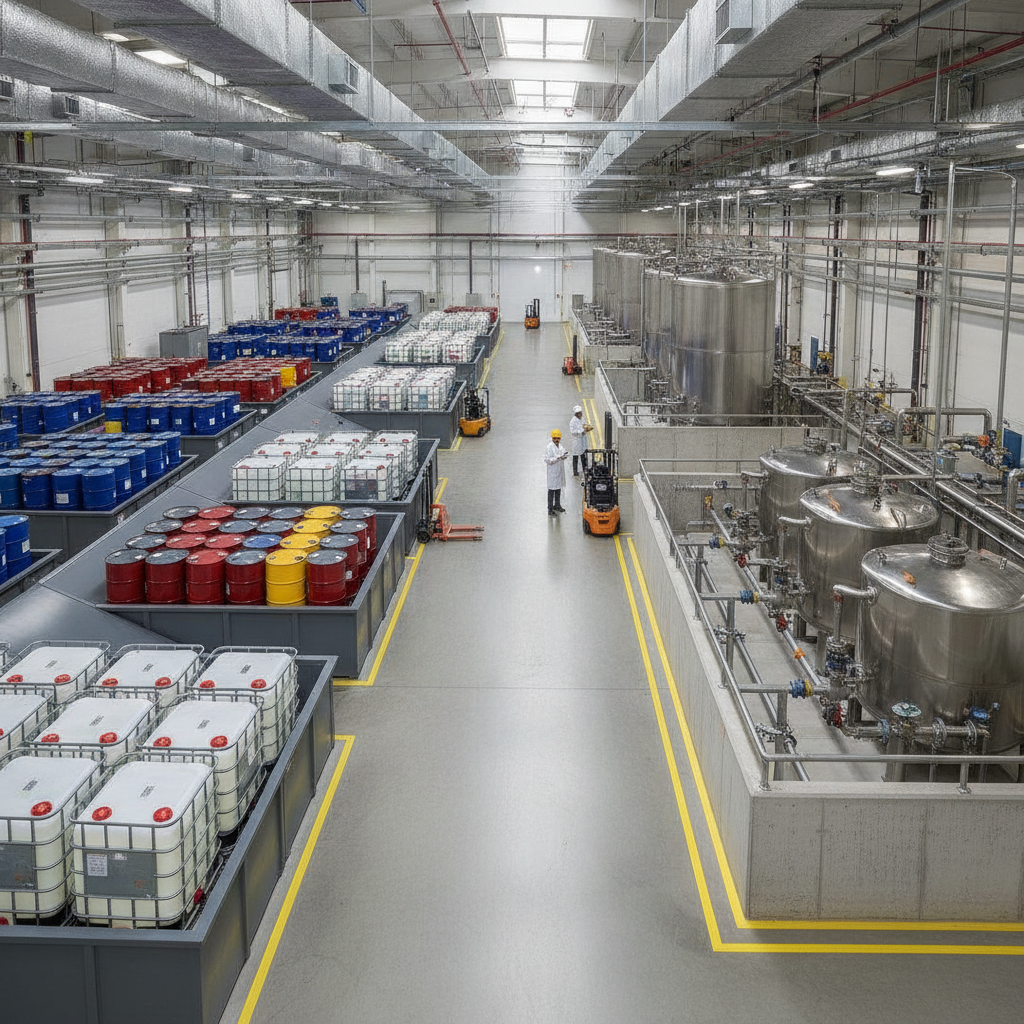
Containment selection process requires facility assessment and regulatory analysis. Follow these steps to determine the right solution.
Calculate total storage volume by container type. Add up all drums, IBCs, and tanks storing regulated oil. Group by storage area to identify containment zones.
Determine mobility requirements for your operation. Consider whether containers move daily, weekly, or remain stationary. Mobile operations favor pallets. Fixed storage works with either option.
Assess weight limits and ground conditions. Check floor loading capacity and ground stability. Pallets require point loading support. Berms need distributed load capacity.
Review budget for initial and ongoing costs. Include purchase price, installation, engineering, and maintenance expenses in the analysis. Factor replacement timelines into lifecycle costs.
Verify SPCC compliance documentation requirements. Determine whether you need PE certification or can use manufacturer specifications. This affects both cost and timeline.
Evaluate space constraints and access needs. Measure available space around storage areas. Consider forklift access, inspection clearances, and emergency response requirements.
Consider future expansion and storage changes. Plan for capacity increases and equipment modifications. Modular solutions provide flexibility. Permanent installations limit future options.
Drum and IBC containment solutions typically favor pallets for quantities under 20 containers. The portability and inspection access outweigh cost differences at small scales.
Secondary containment decisions for tank storage almost always require berms. The volume and weight of aboveground storage tanks exceed pallet capacity limits.
Portable containment product selection affects long-term flexibility. Facilities with changing storage needs benefit from portable berms that redeploy as requirements change.
Decision process includes 7 key evaluation criteria for proper containment selection. Weight each factor based on facility priorities and regulatory requirements.
How Do Portability and Setup Requirements Compare?
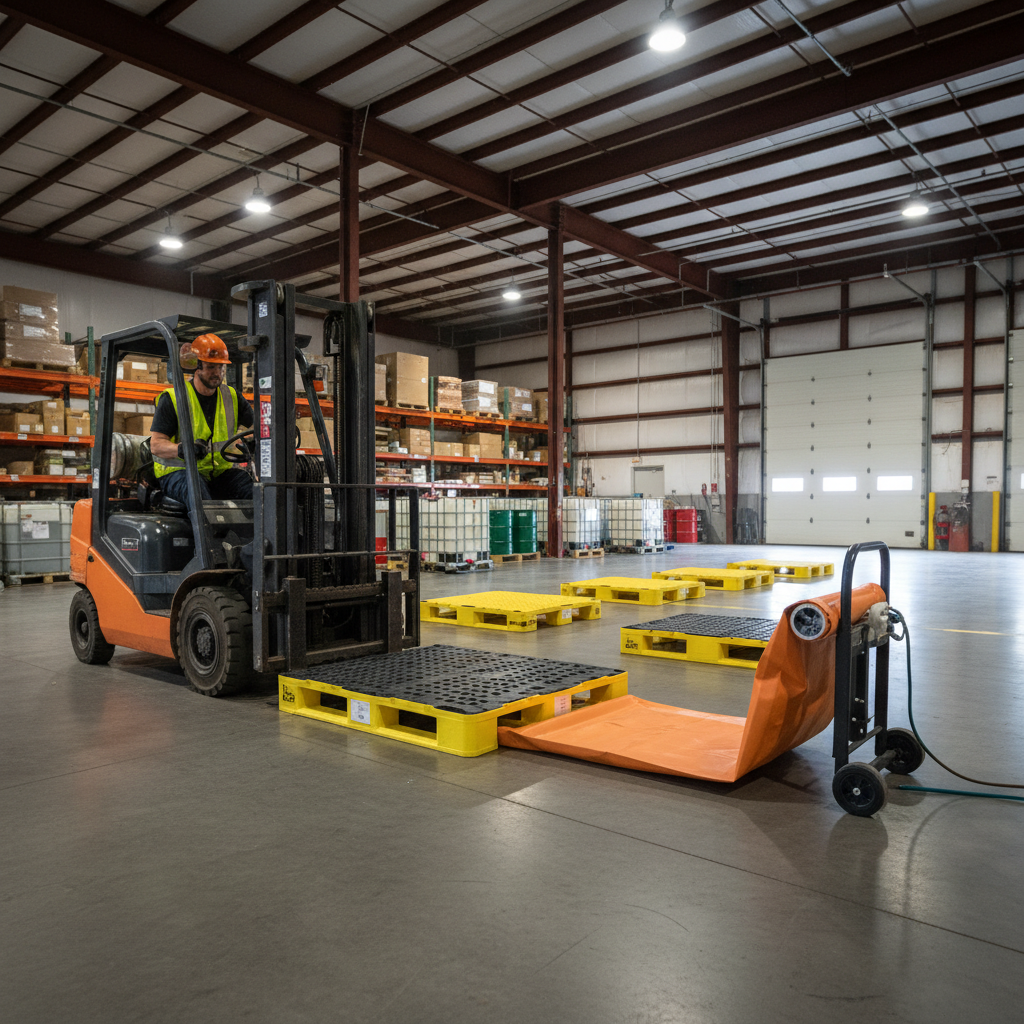
Portable containment options vary in deployment speed and setup complexity. Installation time and crew requirements affect operational flexibility.
Spill containment pallet deployment features include:
- Five-minute setup per unit with standard forklift equipment and single operator
- No tools required for basic installation on level surfaces with adequate load capacity
- Immediate use capability once positioned, with drum loading possible during placement
- Easy relocation for cleaning, maintenance, or facility reorganization without specialized equipment
Containment berm setup requirements include:
- 30-90 minute installation depending on size and complexity of the containment system
- Two-person crew minimum for berms over 500 square feet due to fabric handling requirements
- Site preparation needs including ground leveling and debris removal before deployment
- Connection systems requiring valve installation and testing before the system becomes operational
Pallet deployment takes 5 minutes per unit versus berm setup requiring 30-90 minutes depending on size. This difference matters for emergency response and temporary storage situations.
Berm advantages appear in large installations where setup time per gallon of capacity favors the larger system. A 5,000-gallon berm takes 60 minutes to install. Equivalent pallet capacity would require 75 units taking over 6 hours total.
Weather affects deployment differently. Pallets install in any conditions with overhead protection. Fabric berms require dry conditions and wind speeds under 15 mph for proper installation.
Crew requirements scale with system size. Single pallets need one operator. Multiple pallet installations can parallelize with additional forklifts. Berms require coordinated team effort but deploy entire containment areas simultaneously.
Equipment needs favor pallets for facilities with existing forklifts. Berm installation may require additional equipment for large systems including cranes or telehandlers for positioning and fabric management.
Mobility after installation differs significantly. Pallets relocate easily with standard equipment. Berms require complete breakdown and reassembly for relocation.
Frequently Asked Questions
Can you use spill pallets for gas tanks and fuel storage?
Spill pallets work for small fuel containers like 55-gallon drums but not for large gas tanks or ASTs. Fuel storage over 275 gallons requires containment berms or permanent secondary containment systems that handle the larger volumes and weight loads. The structural capacity and containment volume of standard pallets cannot accommodate aboveground fuel tanks.
Do portable berms meet the same SPCC standards as permanent containment?
Portable berms must meet identical SPCC volume and construction standards as permanent containment when properly engineered. The EPA recognizes portable containment as equivalent to permanent systems provided they maintain structural integrity and proper volume calculations under 40 CFR Part 112. Professional engineer certification applies to both portable and permanent berm installations.
How many drums can fit in a standard spill containment pallet?
Standard spill pallets accommodate 1-4 drums depending on the model, with most facilities using 4-drum pallets for 55-gallon containers. Larger pallets can handle 6-8 drums but require additional structural support and may exceed standard forklift capacity limits. Weight distribution and drum access requirements typically favor 4-drum configurations for operational efficiency.
What maintenance do containment berms require compared to spill pallets?
Containment berms require regular fabric inspection for tears, drain valve testing, and UV degradation monitoring every 6 months. Spill pallets need quarterly drain plug inspection and annual structural integrity checks, making them lower maintenance overall. Berm maintenance costs run $200-800 annually compared to $50-100 for pallet systems due to complexity differences.