OSHA secondary containment requirements and EPA oil containment rules create confusion because they cover different materials under separate regulatory frameworks, leaving facilities unsure which standards apply to their operations.
Key Takeaways:
- EPA SPCC rules under 40 CFR Part 112 govern oil and petroleum products exclusively, not other hazardous materials
- OSHA 29 CFR 1910.120 covers chemical secondary containment for hazmat operations with no minimum storage threshold
- Facilities with both oil storage above 1,320 gallons and hazmat operations must comply with both regulatory frameworks simultaneously
What Do OSHA Secondary Containment Requirements Actually Cover?
OSHA secondary containment requirements under 29 CFR 1910.120 are hazardous waste operations and emergency response rules. This means they apply to facilities actively handling, treating, or responding to chemical spills, not routine storage operations.
OSHA 29 CFR 1910.120 requires secondary containment for hazardous waste operations. The rule targets chemical processing plants, waste treatment facilities, emergency response teams, and cleanup operations. Unlike EPA oil storage rules, OSHA sets no minimum volume threshold for triggering containment requirements.
OSHA covers any quantity of hazardous materials during active operations. A facility handling 50 gallons of methylene chloride faces the same containment requirements as one processing 5,000 gallons. The focus stays on worker protection during chemical handling, not environmental spill prevention.
The regulation applies during five specific activity types: cleanup operations, corrective actions, voluntary cleanup operations, operations involving hazardous wastes at treatment/storage/disposal facilities, and emergency response operations. Routine chemical storage without active handling typically falls outside OSHA’s secondary containment scope.
How Do EPA SPCC Containment Rules Under 40 CFR Part 112 Work?
40 CFR Part 112 is EPA’s Spill Prevention, Control, and Countermeasure regulation governing oil storage facilities. This means it covers petroleum products, vegetable oils, animal fats, and synthetic oils, but excludes other hazardous chemicals entirely.
40 CFR Part 112 mandates 110% rule containment sizing for oil storage above specific thresholds. EPA requires facilities storing 1,320 gallons or more of oil in aggregate capacity to maintain secondary containment sized to hold the largest tank’s contents plus sufficient freeboard for precipitation.
The precipitation freeboard requirement adds complexity beyond simple volume calculations. Facilities must size containment to handle the 25-year, 24-hour precipitation event for their geographic location. This typically adds 6-12 inches of additional containment height depending on regional rainfall patterns.
EPA’s containment sizing methodology uses the 110% rule as a baseline: containment must hold 110% of the largest tank’s capacity or 100% of the largest tank plus 10% of all remaining tank capacity, whichever is greater. The system must also prevent discharge through drainage, include leak detection, and allow inspection access.
EPA requires 1,320 gallons aggregate oil storage capacity to trigger SPCC containment rules. This threshold applies to all oil containers at a facility, not individual tanks. Three 500-gallon diesel tanks trigger EPA requirements even though no single tank exceeds any threshold.
OSHA vs EPA Secondary Containment: Side-by-Side Comparison
| Feature | OSHA | EPA |
|---|---|---|
| Materials Covered | Hazardous chemicals and waste | Oil and petroleum products only |
| Storage Threshold | No minimum volume | 1,320 gallons aggregate capacity |
| Sizing Method | Operational safety-based | 110% rule plus precipitation freeboard |
| Primary Focus | Worker protection during handling | Environmental spill prevention |
| Inspection Frequency | During active operations | Monthly visual, annual integrity |
| Enforcement Agency | Department of Labor | Environmental Protection Agency |
| Maximum Penalties | $15,625 per occurrence | $59,973 per day per violation |
| Documentation | Emergency response plans | SPCC plan with PE certification |
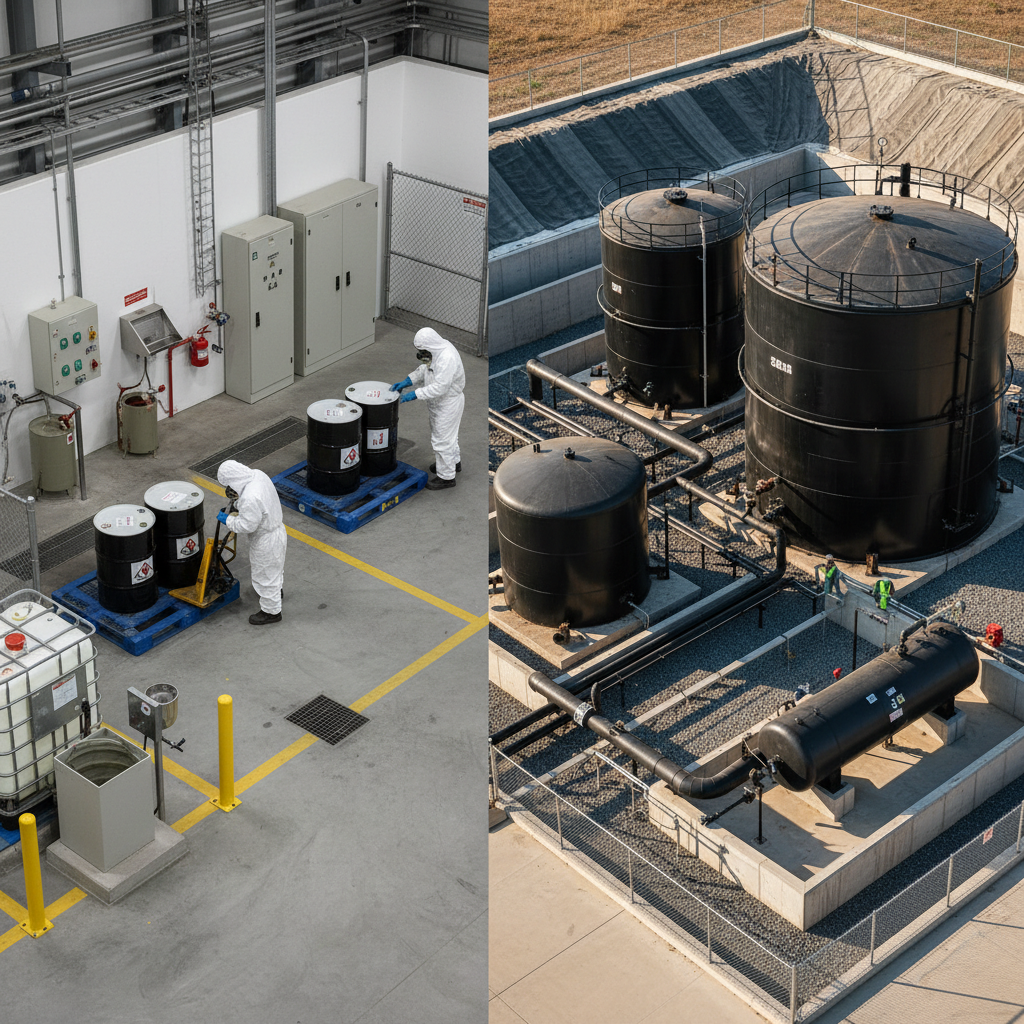
OSHA rules differ from EPA containment sizing methodology in fundamental ways. OSHA prioritizes immediate worker safety during chemical handling operations. EPA focuses on long-term environmental protection from oil spills into navigable waters.
The regulatory scope creates the biggest distinction. OSHA covers active chemical operations regardless of storage volume. EPA regulates oil storage regardless of operational activity. A facility with 2,000 gallons of stored diesel fuel needs EPA compliance even if the tanks sit unused for months.
OSHA has no storage threshold while EPA requires 1,320 gallons aggregate before triggering containment requirements. This means a lab handling 10 gallons of hazardous waste during cleanup operations faces OSHA requirements, while a facility storing 1,300 gallons of heating oil avoids EPA rules entirely.
Where Do OSHA and EPA Containment Rules Overlap at Your Facility?
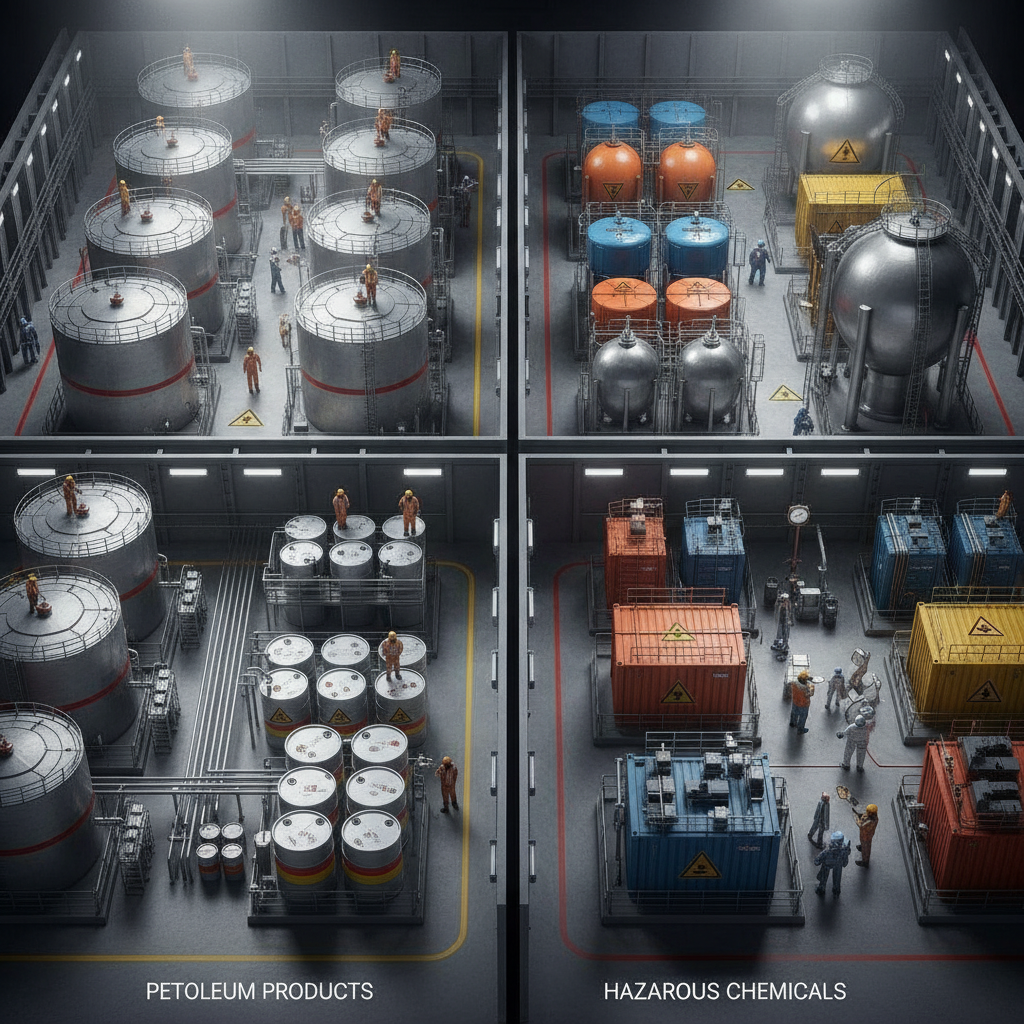
Identify all stored materials by category. List petroleum products separately from hazardous chemicals. Calculate aggregate oil storage capacity and identify active chemical handling operations.
Check EPA thresholds first. Sum all oil containers including diesel, gasoline, hydraulic oil, and lubricants. If total capacity exceeds 1,320 gallons, EPA SPCC rules apply regardless of chemical operations.
Evaluate OSHA applicability based on operations. Review whether your facility conducts hazardous waste operations, emergency response, or active chemical treatment covered under 29 CFR 1910.120.
Map dual compliance requirements. Facilities with oil and hazmat must comply with both OSHA and EPA requirements. Design containment systems meeting the stricter standard from each regulation.
Document separate compliance programs. Maintain SPCC plans for oil storage and emergency response procedures for chemical operations. Each regulation requires distinct documentation and training protocols.
Chemical facilities typically maintain 500-2,000 gallons of diesel fuel for backup generators. This common scenario triggers EPA requirements even at facilities primarily focused on chemical processing under OSHA jurisdiction.
What Are the Key Differences in OSHA vs EPA Containment Design Standards?
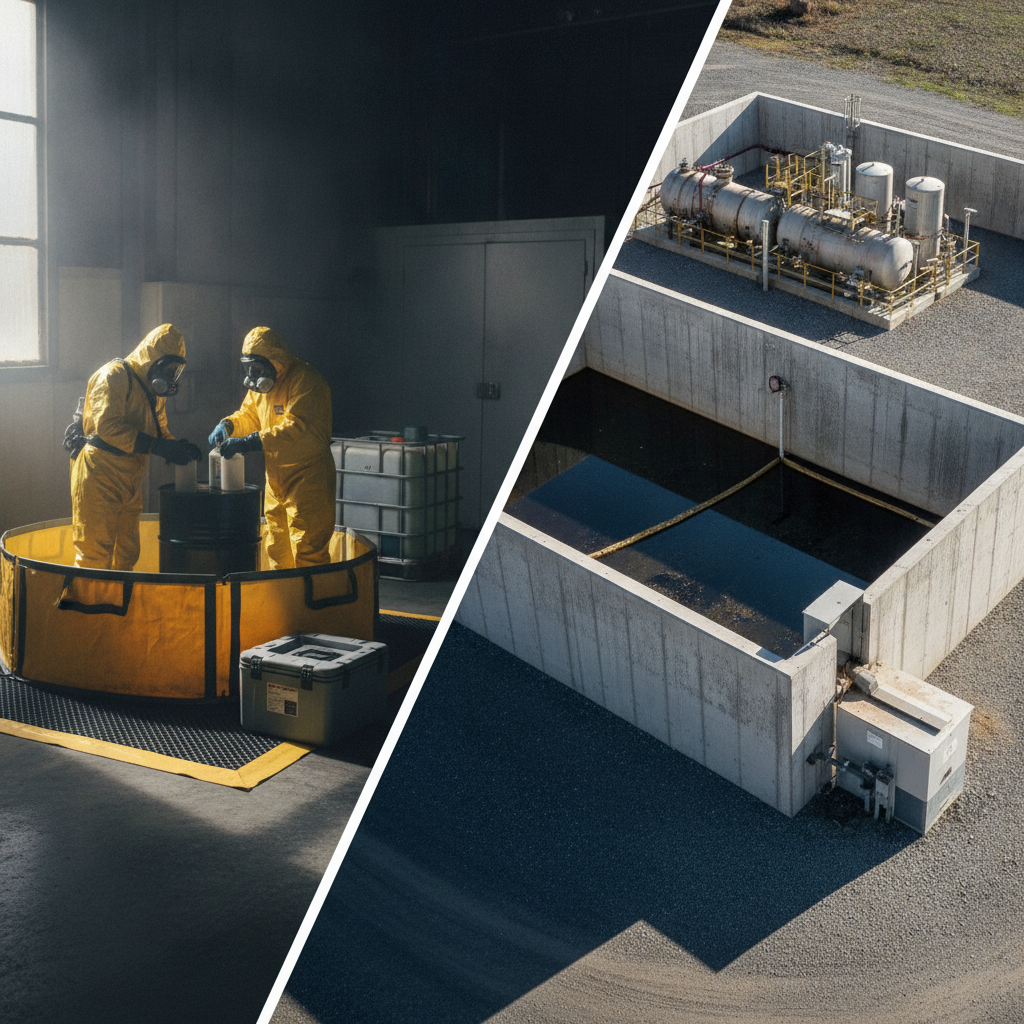
Sizing calculations follow completely different methods. EPA uses the 110% rule plus precipitation freeboard calculations based on 25-year storm events. OSHA focuses on operational containment during active chemical handling without specific volume formulas.
Construction materials have different priorities. EPA emphasizes long-term environmental protection with chemical-resistant liners and structural integrity for outdoor installations. OSHA prioritizes immediate safety during operations with emphasis on emergency access and worker protection features.
Inspection requirements operate on different schedules. EPA mandates monthly visual inspections and annual integrity testing for oil storage systems. OSHA requires containment evaluation during active hazardous waste operations but not routine storage monitoring.
Documentation standards serve different purposes. EPA requires SPCC plans with detailed containment specifications and PE certification for larger facilities. OSHA requires emergency response procedures and training records focused on operational safety.
Drainage and discharge rules conflict in some situations. EPA prohibits discharge from oil containment systems except through treatment. OSHA allows emergency discharge during worker safety situations, creating potential conflicts for dual-regulated facilities.
EPA requires 25-year, 24-hour precipitation event calculation for sizing while OSHA has no specific precipitation standard. This creates situations where EPA-compliant containment exceeds OSHA requirements by substantial margins.
Which Agency Enforces What: OSHA vs EPA Containment Violations
| Violation Type | OSHA | EPA |
|---|---|---|
| Inspection Triggers | Worker complaints, accidents, referrals | Routine inspections, spill reports, third-party complaints |
| Penalty Structure | Per occurrence, up to $15,625 | Per day ongoing, up to $59,973 daily |
| Citation Categories | Serious, willful, repeat violations | Administrative, civil, criminal penalties |
| Settlement Options | Informal conferences, contest procedures | Consent agreements, supplemental environmental projects |
| Appeal Process | Occupational Safety Review Commission | Environmental Appeals Board |
| Focus Area | Workplace safety during operations | Environmental protection and spill prevention |
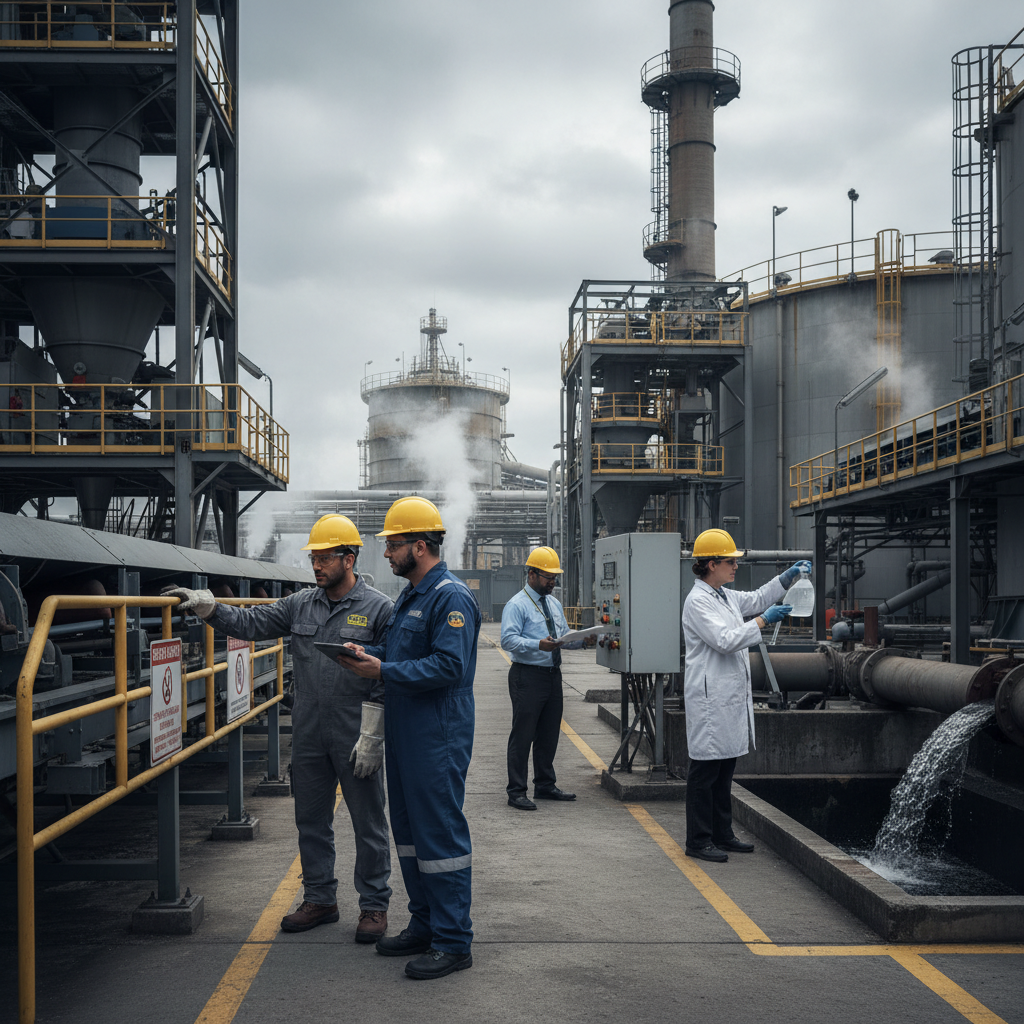
OSHA enforcement targets workplace safety violations during hazmat operations. Inspections typically follow worker complaints, accidents, or referrals from other agencies. Citations focus on immediate safety hazards rather than long-term environmental risks.
EPA enforcement emphasizes environmental protection through routine facility inspections, spill response evaluation, and third-party environmental complaints. Penalties accumulate daily for ongoing violations, creating substantial financial exposure for persistent non-compliance.
The agencies coordinate during major incidents but maintain separate enforcement priorities. A chemical spill affecting workers and waterways triggers both OSHA and EPA investigations with independent citation processes and penalty structures.
Frequently Asked Questions
Do OSHA containment rules apply to oil storage tanks?
OSHA secondary containment requirements under 29 CFR 1910.120 do not typically apply to routine oil storage. OSHA rules focus on hazardous waste operations and emergency response activities involving chemicals, not petroleum storage which falls under EPA SPCC regulations. However, if oil storage areas become part of emergency response operations, OSHA rules may apply during those specific activities.
Can you use the same containment system for both OSHA and EPA compliance?
Yes, but the containment must meet the more stringent requirements of both regulations. EPA requires specific sizing calculations including precipitation freeboard, while OSHA focuses on operational safety features during active chemical handling. The system must satisfy EPA’s 110% rule and precipitation calculations while providing OSHA’s required operational safety features.
What happens if my facility violates both OSHA and EPA containment rules?
You face separate enforcement actions from both agencies with cumulative penalties. OSHA focuses on worker safety violations during operations while EPA targets environmental protection failures, meaning violations can stack rather than overlap. Maximum exposure reaches $75,598 per incident ($15,625 OSHA + $59,973 EPA daily) when both agencies cite the same containment failure.