Aboveground fuel storage tank compliance is getting more expensive as EPA enforcement actions jumped 47% in 2023, with violations averaging $28,000 in fines per facility. The rules are complex but the consequences are real.
Key Takeaways:
- 40 CFR Part 112 requires SPCC plans for facilities storing 1,320+ gallons in ASTs above ground
- API 653 mandates annual external inspections and 10-year internal inspections for steel ASTs over 30 feet diameter
- Double-walled ASTs eliminate secondary containment construction but cost 35-45% more than single-wall tanks
What Federal Regulations Apply to Aboveground Storage Tanks?
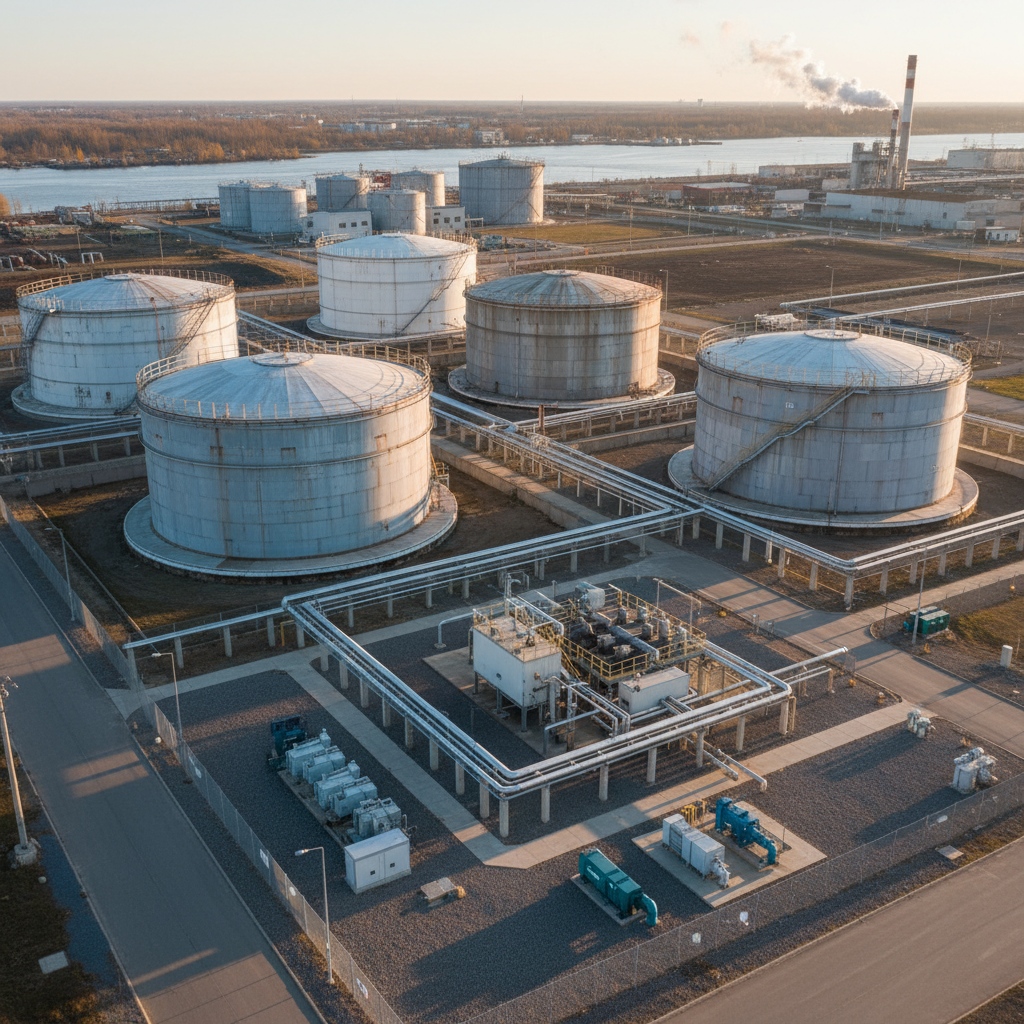
40 CFR Part 112 is the federal regulation that governs aboveground storage tank operations. This means any facility storing regulated oil in tanks above ground must follow EPA’s Spill Prevention, Control, and Countermeasure (SPCC) program requirements.
Federal regulations govern aboveground storage tank operations through multiple overlapping standards. The EPA administers 40 CFR Part 112, which applies to facilities storing 1,320 gallons or more of oil in aboveground containers. This includes diesel fuel, heating oil, hydraulic oil, and lubricating oil. The 1,320-gallon threshold includes all regulated oil storage at the facility, not just individual tanks.
UL 142 listing requirements mandate that steel aboveground storage tanks meet specific construction standards. UL 142 covers material specifications, welding procedures, and testing protocols for tanks storing flammable and combustible liquids. Tanks must pass hydrostatic pressure testing and meet minimum steel thickness requirements based on the stored product.
State overlay programs add requirements beyond federal rules in several states. California requires California Unified Program Agency (CUPA) permits for most ASTs. Texas operates a parallel program under the Texas Commission on Environmental Quality (TCEQ) with additional reporting requirements. New York’s Petroleum Bulk Storage program covers tanks 1,100 gallons and larger, creating a lower threshold than federal SPCC rules.
Violations carry maximum civil penalties of $59,973 per day per violation under Clean Water Act Section 311. Common violations include missing or outdated SPCC plans, inadequate secondary containment, and failure to conduct monthly inspections. EPA documented 847 SPCC enforcement cases in 2023, up from 575 cases in 2022.
API 653 standards apply to tank integrity and inspection requirements for steel tanks over 30 feet in diameter. Smaller tanks follow manufacturer recommendations but typically need professional assessment every 3-5 years according to industry practice. These inspection requirements run parallel to SPCC plan obligations and create separate compliance obligations.
How Do You Choose Between Single-Wall and Double-Wall AST Construction?
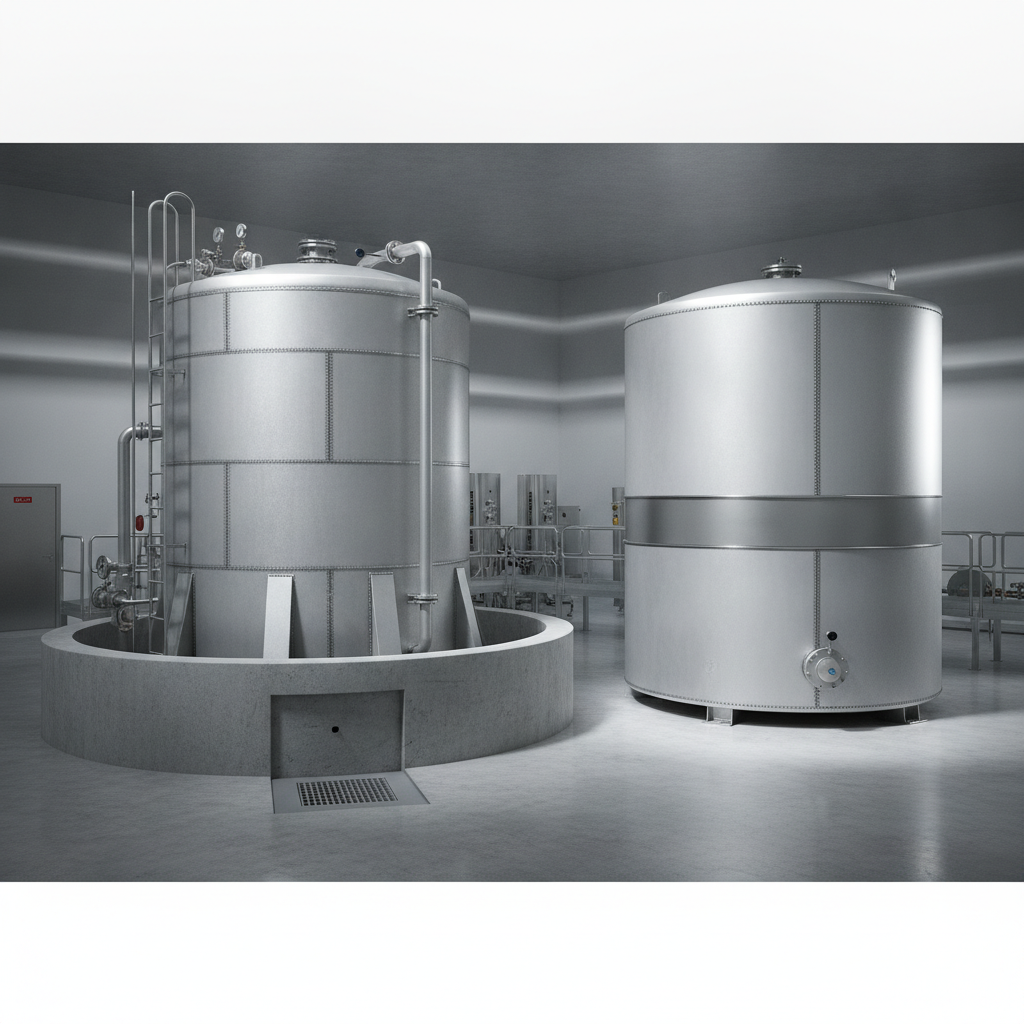
Double-walled AST eliminates secondary containment requirements for SPCC compliance. This means facilities can avoid constructing concrete containment areas, earthen berms, or other secondary containment systems required for single-wall tanks.
| Feature | Single-Wall AST | Double-Wall AST |
|---|---|---|
| Purchase Price | $8,000-15,000 (5,000 gal) | $12,000-22,000 (5,000 gal) |
| Secondary Containment | Required separate construction | Built-in interstitial monitoring |
| Installation Cost | Tank + containment ($15,000-25,000) | Tank only ($3,000-5,000) |
| Leak Detection | Visual inspection of containment | Electronic interstitial monitoring |
| Maintenance Access | Containment area limits access | Full perimeter access maintained |
| Space Requirements | Tank + containment footprint | Tank footprint only |
Single-wall tanks cost less upfront but require secondary containment construction. Per 40 CFR Part 112, this containment must hold 110% of the largest tank volume plus accommodate the 25-year, 24-hour precipitation event. For a 5,000-gallon tank, this means containing at least 5,500 gallons plus rainwater. Concrete containment costs $45-65 per square foot installed, while earthen berms with liner systems cost $25-35 per square foot.
Double-wall ASTs include interstitial space monitoring that detects leaks from either wall. The monitoring system provides continuous leak detection compared to visual inspection of containment areas. Electronic monitoring systems can connect to facility alarm systems or remote monitoring services, providing faster leak notification than monthly visual inspections.
UL 142 listing applies to both construction types but includes additional requirements for double-wall designs. Double-wall tanks must meet UL 142-2017 standards for interstitial monitoring, including leak detection sensitivity and alarm functionality. The interstitial space must maintain vacuum or slight positive pressure for leak detection effectiveness.
Installation complexity favors double-wall designs for retrofit projects. Single-wall tanks requiring secondary containment often need site excavation, concrete work, and utility relocations. Double-wall tanks install like traditional tanks without additional construction around the perimeter.
Monitoring capabilities differ between the two approaches. Double-wall systems provide continuous electronic monitoring of the interstitial space. Single-wall systems rely on visual inspection of containment areas and manual tank gauging. Electronic monitoring detects smaller leaks faster than visual inspection methods.
Cost analysis over 20 years often favors double-wall construction when factoring total installed cost, inspection requirements, and maintenance access. The 35-45% price premium for double-wall tanks gets offset by avoided containment construction costs in most installations.
What Does API 653 Require for AST Inspection and Testing?

API 653 mandates inspection frequency requirements for maintaining tank integrity. Steel aboveground storage tanks over 30 feet in diameter must follow API 653 inspection intervals to identify structural issues before they cause leaks.
Conduct monthly visual inspections of tank exterior, foundation, and immediate area. Look for corrosion, settlement, leaks, or damage to tank shells, roofs, and appurtenances. Document findings in inspection logs with dates, inspector names, and corrective actions taken.
Schedule annual external inspections by API 653 certified inspectors. These inspections include ultrasonic thickness testing of tank shells, assessment of foundation condition, and evaluation of coating systems. Inspectors must hold current API 653 certification for tank inspection.
Plan internal inspections every 10 years maximum for tanks over 30 feet diameter. Internal inspection requires tank emptying, cleaning, and entry by qualified personnel. Inspectors examine internal surfaces, measure remaining steel thickness, and assess structural components.
Perform hydrostatic testing when internal inspection reveals significant corrosion or structural changes. Testing pressure equals 1.25 times maximum operating pressure. Tanks failing hydrostatic tests require repair or replacement before returning to service.
Document all inspection results in permanent records maintained for the tank’s service life. Records must include inspection dates, inspector qualifications, findings, repairs performed, and test results. EPA requires these records during SPCC compliance audits.
Annual external inspections cost $2,500-4,500 per tank depending on size and complexity. Internal inspections range from $8,000-15,000 per tank including cleaning, inspection, and necessary repairs. These costs are separate from monthly inspection activities that facility personnel can perform.
Smaller tanks not covered by API 653 follow manufacturer inspection recommendations. Most manufacturers specify annual professional inspections for tanks storing flammable liquids. Insurance companies often require documented inspection programs regardless of tank size.
Repairs trigger additional inspection requirements when they affect more than 20% of tank surface area or structural components. Major repairs require engineering evaluation and may necessitate hydrostatic retesting before the tank returns to service. Minor repairs like coating touch-up don’t reset inspection cycles.
How Do You Size Secondary Containment for Aboveground Storage Tanks?
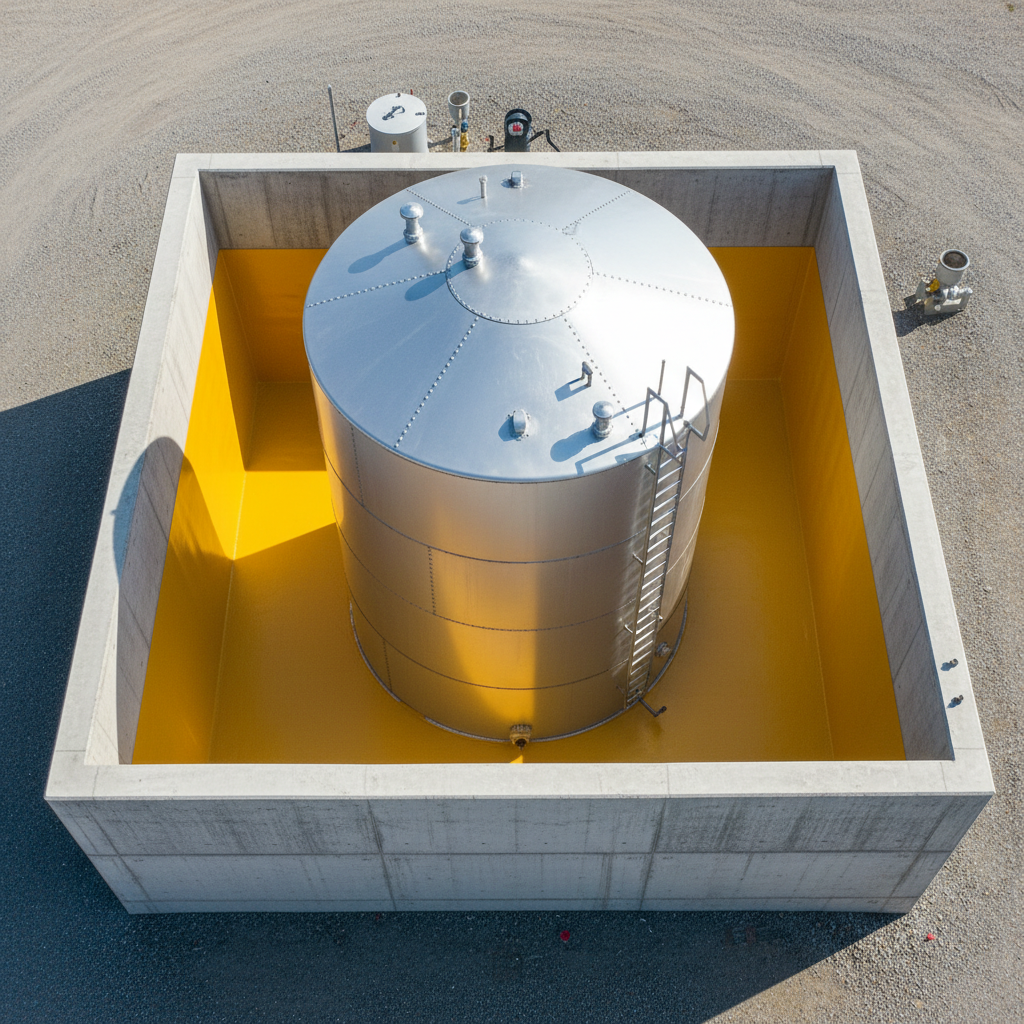
Secondary containment must contain 110% of the largest tank volume according to 40 CFR Part 112 requirements. This ensures adequate capacity for complete tank contents plus operational margin for leak response and precipitation.
| Containment Type | Capacity Formula | Typical Cost per Sq Ft |
|---|---|---|
| Concrete with walls | 110% largest + 10% others + precipitation | $45-65 installed |
| Earthen berm with liner | 110% largest + 10% others + precipitation | $25-35 installed |
| Prefab steel containment | 110% largest + 10% others + precipitation | $35-50 installed |
| Double-wall tank | Interstitial monitoring only | Included in tank cost |
Multiple tank installations calculate containment volume as 110% of the largest tank plus 10% of all remaining tank volumes within the containment area. For three tanks storing 5,000, 3,000, and 2,000 gallons, the requirement equals 5,500 + 300 + 200 = 6,000 gallons minimum containment capacity.
Precipitation allowance adds significant volume to containment requirements. Facilities must accommodate the 25-year, 24-hour precipitation event for their geographic location. This ranges from 3-4 inches in arid regions to 8+ inches in high-rainfall areas. A 40-foot by 60-foot containment area receiving 6 inches of rain contains an additional 1,200 gallons.
Freeboard requirements mandate 2 feet minimum height above maximum liquid level in containment areas. This prevents wave action and provides operational access during emergency response. Freeboard reduces effective containment volume and must be factored into sizing calculations.
Acceptable containment materials include concrete, steel, earthen berms with synthetic liner, and double-wall tank construction. Concrete provides the most durable option but costs more than earthen berms. Synthetic liners must resist the stored product and maintain integrity for the tank’s service life.
Inspection access requirements affect containment design around tank perimeters. Containment walls cannot prevent access to tank connections, gauging equipment, or leak detection systems. Walkways or platforms may be necessary for facilities with multiple tanks in shared containment.
Drainage systems within containment areas require manual operation under SPCC rules. Automatic drains that could allow spilled oil to escape are prohibited. Facilities must manually operate drain valves only after confirming no oil is present in containment areas. This is the most commonly cited SPCC violation during EPA inspections.
What Monthly Inspection and Maintenance Must AST Operators Perform?
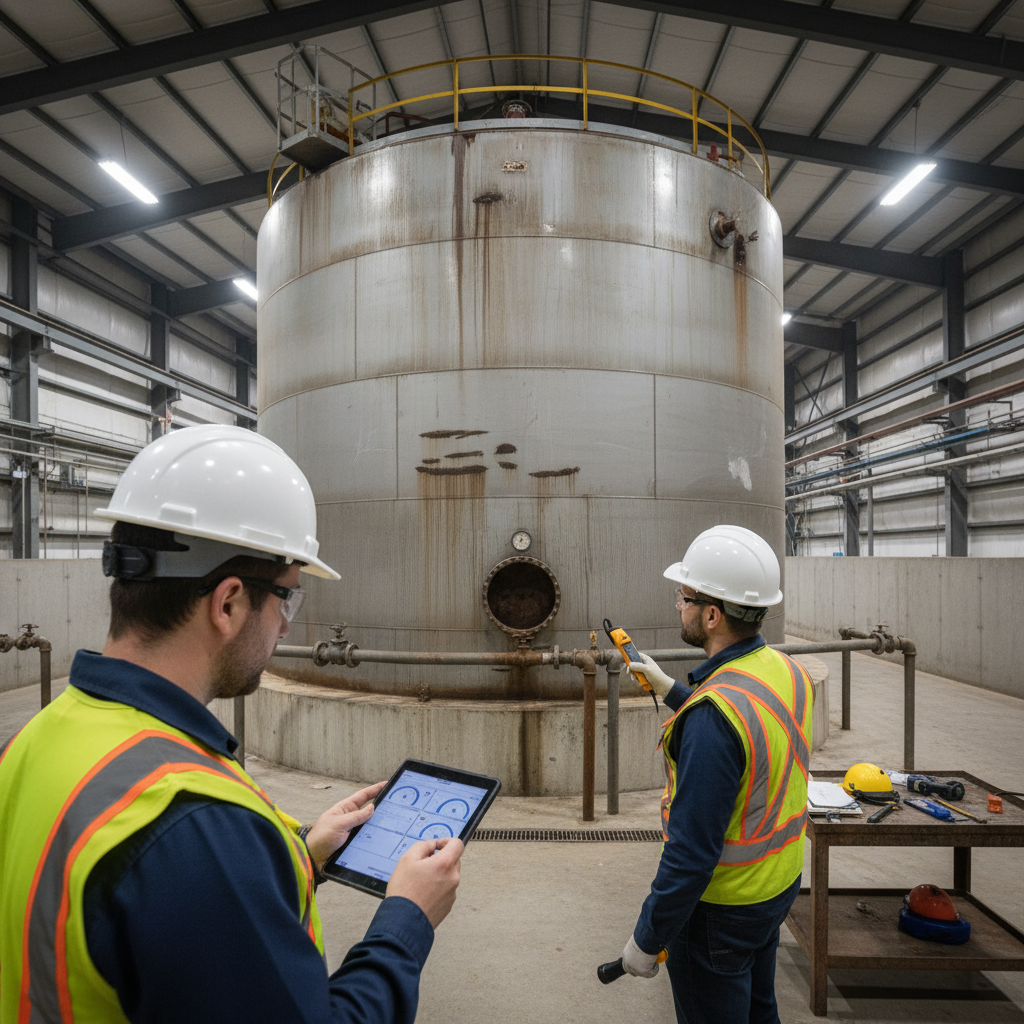
Monthly inspection requirement identifies tank integrity issues before they become reportable releases. Facility personnel can perform these inspections without specialized training, but documentation must meet SPCC plan specifications.
Inspect tank exteriors for corrosion, dents, settlement, or coating damage. Look for rust stains, metal thinning, impact damage, or coating failure that could lead to structural problems. Pay attention to areas near ground level where corrosion typically begins.
Test overfill prevention device functionality monthly and document results. Devices must automatically shut off flow at 95% tank capacity or trigger an alarm allowing manual shutdown. Test alarms and automatic shutoff systems according to manufacturer procedures.
Check secondary containment areas for oil accumulation, drain valve position, and structural integrity. Confirm drain valves are closed and locked, no oil sheens are visible, and containment walls show no cracks or settlement. Remove accumulated water only after confirming no oil is present.
Examine tank foundations for settlement, cracking, or erosion around support structures. Foundation problems can stress tank shells and cause leak points. Document any changes in tank levelness or visible foundation movement.
Verify leak detection system operation and record readings from monitoring equipment. For double-wall tanks, check interstitial monitoring displays and test alarm functions. For single-wall tanks, inspect containment areas and any installed leak detection probes.
Inspection frequency requirements specify monthly intervals with no exceptions for weather or operational constraints. Facilities must complete inspections within the calendar month, not on 30-day cycles. Missed months require documentation of why inspection was delayed and when it was completed.
Overfill prevention device testing verifies both mechanical and electrical components function correctly. Float-operated valves need movement testing to confirm proper operation. Electronic systems require alarm testing and communication verification with control systems.
Documentation requirements include inspector name, inspection date, findings, and corrective actions taken. SPCC plans specify required documentation formats, but records must be legible and retained for three years minimum. Electronic record systems are acceptable if they prevent alteration of completed inspection records.
Common failure points during monthly inspections include stuck overfill valves, open drain valves in containment areas, and corroded tank connections. Each requires immediate attention and documentation of repairs performed. Facilities must complete corrective actions before the next inspection cycle.
Typical monthly inspection time ranges from 30-60 minutes per tank depending on size and complexity. Larger facilities often assign this responsibility to maintenance personnel who can identify mechanical problems and perform minor repairs during inspection rounds.
When Do Aboveground Storage Tanks Require SPCC Plan Coverage?
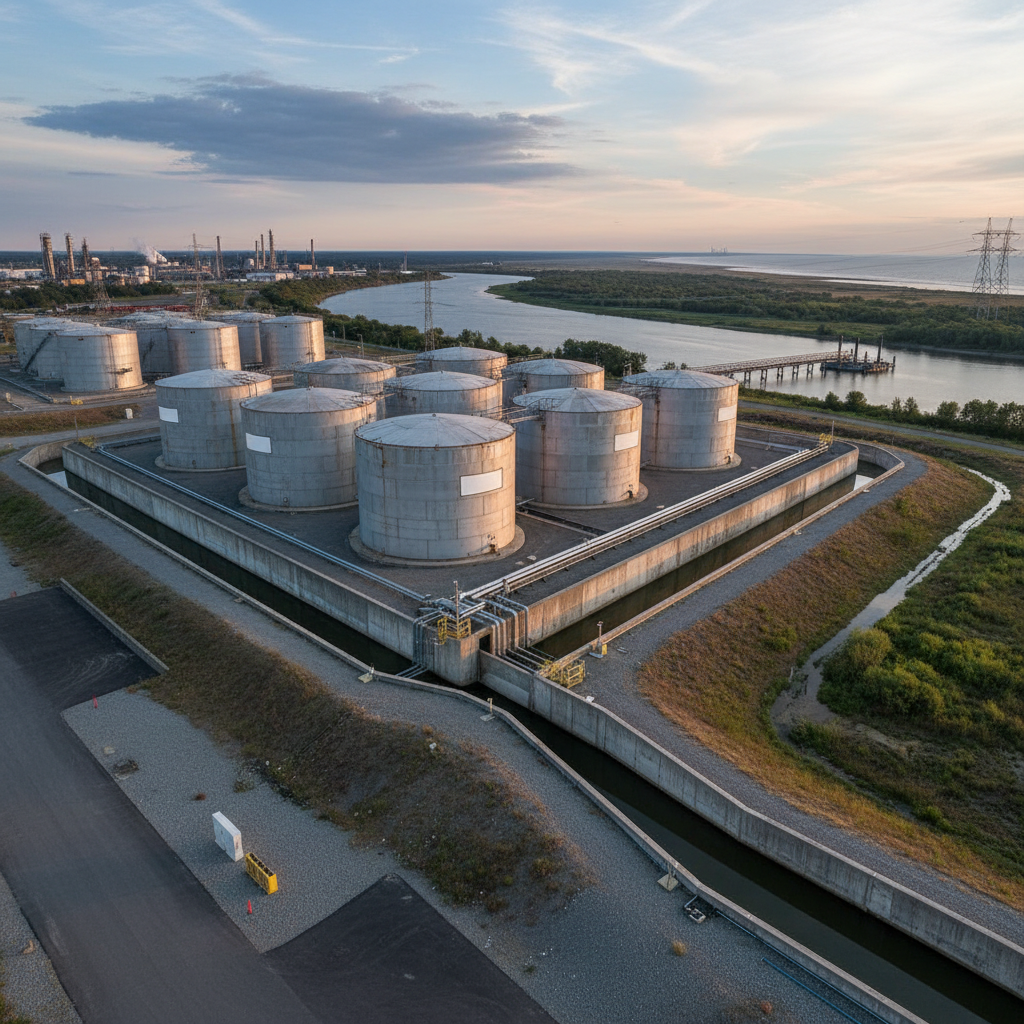
SPCC plan document requirements apply to facilities with qualifying AST capacity under 40 CFR Part 112. The regulation covers facilities storing 1,320 gallons or more of oil in aboveground containers that could reasonably discharge to navigable waters.
Storage threshold calculations include all regulated oil stored above ground at the facility. This includes diesel fuel, heating oil, hydraulic oil, lubricating oil, and other petroleum products. Gasoline, propane, and natural gas are not regulated oil under SPCC rules. Used oil counts toward thresholds but has different management requirements under 40 CFR Part 279.
Mobile versus fixed tank distinctions affect threshold calculations. Permanently installed tanks always count toward SPCC thresholds. Mobile tanks like fuel trucks, portable generators, and construction equipment typically don’t count unless they remain at the facility for extended periods. EPA considers tanks mobile if they can be readily relocated.
Aggregation rules require combining storage capacities across all qualifying containers at the facility. A facility with three 500-gallon diesel tanks exceeds the 1,320-gallon threshold and needs SPCC plan coverage. Separate buildings or operational areas don’t create separate facilities if they’re under common ownership and operational control.
Exclusions that don’t count toward thresholds include tanks storing non-petroleum products like ethanol or biodiesel blends over B20. Heating oil tanks serving single-family residences are excluded regardless of size. Completely buried tanks are covered under different regulations and don’t count toward SPCC thresholds.
Relationship to underground storage involves separate regulatory programs with different requirements. Underground storage tanks are regulated under 40 CFR Part 280 with different technical standards, inspection requirements, and financial responsibility rules. Facilities can have both SPCC obligations for aboveground storage and UST obligations for underground storage simultaneously.
EPA documented approximately 570,000 facilities subject to SPCC requirements nationwide. Agricultural operations account for roughly 40% of regulated facilities, followed by manufacturing and commercial facilities. The average regulated facility stores 3,500-5,000 gallons in aboveground tanks according to EPA survey data.
Frequently Asked Questions
What UL 142 listing means for aboveground fuel storage tanks?
UL 142 listing certifies that an aboveground storage tank meets safety standards for construction materials, welding procedures, and testing requirements. Per UL standards, listed tanks must pass hydrostatic testing and meet specific steel thickness requirements for the intended fuel type.
How often do aboveground storage tanks need professional inspection?
API 653 requires annual external inspections by qualified personnel and internal inspections every 10 years for steel tanks over 30 feet in diameter. Smaller tanks follow manufacturer recommendations but typically need professional assessment every 3-5 years according to industry practice.
Do all aboveground fuel storage tanks need overfill prevention?
Yes, 40 CFR Part 112 requires overfill prevention devices on all aboveground storage tanks subject to SPCC regulations. The device must automatically shut off flow at 95% tank capacity or trigger an alarm that allows manual shutdown before overflow occurs.
Can I use the same secondary containment for multiple aboveground storage tanks?
Yes, multiple tanks can share secondary containment if the total containment volume equals 110% of the largest tank plus 10% of the remaining tank volumes. The containment must also accommodate the 25-year, 24-hour precipitation event for your location per EPA requirements.