IBC Spill Containment Pallets: What to Buy for Totes and Intermediate Bulk Containers

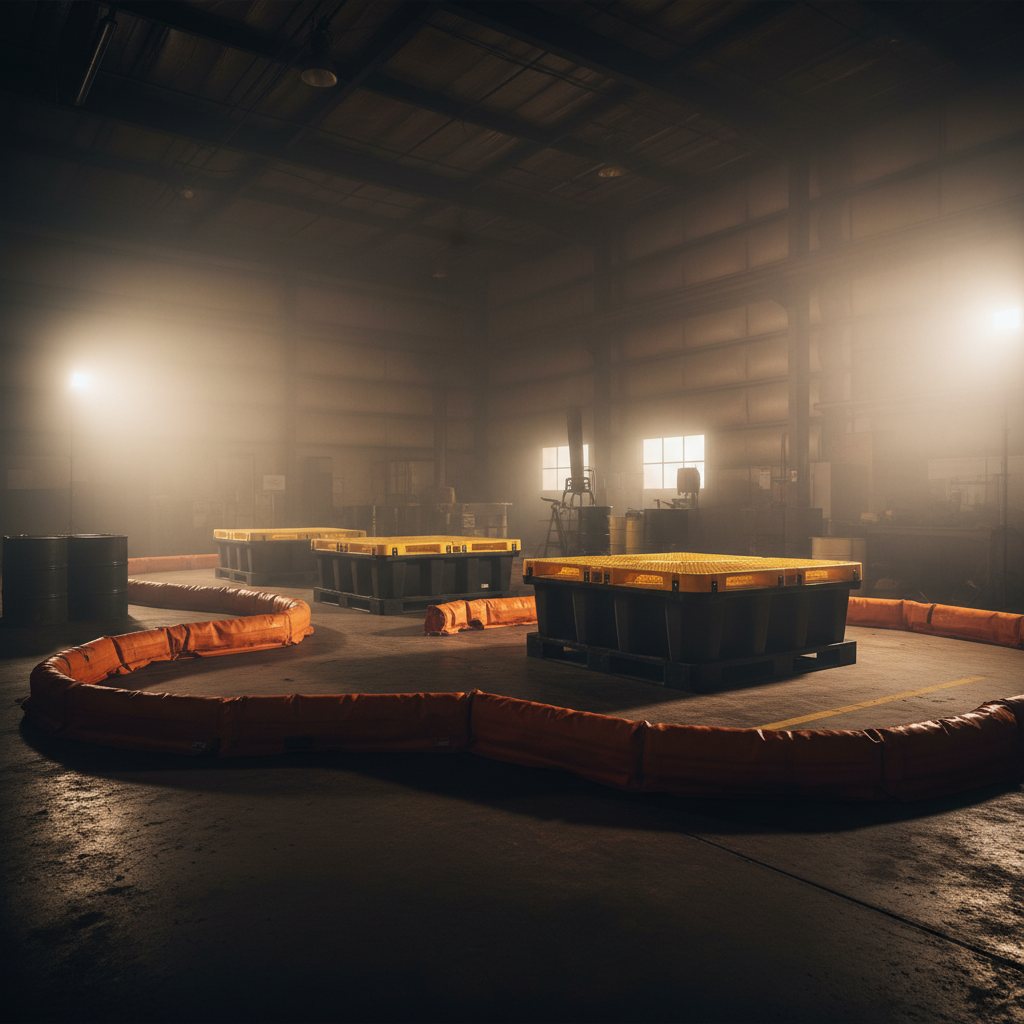
IBC tote on a spill containment pallet in dramatic lighting and fog.

IBC spill containment pallet solutions handle the unique footprint and capacity demands of intermediate bulk containers that standard drum containment can’t accommodate. Standard drum pallets can’t handle the 48 x 40-inch footprint of intermediate bulk containers, which is why IBC-specific containment pallets exist as the only SPCC-compliant option for tote storage. Key Takeaways: 275-gallon IBC … Read more

Spill Containment Berms: Types, Sizing, and SPCC Compliance

Vehicle maintenance area with foam-wall berms and dramatic lighting.

Spill containment berms protect your facility from EPA violations that average $50,000 per incident. Choose wrong and a simple hydraulic leak becomes a regulatory nightmare. Key Takeaways: Foam-wall berms work for 95% of vehicle maintenance applications under 1,000 gallons Drive-through berms cost 40-60% more than standard foam walls but eliminate forklift positioning issues SPCC compliance … Read more

Spill Containment Pallets: Complete Buyer’s Guide for SPCC Compliance

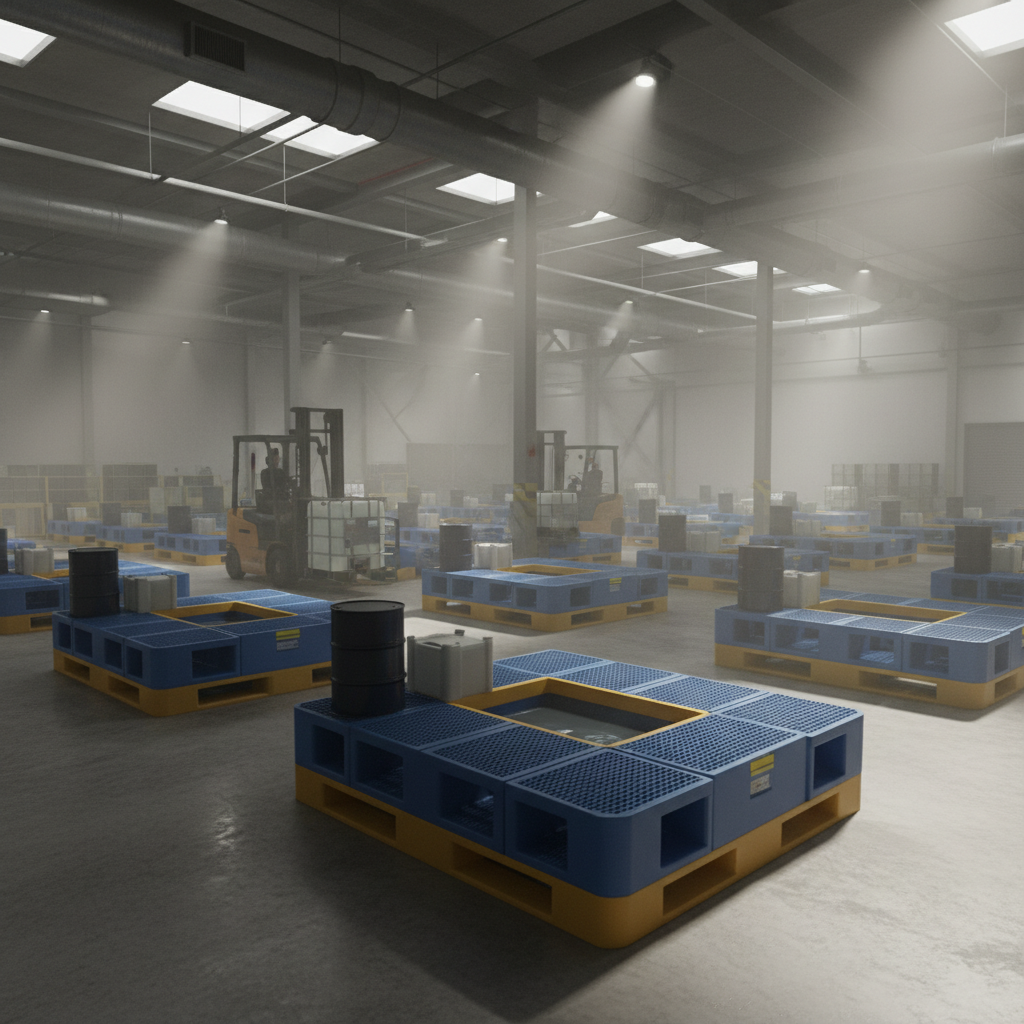
Industrial spill containment pallets in a warehouse, dramatic lighting and fog.

Spill containment pallet failures happen when facilities ignore the 110% sump capacity rule for each storage area. Most buyers focus on price over compliance requirements and end up with pallets that can’t hold the required volume. Key Takeaways: 4-drum pallets require 66-gallon sump capacity minimum for SPCC compliance with 55-gallon drums Polyethylene pallets cost 40-60% … Read more

Spill Containment Pallets vs Containment Berms: Which Is Right for Your Facility?

Warehouse with spill containment pallets and containment berms, dramatic lighting.

Spill pallet vs containment berm SPCC decisions affect your compliance status and violation risk. Choose wrong and face $59,973 daily penalties. Choose right and handle everything from 55-gallon drums to 50,000-gallon tank batteries with proper secondary containment. Key Takeaways: Spill pallets handle drum and IBC storage up to 350 gallons per unit, while berms accommodate … Read more

OSHA vs EPA Secondary Containment Requirements: What’s the Difference?

Emergency team at oil storage facility with dramatic lighting and fog.

OSHA secondary containment requirements and EPA oil containment rules create confusion because they cover different materials under separate regulatory frameworks, leaving facilities unsure which standards apply to their operations. Key Takeaways: EPA SPCC rules under 40 CFR Part 112 govern oil and petroleum products exclusively, not other hazardous materials OSHA 29 CFR 1910.120 covers chemical … Read more

Secondary Containment Calculator: Size Your Containment for SPCC [Free Tool]

Industrial facility with large storage tanks under foggy, stormy skies.

Secondary containment calculator projects fail because engineers guess at rainfall data instead of calculating actual regional requirements. That miscalculation costs facilities an average of $47,000 in redesign and reconstruction. Key Takeaways: Regional 25-year 24-hour storm data varies by 340% across the US, using generic calculations guarantees undersized containment Tank displacement volume reduces required containment capacity … Read more

The 110% Rule Explained: Why It’s Often Not Enough

Industrial tanks with secondary containment, dramatic lighting, volumetric fog.

110 percent rule SPCC secondary containment is one of the most misunderstood requirements in oil storage compliance. Following it blindly will get you cited during EPA inspections. The regulation never mentions 110%, and your actual requirements vary by location. Key Takeaways: The 110% figure appears nowhere in 40 CFR Part 112,actual requirements range from 110% … Read more

SPCC Containment Volume Calculation: Step-by-Step Sizing Guide

Dramatic scene of large oil tanks in a foggy containment area, cinematic lighting.

SPCC containment volume calculation determines whether your facility faces compliance or catastrophic enforcement costs. Getting the sizing wrong triggers EPA violations, daily fines up to $59,973, and mandatory reconstruction that can exceed $50,000 for commercial operations. Key Takeaways: The 110% rule requires containment volume equal to 110% of your largest tank plus 100% of all … Read more

Secondary Containment Requirements and Products: The Complete SPCC Guide

Oil storage tank with secondary containment barrier in an industrial setting.

Secondary containment requirements SPCC violations now average $47,000 per incident according to EPA enforcement data, yet most facilities still guess at compliance requirements. This costs money and invites regulatory scrutiny. Key Takeaways: EPA’s 110% rule requires containment volume equal to 110% of the largest single tank plus freeboard for the 25-year, 24-hour storm event OSHA … Read more

AST Installation Best Practices: Site Prep, Foundation, and Setup

Construction site with soil testing and grading, workers preparing ground.

Aboveground storage tank installation requirements determine whether your facility avoids the 90% of structural failures and leak incidents that trigger EPA violations in the first five years of operation. Key Takeaways: Concrete foundation pads must be 6 inches larger than tank diameter on all sides with 4-inch minimum thickness for tanks under 10,000 gallons Soil … Read more